
 Desk
Desk Share
Share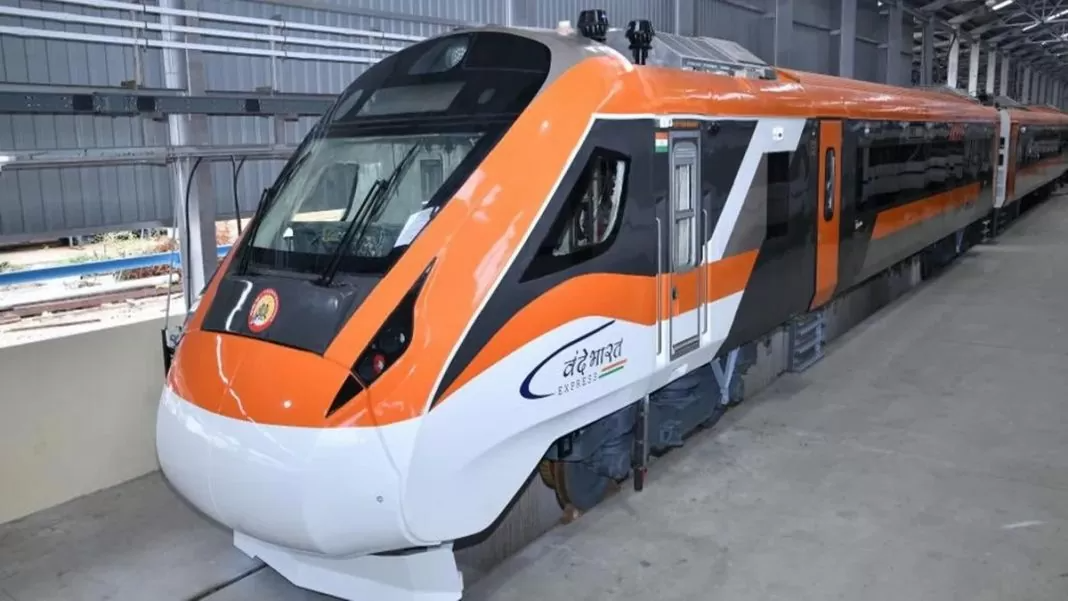
The Vande Bharat Express has commenced operations between Katra and Srinagar as of June 7, winning widespread acclaim from travellers. Demand for the service has surged, resulting in full occupancy across the two additional Vande Bharat departures on the Katra-Srinagar loop. Any passenger wishing to experience the spectacular Kashmiri valleys aboard this service is advised to secure seats well in advance; last-minute availability is quickly diminishing. This train represents a landmark advance in Jammu and Kashmir’s rail connectivity, and is expected to spur further tourism growth. The 191-kilometre journey from Shri Mata Vaishno Devi Katra to Srinagar is completed in two hours and fifty-eight minutes, with service every day except Tuesday.
The route is currently served by two pairs of Vande Bharat trains. The first set operates as train numbers 26404 and 26403; the second set carries numbers 26401 and 26402. All services make a single scheduled stop at Banihal station in each direction between Srinagar and Katra.
Katra-Srinagar Vande Bharat Timetable
Train 26402 departs Katra precisely at 14:00, arriving in Srinagar at 16:58. For the return journey, train 26404 sets out from Srinagar at 08:00, reaching Katra at 10:58. Additionally, train 26401 leaves Katra at 08:10, arriving Srinagar at 11:08. Train 26403, returning from Srinagar, departs at 14:55 and pulls into Katra at 17:53.
Katra-Srinagar Vande Bharat Fare Structure
As per IRCTC’s official tariff, the 24 July 2025 fare for the chair car on train 26401 from Katra to Srinagar is ₹720, accommodating catering, while the executive seat is ₹1,325. The chair car on train 26403 from Srinagar to Katra is ₹665, also covering catering, with the executive fare at ₹1,275. Train 26402's chair car fare from Katra to Srinagar is ₹885, incorporating ₹308 for catering. The executive fare is ₹1,520, which includes ₹369 for catering. Lastly, the chair car on train 26404 from Srinagar to Katra is ₹720, with the executive seat priced at ₹1,325, both inclusive of catering.
According to Indian Railways, the Vande Bharat train has been meticulously engineered to operate reliably in subzero conditions typical of the valley during winter months, when temperatures can drop below freezing. The train incorporates silicon heating pads that prevent both water tanks and bio-toilet tanks from forming ice. A redundant overheat protection sensor has been integrated to enhance safety. Passenger accommodation is ensured through strategically placed heaters that deliver a consistent stream of warm air. Complementarily, an auto-draining mechanism within the plumbing circuits automatically expels a small quantity of water when temperatures approach the freezing point, further safeguarding the entire hydraulic system from ice formation.
Read More: Sona Valliappa Group launches SCALE, India’s first integrated campus for GCCs and students