
 Priyanka Tiwari
 Share
Share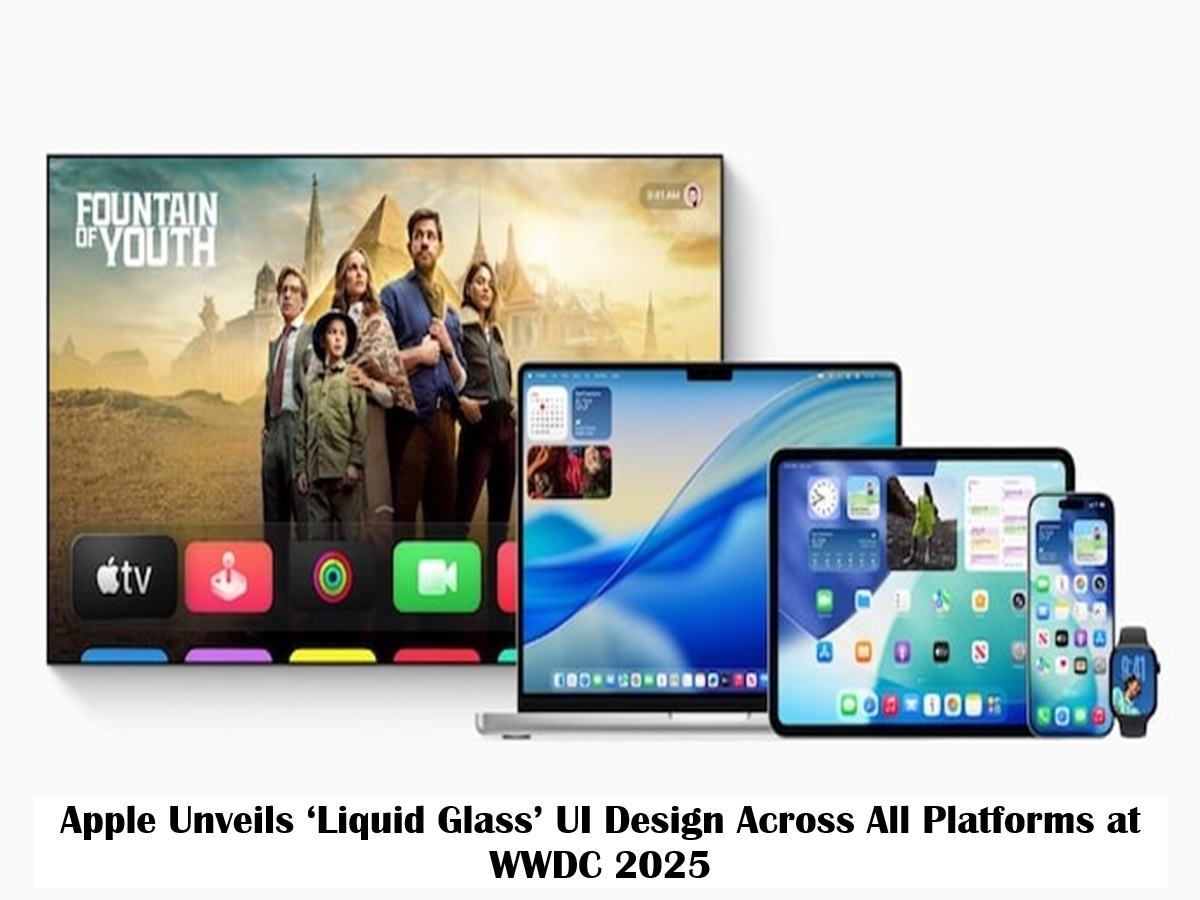
Suspense crime, Digital Desk : Apple saved one of its biggest surprises for WWDC 2025: a design overhaul dubbed Liquid Glass. Executives described it as a new skin that feels translucent, responsive, even a bit alive under your fingers. Hands-on demos showed panels that change character mid-sentence, and the buzz on the floor was electric.
The look lands system-wide on iOS 26, macOS Tahoe, watchOS 26, and the rest of the Apple family, each build nicknamed after the same year. Travelers between devices will see an icon bounce, a slider ripple, and a control center flicker in practically the same breath, yet no device is forced to mimic the one beside it.
Liquid Glass is being sold as more than a slick overlay. Design blogs are already headlining it an adaptive material, possibly the most ambitious thing Apple has tried in over a decade.
Intuitive Light Play
To start with, the interface gathers light like a pane of frosted glass. Daylight flares, room lamps smudge the edges, and the screen keeps pace without prompting the user for a single toggle.
Every element inside the frame behaves as if it expects attention. Tap a toolbar icon and the background lightens; slide a settings knob and particles briefly trail your fingertip.
Contrast still obeys dark mode, but now the border between modes is more suggestion than rule. Wallpapers whisper their colors to system elements, producing a brief harmony before the user customizes again.
Traveling Visual Hierarchy
Creators at Apple boast that Liquid Glass pushes hierarchy to the background while foregrounding choice. Notifications sink quietly after reading; scrolling lists fluidly hold your gaze even as they move.
Between transitions, focus snaps perceptibly to buttons, links, thumbnails, or whatever else wants a tap. The smoothing algorithms appear smart enough that veteran designers speaking off the record call them borderline predictive.
One Design, Many Screens
Snagging headlines back in the demo tent, engineers pointed out something unusual: every screen shares its skeleton. Light-switching phones, kitchen-facing TVs, and studio Macs respectively support the same glassy rhythm while obeying local constraints.
Picture this on an iPhone running iOS 26: the Lock Screen time floats around the subject cut-out, almost tracing its outline. Drag the camera into Control Center and the border follows, as if someone had dipped the bezel in gel.
Mac running macOS Tahoe introduces a translucent menu bar that melts into the wallpaper, letting the desktop breathe.
The iPad and companion Mac sidebars borrow the same idea: a tinted glass effect that bends the background yet leaves text crisp and legible.
Navigation on Apple TV and watchOS now mimics the colors and shapes in living room light, stacking menus to mimic physical depth you can almost swipe through.
Pull any of those devices beside another and the visual language reads the same-everything feels like it was poured from the same mold across phone, tablet, desktop, and screen.
Safari, Music, FaceTime, and the rest of the everyday apps have been retooled with the Liquid Glass effect. Curved buttons echo the rounded edge of the hardware, almost as if they were chiselled from the same slab of glass.
Toolbars shrink and stretch as you scroll, sliding content forward instead of pushing it aside. Even floating controls shift hue on the fly, matching the thumbnail or photo that happens to sit behind them.
None of this steals the spotlight from the content; the tweaks sit under the hood, polite and unobtrusive. Usability improves, yet the comfort of familiarity stays intact.
Blink once and you might miss the changes, but the surface is fresher, lighter, more tactile than it was last week. Icons, widgets, and folders now accept haze, bold tints, or gentle transparency at your command.
Core patterns remain untouched because Apple knows muscle memory dies hard. The goal is a next-generation interface that feels instantly welcoming to anyone who has ever pressed an iPhone home button.
Read More: Toyota Kirloskar Motor November 2025 Sales Report Shows Innova and Hyryder Leading Volume