
 Priyanka Tiwari
 Share
Share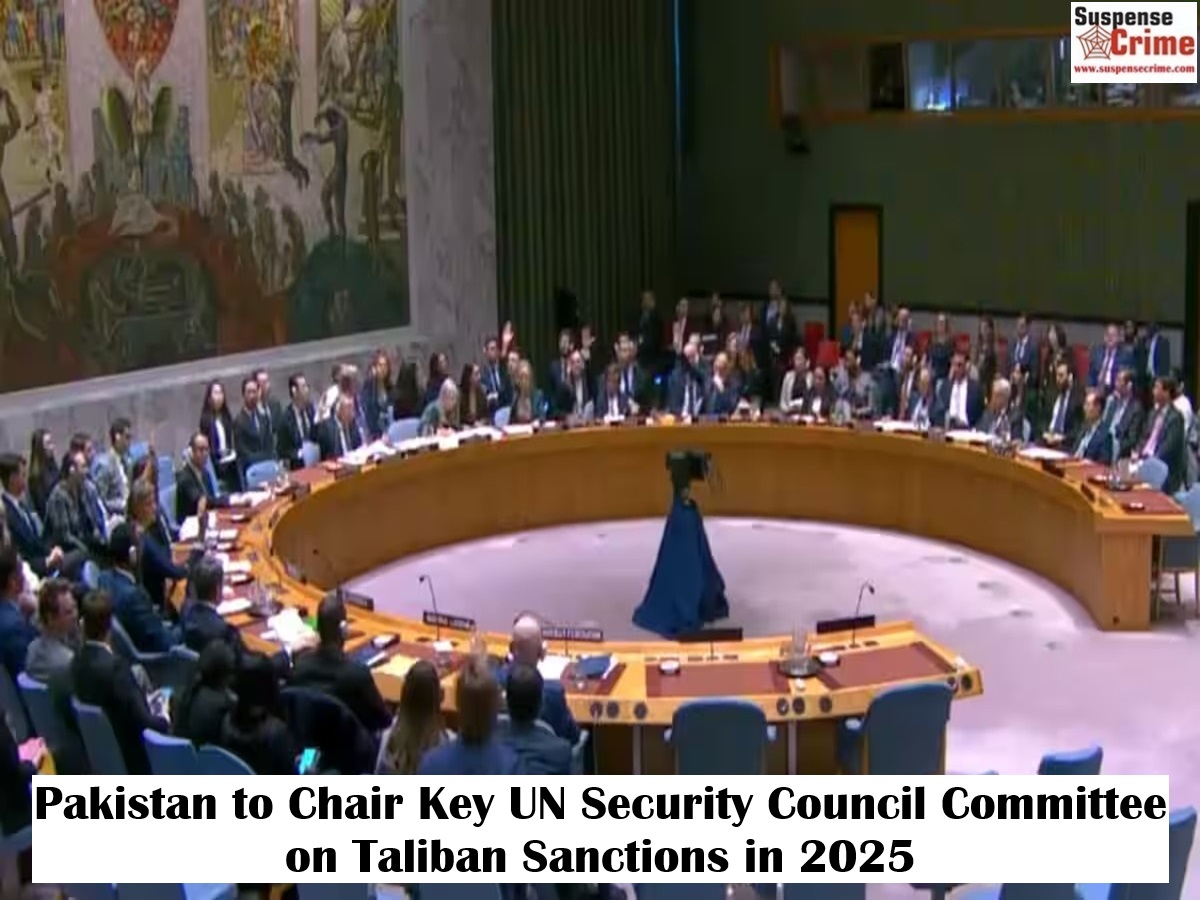
Suspense crime, Digital Desk : As noted by PTI, Pakistan is set to assume the leadership for the UNSC 1988 Sanctions Committee in 2025, which oversees sanctions on Taliban-affiliated people and groups posing a danger to peace in Afghanistan. Pakistan will also be a vice-chair of the Council's Counter Terrorism Committee.
This follows Pakistan commencing a two-year stint as a non-permanent member of the 15-member UNSC for 2025-26.
The 1988 Committee imposes sanctions such as asset freezes, prohibitions on travel, and restrictions on the supply of military equipment to individuals and groups associated with the Taliban. Pakistan will also serve as co-chair for two unofficial UNSC working groups, one focusing on sanctions, and the other on rules of procedure.
Denmark takes over the leadership of the 1267 ISIL and Al-Qaida Sanctions Committee, while Russia and Sierra Leone assume the vice-chair positions. Algeria heads the 1373 Counter-Terrorism Committee, while France, Pakistan, and Russia will fill the deputy chair positions.
India, who chaired the Counter Terrorism Committee in 2022, is currently not part of the Council. Sources suggest, however, that New Delhi may try to ally with like-minded members of the Council to pre-emptively counter narratives Pakistan may seek to advance, especially on issues of terrorism and Kashmir.
The structure of the UNSC poses clear limitations for Pakistan, as pointed out by the experts. The endorsement of at least nine members from the total of 15, along with a veto from one of the five permanent members- US, UK, France, China, or Russia, is obligatory for critical decisions.
For a long time now, India has accused Pakistan of hosting terrorists recognized by the United Nations, after referencing the killing of Osama Bin Laden in Abbottabad during 2011.
Diplomatic insiders state that it is highly probable that Pakistan would bring up the Kashmir dispute and the subject of terrorism during the councils on July 2025, although they predict that considerable retaliation would be faced.
While India strengthens bilateral relations with the Taliban administration in Afghanistan, the country also takes measures such as supporting the “Chabahar port” as well as the “International North South Transport Corridor” (INSTC) which undermines Pakistan, alongside the newly introduced softer visa policies towards Afghan citizens and denouncing an Indian terrorist attack.
In a separate development, Bahrain, Latvia, Liberia, the Democratic Republic of the Congo, and Colombia were selected as non-permanent members of the UN Security Council and will assume their roles on January 1, 2026.