
 Desk
Desk Share
Share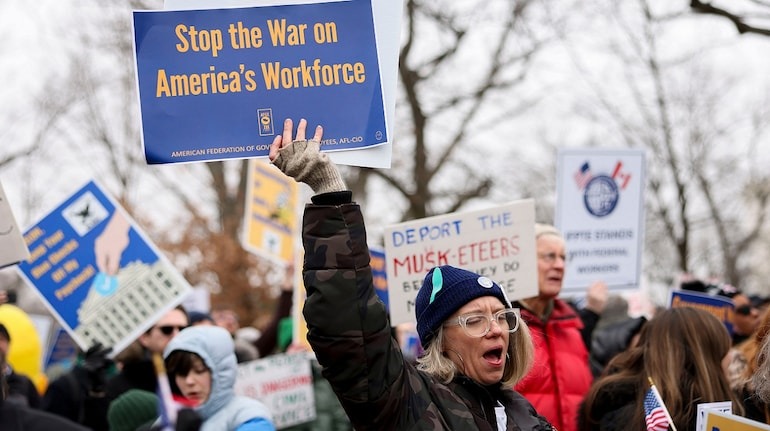
The Trump administration is facing a wave of legal challenges, with four US courts dominated by Democrat-appointed judges at the center of ongoing disputes over executive actions.
Lawsuits Surge Against Trump Policies
In just four weeks, at least 74 lawsuits have been filed against the administration, with 58 cases concentrated in Washington, Boston, Seattle, and suburban Maryland, according to a Bloomberg News analysis. These districts and their appeals courts have a history of rulings that tend to favor more progressive legal interpretations.
The lawsuits target Trump’s hard-line immigration policies, reductions in federal agencies' power, and rollbacks of civil rights protections. Other cases challenge the Department of Government Efficiency, a new agency led by Tesla and SpaceX CEO Elon Musk, questioning its constitutionality and data access policies.
Legal experts say that challengers deliberately choose venues where they expect more favorable rulings. Harvard Law School senior lecturer Nancy Gertner, a former Boston federal judge appointed by Bill Clinton, noted, “Advocates will want to go to places that they perceive to be more sympathetic.”
Judges Push Back on Trump’s Agenda
At least 17 judges—including several Republican appointees—have issued orders blocking or temporarily halting various Trump administration actions. These include efforts to:
- Restrict birthright citizenship
- Suspend domestic and foreign US funding
- Shrink the federal workforce
- Remove independent agency heads
- Roll back legal protections and healthcare for transgender individuals
In some cases, the administration itself has paused policies to give judges time to issue rulings, slowing down Trump’s broader agenda.
Washington, D.C.: The Center of Legal Challenges
More than half of the 74 cases have been filed in Washington, D.C., the traditional legal battleground for federal lawsuits. The capital's federal court is the default venue for many legal actions against government agencies, but advocacy groups have also spread cases across multiple jurisdictions to avoid a single point of failure.
The cases in Washington, D.C. feed into the D.C. Circuit Court of Appeals, while those in Boston, Maryland, and Seattle go to the 1st, 4th, and 9th Circuits, respectively—courts that have historically ruled against Trump's policies, especially on immigration.
By contrast, during Biden’s presidency, conservative groups concentrated lawsuits in Texas, within the 5th Circuit, known for its right-leaning rulings.
Trump’s Allies Fight Back
In response to the legal setbacks, Trump’s allies have aggressively criticized judges. Musk and Vice President JD Vance have taken to social media, accusing the judiciary of bias.
Trump’s own criticism of judges—especially those ruling against him—has drawn a rare public rebuke from Chief Justice John Roberts, who defended the judiciary’s independence during Trump’s first term.
Despite claims of political bias, federal judges insist that their lifetime appointments and ethics rules prevent political influence. However, Syracuse University law professor Katherine Macfarlane noted that in politically charged cases, legal teams increasingly consider "macro-level strategy" when deciding where to file lawsuits.
The Debate Over "Judge Shopping"
The tactic of forum shopping—filing cases in courts likely to rule favorably—became a major point of controversy during Biden’s presidency, when conservative lawsuits were funneled into Texas courts with single-judge divisions.
However, Georgetown law professor Steve Vladeck, an expert on judicial strategy, argued that Trump’s challengers have not engaged in the same extreme tactics.
"Is there forum-shopping? Sure. Is it anything close to what was happening over the past four years? No," Vladeck said.
To prevent judge shopping, some courts are implementing random case assignments. Massachusetts' chief judge recently introduced a policy to randomly assign cases seeking nationwide injunctions, instead of allowing plaintiffs to select specific judges.
Legal Battles Set to Continue
Despite strategic venue choices, legal experts argue that the fundamental legality of Trump's policies is the core issue. Gertner emphasized that the substance of Trump's executive actions often contradicts legal and constitutional principles, leading to widespread judicial pushback.
"The distance between what Trump is doing and what the law requires is so substantial that it doesn’t matter what the judge is," she said.
With lawsuits mounting and court rulings slowing down key policies, Trump’s administration is likely to face prolonged legal battles—a familiar challenge that defined his first term and now shapes his second.
_1570701464_100x75.jpg)
_1563449287_100x75.jpg)

_1025409548_100x75.jpg)
_1681775372_100x75.jfif)