Why Tamil Nadu CM Vijay Invoked LTTE Chief Prabhakaran, and How It Triggers a Political Storm Involving BJP and Rahul Gandhi
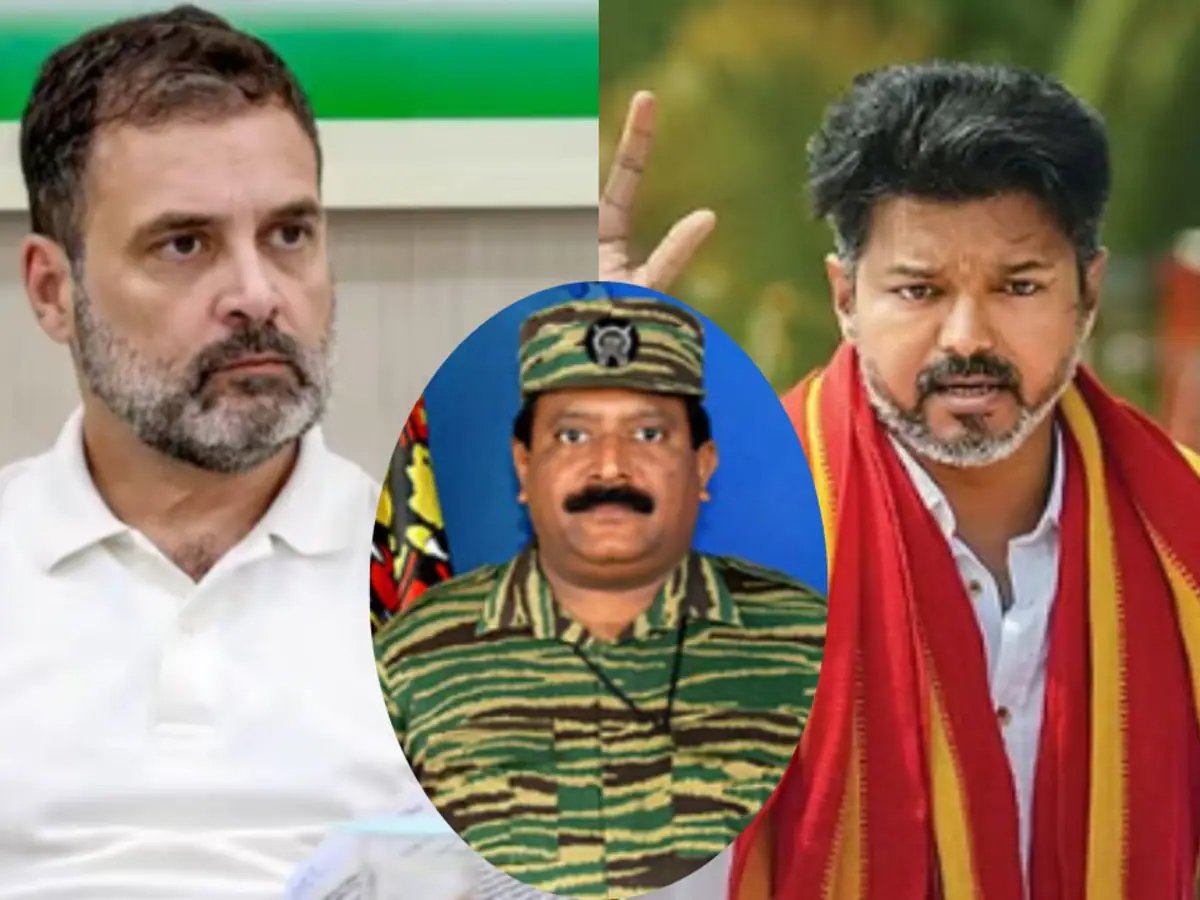
In a move that has sent shockwaves through India’s political corridors, newly elected Tamil Nadu Chief Minister and Tamizhaga Vetri Kazhagam (TVK) chief C. Joseph Vijay publicly expressed solidarity with the global Sri Lankan Tamil diaspora on Mullivaikkal Remembrance Day. By doing so, Chief Minister Vijay has broken a decades-old unspoken political taboo in mainstream Tamil Nadu politics by directly invoking the legacy of Velupillai Prabhakaran, the slain founder of the Liberation Tigers of Tamil Eelam (LTTE).
"We will carry the memories of Mullivaikkal in our hearts! We will always stand in solidarity for the rights of our Tamil kin living across the seas!" Vijay posted on the social media platform X. The explicit nod to an event inextricably linked with the death of one of the world's most notorious guerrilla leaders has ignited fierce pushback, with the Bharatiya Janata Party (BJP) using the opportunity to mount a sharp offensive against Congress leader Rahul Gandhi and the broader opposition alliance.
Understanding the Tragedy of Mullivaikkal and India’s Red Line
To understand why Vijay’s post is politically explosive, one must look back to May 18, 2009. On this day, the 26-year-long, bloody Sri Lankan Civil War culminated in the small coastal village of Mullivaikkal in the Mullaitivu district, where the Sri Lankan military tracked down and killed LTTE chief Velupillai Prabhakaran.
While the day is observed globally by Sri Lankan Tamils as a solemn day of remembrance for the estimated 40,000 to 70,000 Tamil civilians killed during the final, brutal phase of the war, any political proximity to the LTTE within India crosses a major legal and emotional red line. The LTTE remains a strictly banned terrorist organization in India due to its central role in the 1991 assassination of former Indian Prime Minister Rajiv Gandhi, a conspiracy in which Prabhakaran was named the prime accused.
Consequently, traditional powerhouse Dravidian parties like the DMK and AIADMK have historically navigated the Sri Lankan Tamil issue with immense caution. They routinely champion the human rights of Tamil civilians while keeping a safe, calculated distance from the armed separatist legacy of the LTTE. Chief Minister Vijay’s direct embrace of Mullivaikkal signals a radical shift away from this cautious consensus.
The Ideological Calculus: Building a 'Neo-Dravidian' Identity
Political analysts view Vijay’s bold messaging not as an endorsement of militancy, but as a calculated ideological experiment to refashion Tamil Nadu’s political spectrum. Having successfully broken the six-decade-long political duopoly of the DMK and AIADMK to capture the Chief Minister’s chair, Vijay is trying to pioneer what experts describe as a "neo-Dravidian" political framework.
Historically, Dravidianism and Tamil Nationalism have existed in deep systemic tension within the state. Dravidian politics, heavily influenced by Periyar, focuses on social justice, rationalism, anti-caste structures, and administrative resistance to central overreach. Conversely, Tamil Nationalism places absolute premium on indigenous Tamil civilization, global Tamil identity, and an emotional, almost spiritual solidarity with Tamils worldwide.
Vijay famously declared that "Dravidianism and Tamil nationalism are the two eyes of this soil." By honoring Mullivaikkal, he is actively trying to fuse these two distinct streams, absorbing the fierce emotional subtext of Tamil Nationalism into his governance model to cultivate a unique "Tamil First" regional identity. This is not the first time Vijay has leaned into this sentiment; during his campaign trail in late 2025, he drew massive controversy by comparing Prabhakaran to a "mother" figure who showered Sri Lankan Tamils with protective affection.
The Coalition Compulsion: The Influence of Pro-LTTE Allies
Beyond pure ideology, Vijay’s willingness to touch this sensitive issue is tethered to cold, arithmetic calculations of survival. While Vijay secured the chief ministership, his administration operates as a minority government that relies on crucial external legislative support to sustain its mandate.
A vital pillar of this legislative buffer is the Viduthalai Chiruthaigal Katchi (VCK), a prominent regional political force. The VCK is well-known across the state for its unvarnished, openly sympathetic stance toward the LTTE and its historical struggle for a separate Tamil homeland. By taking a visible, uncompromising stand on Mullivaikkal Day, Chief Minister Vijay is directly consolidating his political alignment with his ideological partners, ensuring the stability of his state government by demonstrating that he is not afraid to back their core emotional issues on a national stage.
National Fallout: BJP Confronts Rahul Gandhi Over the Silence
The political tremors of Vijay's tribute were quickly felt in New Delhi, sparking a massive national debate on national security and coalition ethics. The BJP launched a coordinated political counter-offensive, explicitly targeting Congress leader Rahul Gandhi over his absolute silence on the matter.
BJP leadership questioned how the Congress party could maintain its national alignment or look the other way when a prominent state Chief Minister, backed by key regional players, openly pays homage to an event inextricably linked to the legacy of the man responsible for the assassination of Rajiv Gandhi—Rahul Gandhi’s own father.
National security commentators have pointed out the stark irony of mainstream political leaders trying to mainstream the imagery of a banned outfit. As the BJP continues to leverage this controversy to paint the opposition alliance as compromising on national security for local electoral gains, Chief Minister Vijay’s calculated homage has effectively turned a regional remembrance day into a major flashpoint for national politics.
_1242169616_351x234.jpg)