 Priyanka Tiwari
 Share
Share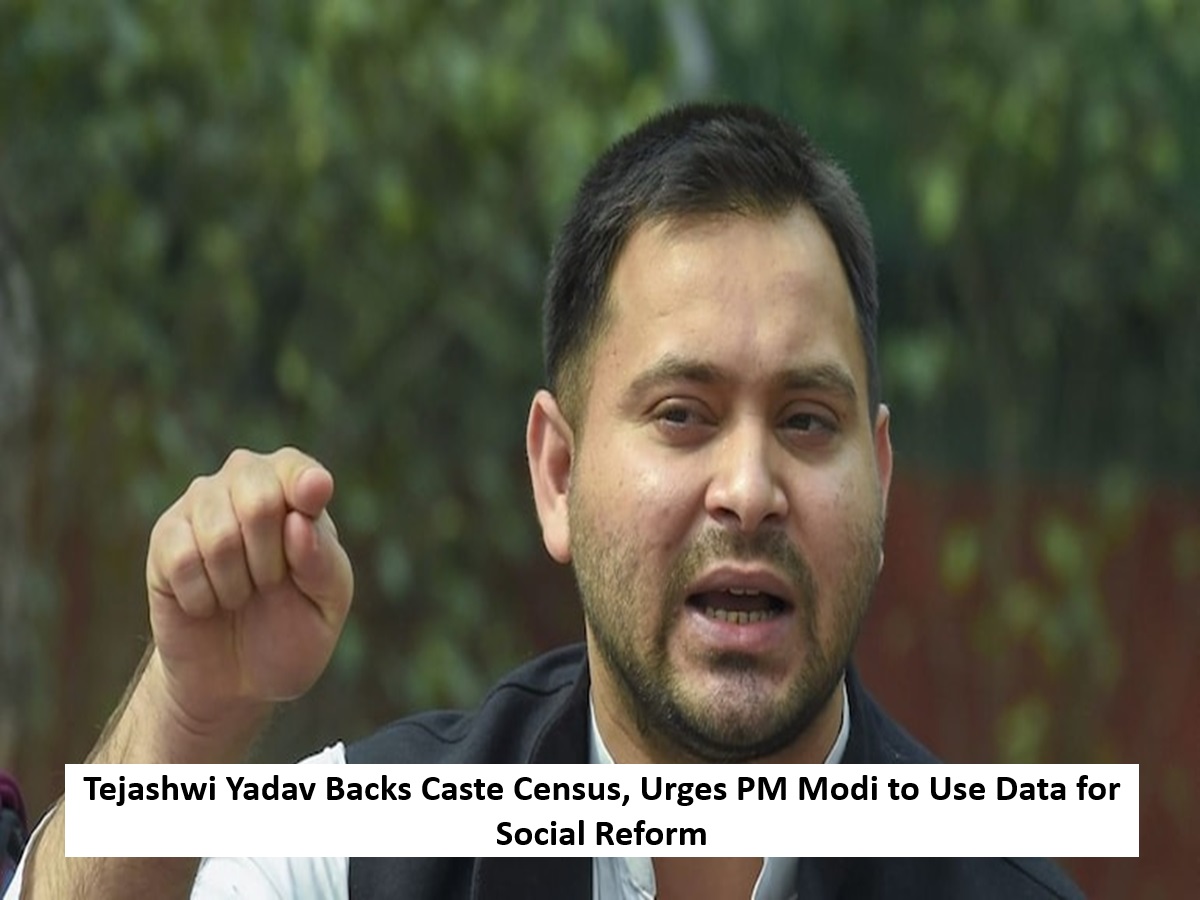
Suspense crime, Digital Desk : Bihar’s former Deputy Chief Minister Tejashwi Yadav of Rashtriya Janata Dal gave major strokes of support towards the Indian central government’s decision to map out caste demographics in the forthcoming census. Yadav wrote a letter thanking Prime Minister Narendra Modi and stressed the need of using this data to explore structural changes essential for social justice.
To perform a caste census is, without a doubt, one of the most fundamental steps towards achieving equality as quoted by Yadav on X formerly known as Twitter. People may have great expectations from the census beyond numbers, and that is power and identity.
My letter to PM Sh. @narendramodi Ji.
— Tejashwi Yadav (@yadavtejashwi) May 3, 2025
The decision to conduct the caste census can be a transformative moment in our nation's journey towards equality. The millions who have struggled for this census await not just data but dignity, not just enumeration but empowerment.… pic.twitter.com/t2uszNfjOH
Yadav spoke out in support of the marginalized communities muted by the deafening silence of the governmental system and urged Indian authorities to utilize the caste information to redefine the social justice approach and evaluate the overbearing constraints placed on caste based reservation seats.
Overhaul Policies Regarding Reservation and Redistribution of Welfare Resources
Yadav called these steps the first initiatives that the central government should take while pledging accounts with reservation and social policies to use moving forward. The former chief asserted this new data should be available for revision junction of electoral boundary redistribution in relation to caste population distributions.
"His comment is that the findings need to assist in changing social protection frameworks and the configuration of political wards”
Encourage Inclusion Outside Of Government Employment
In this regard, Yadav advanced the argument that private sector discourse should also receive consideration in terms of caste inclusion beyond public sector employment. He emphasized the need for dialogues on inclusivity within organizations, including top-level representation.
“Let's harness the momentum generated by the caste census to drive change across the private sector's organizational structure,” he stated.I
While raising other issues, Yadav highlighted focusing on the data’s outcome and its potential impact on actual reform, questioning if it would end up ignored as previous commission reports have.
Context of Increased Interest in Caste Based Information
In conjunction with this, the letter comes after the caste survey carried out in Bihar which has now placed pressure on the Union to carry out a nationwide survey. The caste census aims at providing comprehensive data pertaining to different social groups with an insight into their varying standards of living such as their economic status, education level, and other essential factors.
Since the onset of the Indian census, there has been inclusion of data pertaining to the Scheduled Castes (SCs) and Scheduled Tribes (STs) which started in 1951. However, there is no inclusive detailed data available pertaining to Other Backward Classes (OBC) and other caste groups which has been subjected to scrutiny for stagnating development
policy.
Read More: A Compromised Prime Minister Rahul Gandhi Launches Scathing Attack on PM Narendra Modi