
 Priyanka Tiwari
 Share
Share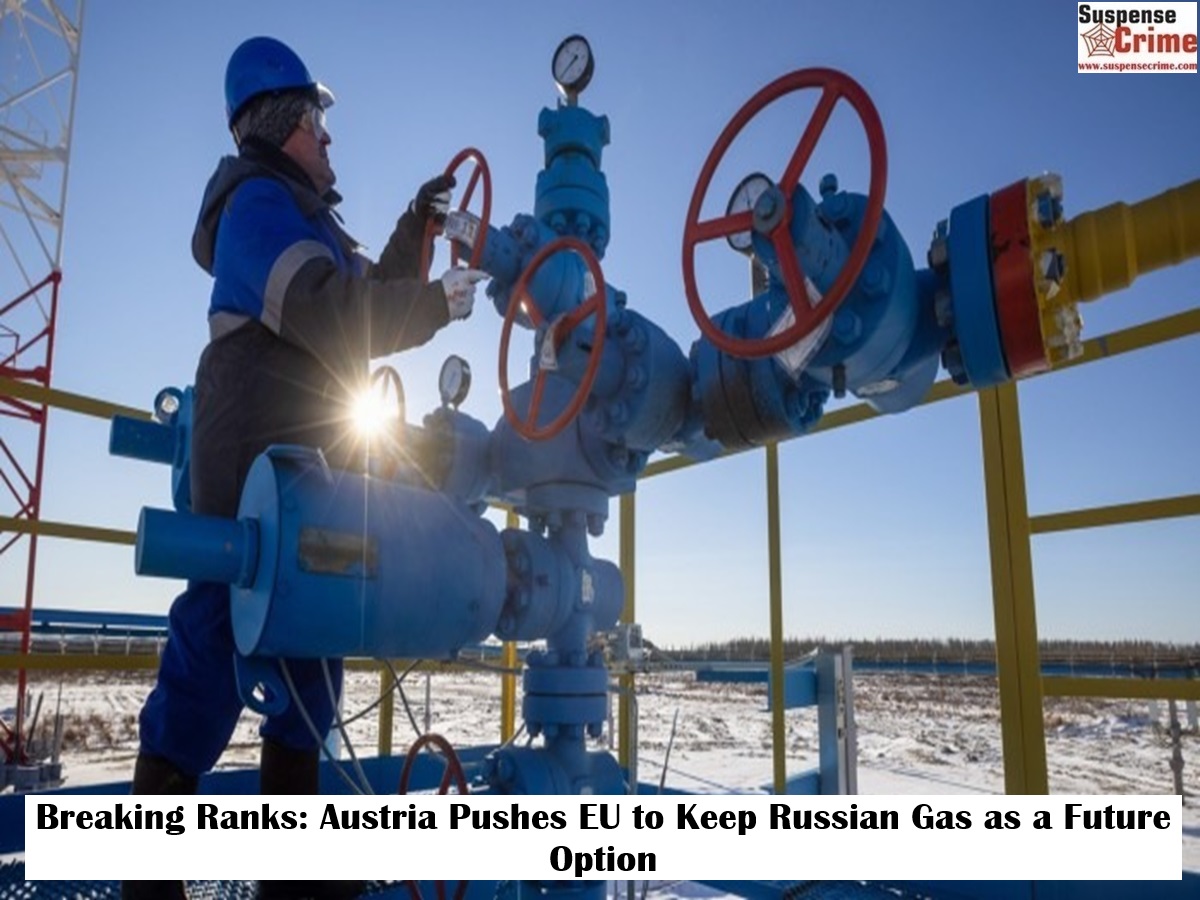
Suspense crime, Digital Desk : In a move that challenges the European Union's united front against Moscow, Austria is urging the bloc not to permanently shut the door on Russian natural gas, even after the war in Ukraine ends.
Austria's Energy Minister, Leonore Gewessler, argued that while the immediate goal is to completely wean the EU off Russian energy, a pragmatic long-term strategy requires keeping all options on the table. She stated that once the war is over and if Russia returns to being a "rule-based state," it could once again be considered one of many suppliers in a diversified European energy market.
This stance puts Vienna at odds with the mainstream EU position, which is driven by a strong political will to permanently sever energy ties with the Kremlin as a consequence of its aggression. Many member states believe that relying on Russian energy in the future is untenable, regardless of the war's outcome.
However, Austria's position is shaped by its own deep-seated energy reality. The landlocked country remains one of the last in Western Europe to be heavily dependent on Russian gas, which is still being piped in through Ukraine. This dependence has made its transition away from Russian supply more complex and costly than for other nations.
Gewessler emphasized that the future should be about diversification, not exclusion. "A diversified supply means we can draw from many countries and regions," she explained, implying that a future, reformed Russia could be part of that mix.
This controversial plea highlights the deep divisions within the EU as it grapples with a fundamental dilemma: how to balance the moral and geopolitical imperatives of punishing Russia against the pragmatic need for long-term energy security.
Read More: High-Stakes Drama at Sea Pakistani Oil Tanker Shalamar Defies US Blockade in Strait of Hormuz