

 Priyanka Tiwari
 Share
Share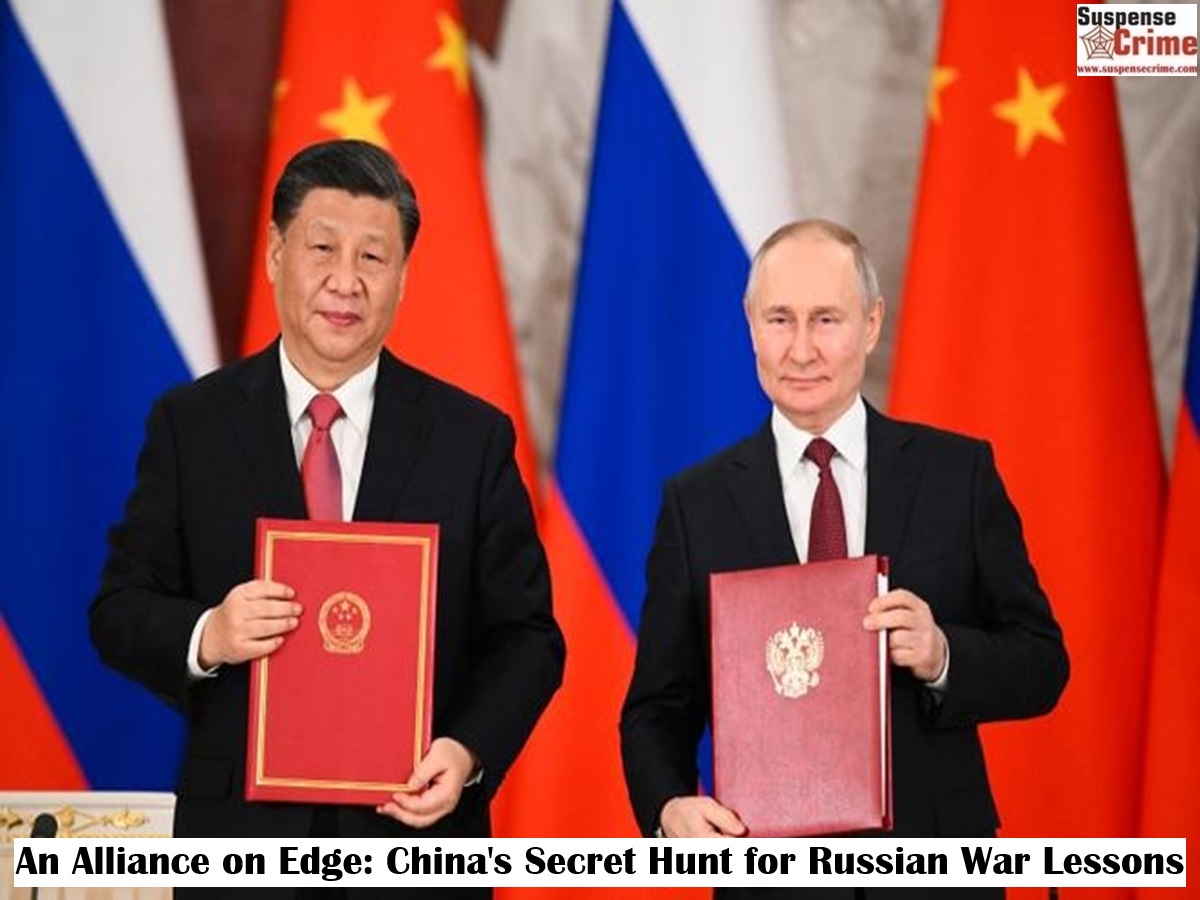
Suspense crime, Digital Desk : Publicly, China and Russia tout their "no-limits partnership" as an unbreakable front against the West. But behind the diplomatic handshakes and unified rhetoric, a tense game of spy-versus-spy is unfolding, with Beijing's intelligence agencies aggressively targeting their most important ally.
According to Western intelligence officials and Russian security sources, China is systematically spying on Russia to extract critical military secrets and lessons from the ongoing war in Ukraine. For Beijing, Russia's invasion offers a real-world laboratory to study modern warfare, providing invaluable insights into the performance of advanced weaponry, the effectiveness of combined arms tactics, and the vulnerabilities of a major military power in a protracted conflict. This intelligence is seen as crucial for China’s own military modernization and its strategic planning, particularly concerning Taiwan.
This covert hunt for information has put Moscow's security apparatus on high alert. Russia's Federal Security Service (FSB) is reportedly in a state of "paranoia," working overtime to identify and neutralize Chinese spies operating within its defense and technology sectors. In recent years, several Russian scientists, including experts in hypersonic missile technology, have been arrested and charged with treason for allegedly passing state secrets to Chinese contacts.
Despite this undercurrent of deep distrust, Russia finds itself in a difficult position. Heavily sanctioned by the West and diplomatically isolated over its actions in Ukraine, Moscow has become increasingly dependent on China as its primary economic and political partner. China is a vital buyer of Russian energy and a key supplier of goods that Russia can no longer source from Europe or the United States.
This dependency forces Russia to tolerate a level of Chinese espionage that it would otherwise aggressively counter. While the FSB works to protect Russia's most sensitive secrets, the Kremlin cannot afford a public fallout with Beijing. The result is a fragile and pragmatic alliance built not on trust, but on shared opposition to the West and mutual self-interest. As Russia increasingly slips into the role of a junior partner, it must navigate a complex relationship with an "ally" that is simultaneously a friend, a customer, and a spy.
Read More: Strait of Hormuz Crisis: Three Ships Targeted in Fresh Gunfire, Global Energy Supply at Risk


_1646667941_100x75.jpg)
_133712142_100x75.jpg)