


Former Deputy PM And Former Home Minister Sentenced To Prison In Shocking Fake Bhutanese Refugee Scam
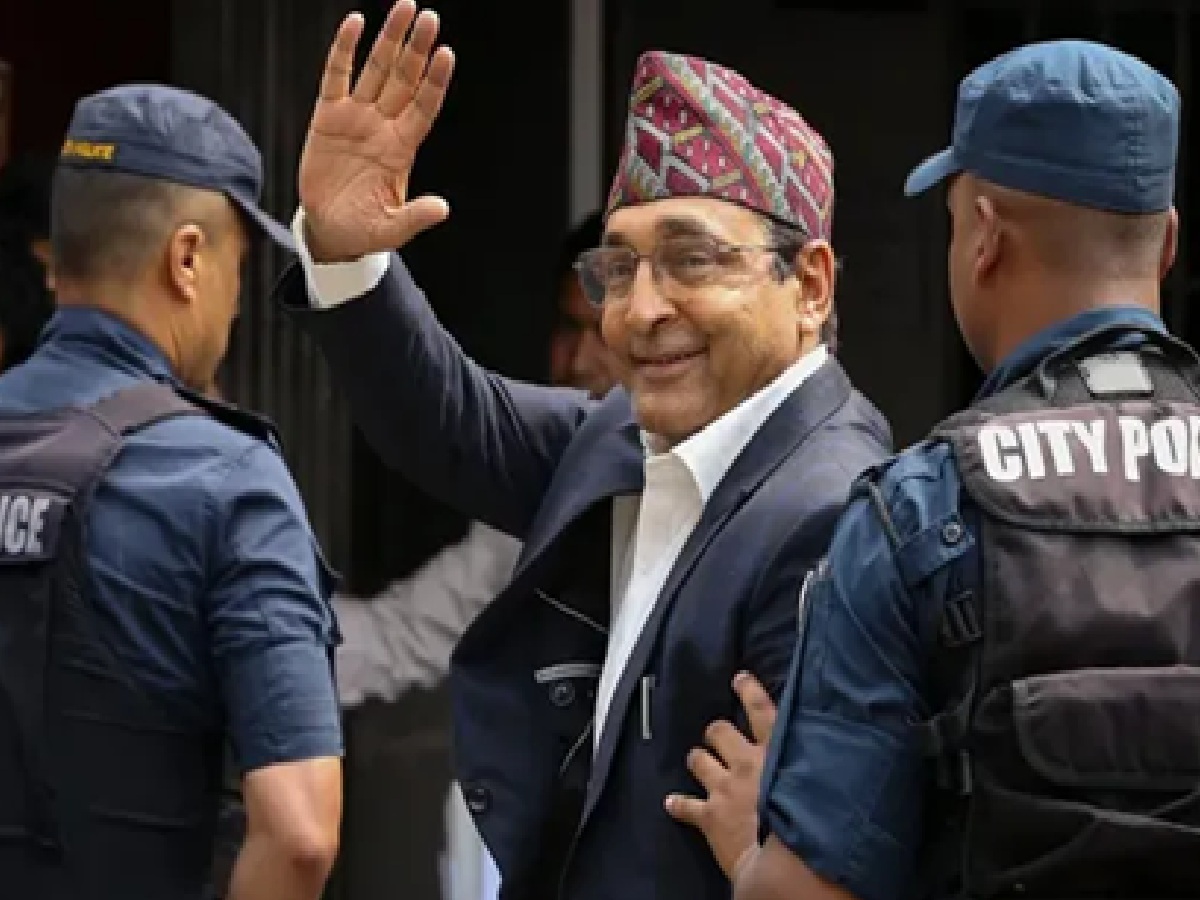
In a groundbreaking judicial decision that has sent structural shockwaves through the political corridors of South Asia, the Kathmandu District Court has handed down definitive prison sentences to some of the country's most powerful political heavyweights. Former Deputy Prime Minister Top Bahadur Rayamajhi and former Home Minister Bal Krishna Khand have both been officially convicted and sentenced to jail terms for their direct involvement in an international human trafficking and forgery syndicate. Widely labeled as the "fake Bhutanese refugee scam," the institutional racket involved fabricating official state documentation to illegally deport individuals to the United States under the guise of Nepalese nationality.
The Historic Court Verdict: Judge Imposes Jail Terms and Severe Financial Penalties
The high-stakes legal proceedings culminated in a definitive ruling delivered by a single bench of Kathmandu District Court Judge Tej Bahadur Khadka. The court sentenced former Deputy Prime Minister Top Bahadur Rayamajhi to four years of rigorous imprisonment alongside a corporate fine of 40,000 Nepali Rupees. Concurrently, former Home Minister Bal Krishna Khand was handed a two-year prison sentence accompanied by a statutory penalty of 20,000 Nepali Rupees. In a highly critical observation recorded within the final judicial order, Judge Khadka stated that the actions of the high-ranking public officials directly degraded the international sovereignty, ethical reputation, and structural dignity of Nepalese citizenship.
Anatomy of the Syndicate: Chronology of the Legal Crackdown and Charge Sheets
The operational exposure of this cross-border racket began on May 24, 2023, when state prosecutors formally filed a complex omnibus case targeting 30 high-profile individuals. The prosecution brought forward severe charges encompassing systemic forgery, corporate fraud, organized crime, and treasonous acts against the state. As the deep-rooted investigation progressed over the months, state intelligence cells uncovered deeper financial trails, leading to the filing of two crucial supplementary charge sheets in May and July of 2024. Following comprehensive cross-examinations, the district court successfully convicted 16 primary accused individuals, acquitted seven due to a lack of immediate corroborative evidence, and issued indefinite stay orders against eight active fugitives until federal police execute their pending arrest warrants.
Parallel Security Operations: International Counterfeit Currency Ring Busted in Butwal
Simultaneous to the political anti-corruption trials, the Nepalese security apparatus achieved a massive victory against trans-border financial crime networks in the southern lowlands. Acting on precise intelligence tip-offs, specialized police units launched a high-risk raid on a residential safehouse located in Butwal city, situated within the Lumbini Province. The tactical operation successfully dismantled a major currency counterfeiting factory, resulting in the immediate arrest of six cross-border operatives. Among those intercepted by the police was 49-year-old Basu Mitra Anand, a resident of West Bengal, India, who was operating the manufacturing hub in close coordination with five Nepalese nationals.
Infrastructure Seized: High-Tech Printing Machinery Intercepted by Police
Senior security officials supervising the regional raid confirmed that the specialized task force successfully recovered and seized high-quality counterfeit banknotes holding a face value of 622,000 Nepalese Rupees. The criminal cell had established a sophisticated, assembly-line printing laboratory designed to easily deceive rural banking systems. Alongside the massive haul of fake physical bills, the police confiscated heavy industrial currency printing machinery, commercial-grade color photocopying units, high-performance laptops preloaded with currency design software, and advanced digital scanners. The arrested international group is currently being held under maximum security detention while intelligence agencies investigate deeper financial links extending into neighboring Indian states.



_125698746_351x234.jpg)
_805577291_351x234.jpg)