Mujtaba’s Trillion-Dollar Gambit: Why Iran is Moving to Tax the World’s Digital Data
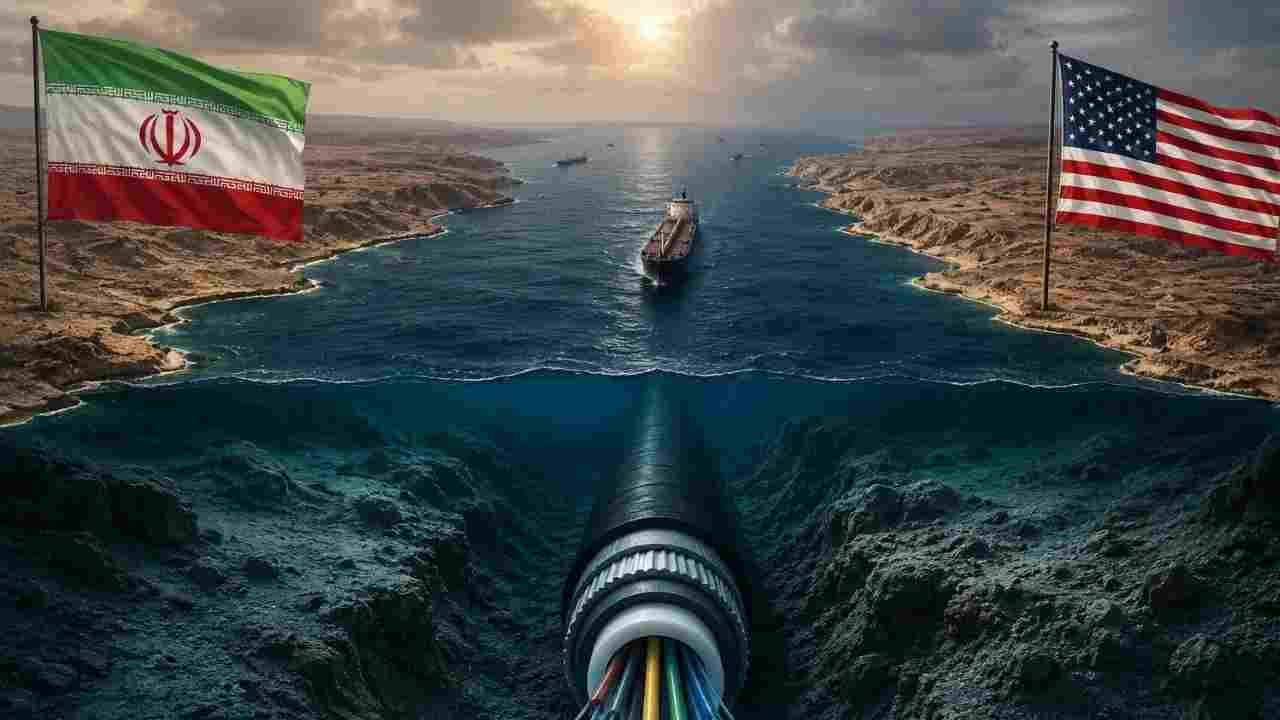
In the high-stakes chess match for control over the Strait of Hormuz, the rules are changing. For decades, the world has viewed this narrow strip of water primarily as a "choke point" for global oil. But a new strategy—often referred to as "Mujtaba’s Trillion-Dollar Gambit"—is shifting the focus from barrels of crude to terabytes of data.
The Double Blockade
Currently, the Strait of Hormuz is under a unique "double blockade." On one hand, Iran controls the physical passage, requiring ships to pay a "toll tax" to transit through its waters. On the other hand, the Donald Trump administration's naval blockade has severely restricted Iran’s ability to export its own oil. To compensate for this massive loss in oil revenue, Tehran is now looking toward a new asset: Digital Data.
Taxing the "Digital Ocean"
Iran is reportedly preparing to levy a tax on the fiber optic cables lying on the seabed of the Strait of Hormuz. Here is why this is a global game-changer:
Financial Lifeline: These underwater cables carry approximately $10 trillion in financial data every day, including SWIFT banking messages, stock market trades, and international money transfers.
The Jurisdiction Argument: Iran points to the UN Convention on the Law of the Sea (UNCLOS). While Article 34 ensures "transit passage" for ships, Article 79 grants a coastal state the right to set conditions for cables entering its territorial waters.
The "Permit" Plan: Under a proposed two-phase plan, tech giants like Meta, Amazon, and Microsoft would be required to obtain annual permits and pay fees to Iran for their data to pass through the Strait.
The Threat of a Digital Blackout
The move isn't just about revenue; it’s about leverage. Iran has hinted that if these "digital tolls" aren't paid, the physical security of the cables could be at risk.
The Strait of Hormuz is home to critical cables like FALCON, TGN-Gulf, GBI Bridge, and IMEWE. These are the digital lifelines for the Middle East:
Qatar: 99% of its international internet traffic depends on these cables.
Kuwait & Bahrain: Around 95% dependency.
UAE & Saudi Arabia: Between 85% to 90% dependency.
If these cables were damaged or "switched off" by the IRGC, it wouldn't just be an inconvenience—it would be a Digital Blackout. Banking sectors would freeze, businesses would stall, and the regional economy could face a standstill.
Control Beyond the Water
Iran’s strategy also includes a plan to ensure that only Iranian companies are allowed to maintain and repair the cables within their territory. This would give Tehran unprecedented monitoring capabilities and physical control over the internet traffic connecting Europe to Asia.
The conflict in the Middle East is no longer just about missiles and warships; it is evolving into a war over clouds and cables. As Donald Trump seeks to tighten the economic screws on Tehran, Iran is using its geography to turn the world's digital economy into a hostage. Whether this "digital lock" will force the world to the negotiating table or lead to further escalation remains the most critical question of 2026.



_124973916_351x234.jpeg)