
 Priyanka Tiwari
 Share
Share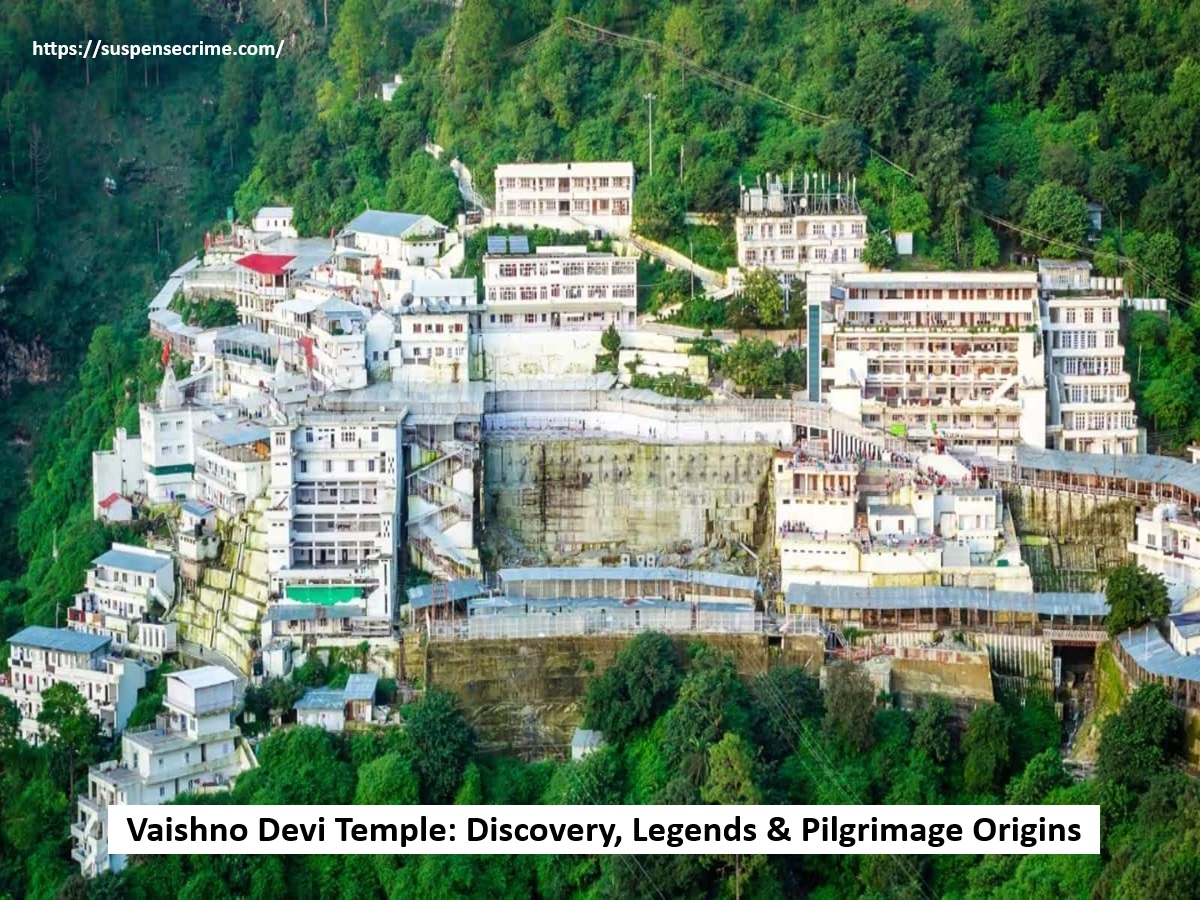
Suspense crime, Digital Desk : Vaishno Devi News Updates: The Mata Vaishno Devi Temple holds a very significant religious position in India. Every year, hundreds of thousands of devotees visit to pay their respects. This temple which is located at Katra in Jammu and Kashmir lies on Trikuta Mountain. It requires a 14 kilometer hike to get to the temple. A key place in this pilgrimage is the Ardhkunwari Temple also known as Garbhjoon Cave.
Religious fais belief of Ardhkunwari temple
As per the beliefs, Mata Vaishno Devi meditated on the Ardhkunwari cave for a period of 9 months. People also believe that if devotees come to visit this cave, they attain liberation from the cycle of life and death. While this cave might be small, it is a popular saying that every devotee can get access to the cave. People also believe that offering prayers to this sacred place grants devotees happiness, peace and prosperity.
Who discovered Vaishno Temple
As per the Shri Mata Vaishno Devi Shrine Board, there are different versions about the origin and legend of Vaishno Devi, but all agree that the temple was discovered by Pandit Shridhar about 700 years back, who assisted Mata in organizing a Bhandara at the particular location.
Bhandara of Shridhar and Killing of Bhairav Nath
In a legend, it is told that Shridhar, a devout follower, was contemplating with a feast through the invocation of Vaishno Mata who in his vision shone as a girl and told him to celebrate a Bhandara. With the blessings of Mata, Shridhar did Shridhar feasted Tantrik Bhairav Nath also partook of it. To which Tantric Bhairav Nath asked for a feast of meat and wine, ignored by Mata Vaishno, leading to him chasing Yard Mata.
There is a belief with regard to what occurred after this that Mata Vaishno Devi began her trek towards Trikuta Mountain while being escorted by Hanuman Ji for added safety. Along the journey, in need of a drink, Hanuman ji was quenched of his thirst as Mata summoned forth a waterfall from the rocks with ease. This landmark is known to History as Banganga.
Following this, she engaged in a period of prayer at the Ardhkunwari cave which enabled her to ultimately slay Bhairav Nath at the entrance. As he died, Bhairav Nath pleaded for mercy. Thereafter, Mata Vaishano granted the wish that “I will ensure that no devotee pays the mandatory fee after this I will require a tribute from every devotee who comes to me. That tribute is to visit the shrine of Bhairav Nath as.”What events led Shridhar to the discovery of the temple of Mata Vaishno?
As noted by the Shri Mata Vaishno Devi Shrine Board, Shridhar was distraught when Mata Vaishno Devi left for Trikuta Parvat in order to evade the horror inflicted by Bhairav Nath. During the rites of Bhandaara, Mata transformed herself and Shridhar was left behind. As Devotees paid tribute, offered food, and chanted joyous hymns, he felt detached and as if the epicenter of his existence had been wrenched away. For the next few days, he refused to eat and even drink water. Shridhar stayed locked up in his room for days on end pleading for her return.
One night, during his period of relentless devotion, Mata Vishnavi appeared to him in a dream and instructed him to visit the region above the ground in Trikuta Mountain. At that holy cave, him and his eyes were anticipated. Blessing him with sight, Mata guided him to the holy cave and commanded him to break his fast.
With the desire of seeing holy Mata, he set off to the mountains. The path was tricky and many times lost all sense of direction, but his dream served as his compass. Guided by his fevered dreams, he finally reached the cave where he set eyes on a unique stone. To his astonishment, three heads had sprouted on the stone.
This was the instance when the Mother manifested in her divine form and granted darshan to Shridhar. As some believe, the threefold powers of Mother Mahasaraswati, Mahalakshmi ,and Mahakali collectively manifested in this cave and her gave her holy darshan to the three ends of the sacred rock in the form of holy idols.
The Mother blessed Sridhar with four sons and gave him the right of worship at this holy place. He was also commanded to proclaim the fame of the holy pilgrimage to the people.
Kashmir became a source of great revenue in the summer months, as tourists from other parts of India flocked to the region, especially to the areas surrounding Vaishno Devi Shrine.
Travel by air: The nearest airport to Vaishno Devi shrine is Jammu Airport and Katra is only roughly five hundred kilometers away. Fron here, taxis and buses can used to Katra.
Travel by Road: Katra is conveniently connected to many parts of the country via National Highways and buses.
Ways to go from Katra to the Bhawan (temple)
Trek: Katra to Vaishno Devi Bhawan is in the range of 12 to 13 kilometers. The trek is on a well maintained pathway and is quite easy.
Yatra Registration (Yatra Parchi): It is compulsory to collect a Yatra Parchi (Yatra Permit) from Katra before heading on the journey to the temple. This Parchi can be collected at no charge from the Yatra Registration center at Katra.
Special Features and Additional Services
Horses and Palanquins: For the aged and other less mobile travelers, horses and palanquins are readily accessible.
Battery Car Service: Vehicles (battery cars) specifically for the aged and disabled also operate from Ardhkunwari to Bhawan.
Helicopter Service: The helicopter service is in operation from Katra to Sanjhi Chhat. There one must walk about 2.5 kilometers to the building.
The Vaishno Devi Yatra has been made a whole lot simpler
Construction of a modern ropeway costing ₹300 crore has been taken up with the objective to simplify and bypass Mata Vaishno Devi's Katra to Bhawan journey. The newly proposed ropeway from Katra will end at Sanjichhat, helping pilgrims get rid of the long arduous climb.
Currently, devotees need to walk non-stop for 6 to 7 hours to reach Vaishno Devi Bhawan. For those who ride a horse or palanquin, the journey also takes around 4 hours. Despite there being a helicopter service, pilgrims are required to walk 2.5 km from the Sanjhi Chhat to the Bhawan.
After this proposed ropeway is built, the journey will take only 1 hour. Passengers, including the elderly and disabled, will especially benefit from the time saved.
According to officials of Shrine Board, the experience of Vaishno Devi Yatra will be completely transformed with the introduction of this ropeway. Annual pilgrimage numbers are anticipated to increase as well. Expect the project to be completed in the year 2026.
Read More: Success or Warning? What the Growth of Your Navratri Barley Says About Your Future