 Priyanka Tiwari
 Share
Share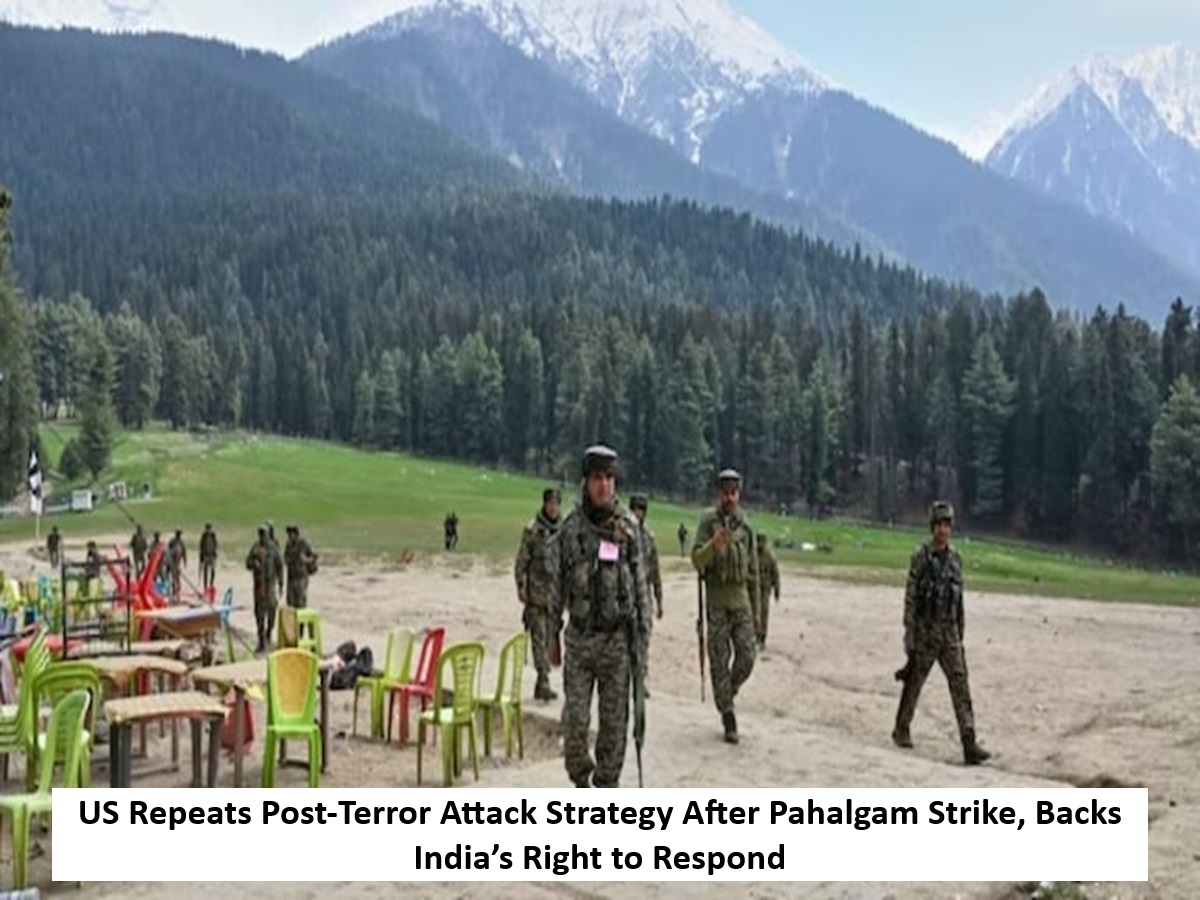
Suspense crime, Digital Desk : In the wake of the recent Pahalgam terror attack, the United States has taken yet another familiar approach, as witnessed during the 2016 Uri and 2019 Pulwama attacks. While endorsing a limited counter-terrorism approach by India, the US is also restraining New Delhi and Islamabad from escalating the situation further and advocating direct communications between the two nations.
Once again, the US response follows an approach: endorsing India's self-defense moves while subsequently pressuring Islamabad to take decisive action against the terrorism emanating from its borders.
US urged caution while India vowed for a stern response
A strong reaction to the Pahalgam attack was also promised by Prime Minister Modi alongside Home Minister Amit Shah. Defence Minister Rajnath Singh further went on to explicitly name Pakistan as the nation that reigns as the global fountainhead of terrorism and unemployed rationalists.
As previously noted with other attacks, US Secretary of defense voluntarily offered Singh to settle down—Washington stands with New Delhi on India exercising her self-defensive rights. JD Vance, the other vice, echoed the need to give space to New Delhi but urged restraint in India taking a more aggressive stance so as to not turn it into a wider quagmire, unlike the response in 2019 post Pulwama.
Historically, there seems to be a consistent pattern in US diplomacy with regard to South-Asian relations.
As recently as 2019, the Balakot airstrikes saw fierce debate among US policymakers. Mike Pompeo, the then-Secretary of State, along with President Trump were on record supporting India's retaliatory action as “counter-terrorism” while urging restraint to avoid further escalation. This appears to be the same message current officials like Defense Secretary Marco Rubio and Vice President Vance seem to be echoing now.
This is also consistent with the stance taken by the US in 2016 post the Uri attack, where Kerry, the then-Secretary of State, urged an Indian leadership keen on vigorous military response to “exercise restraint and talk.”
These are undoubtedly favorable steps for Washington which has once again reiterated its long-standing message: Pakistan should take decisive action.
The United States, for the second time, implored Pakistan to take “meaningful actions” against defined terrorist elements operating from Pakistani soil. This was underscored by Vice President Vance’s remark that it is imperative for Pakistan to work with India in order to bring the offenders to justice. This was also the reaffirmed stance in 2016 and 2019 whereby the US still pressured Pakistan to take “meaningful action” against terrorism.
These calls for cooperation are however rendered meaningless as India has resolved not to entertain Pakistan for joint investigations, citing the lack of constructive outcomes post-2016 Pathankot Attack.
Read More: Why the Silence? Activist Arif Aajakia Slams Global Apathy on Pahalgam Terror Attack Anniversary