
 Priyanka Tiwari
 Share
Share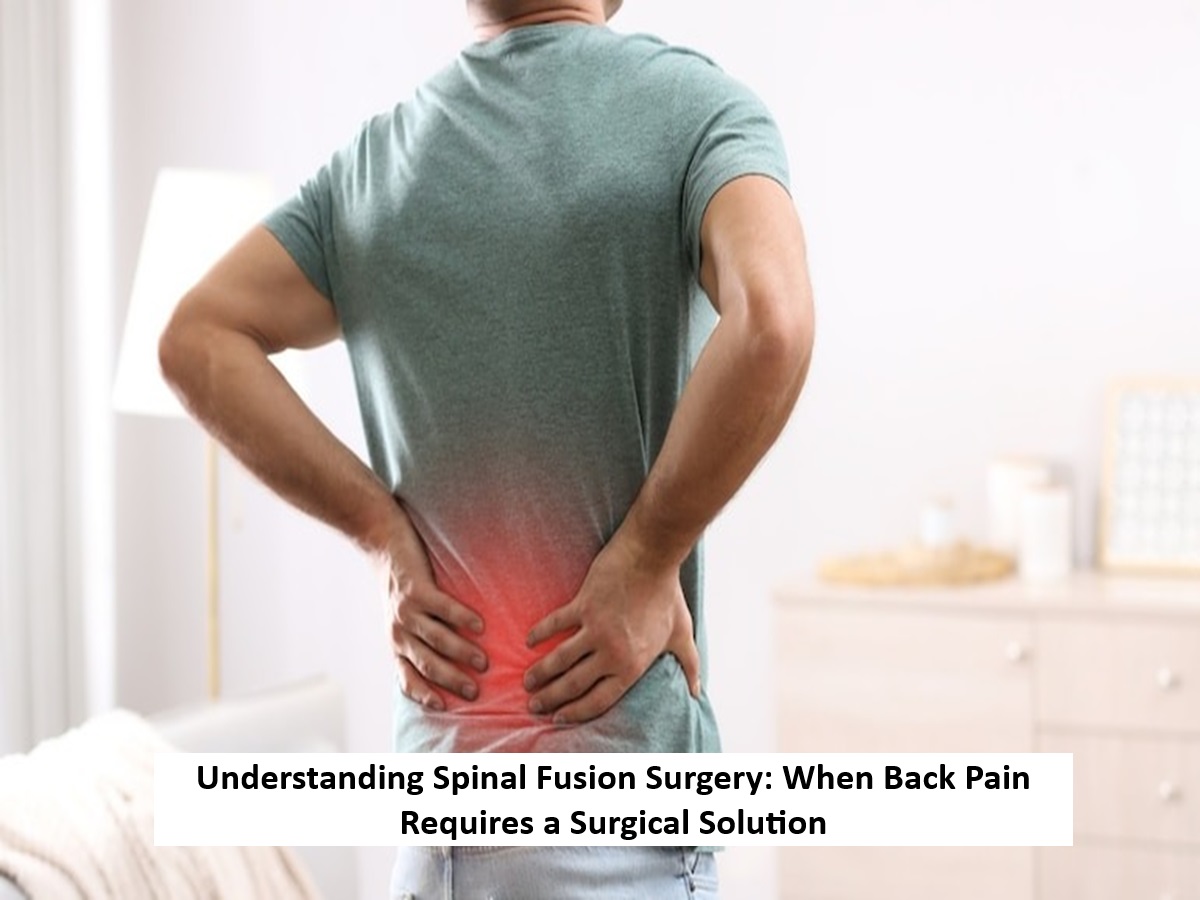
Chronic back pain can take a toll physically and mentally; it can be debilitating. Surgical spinal fusion may be the answer after medications and physiotherapy have been exhausted. This procedure entails surgically blocking movement between the painful spinal segments by joining two or more vertebrae, thereby minimizing motion and stabilizing the spine.
Senior Consultant, Orthopaedics and Spine Surgery at Sarvodaya Hospital Faridabad, Dr. Ashish Tomar, notes that spinal fusion is usually performed for back pain secondary to disc degeneration, spinal stenosis, scoliosis, and even more severe causes like fracture, vertebral tumors, or infectious processes.
“The objective is to significantly reduce, if not completely eliminate, the movement in the problem site. This way, pain and instability can be managed,” states Dr. Tomar. “Surgery may be required if conservative treatment options are exhausted and symptoms like numbness, tingling, and weakening muscles start to interfere with ordinary life.”
Determining the Most Suitable Surgical Technique
Every spinal fusion case differs from each other. The surgical technique used will depend on the individual’s condition, the patient’s spinal anatomy, and the goals of treatment, whether decompression of nerves and stabilization of the spine is necessary or correcting structural alignment of the spine.
“Every surgical option has certain beneficial aspects, and this choice greatly influences how a patient recovers and the outcome,” Dr. Tomar adds. For instance:
Anterior Lumbar Interbody Fusion (ALIF): The surgeon approaches the spine from the abdomen, which aids in strategically removing the disc and placing the graft with very little disturbance to the back muscles.
Posterior Lumbar Interbody Fusion (PLIF): The approach is from the back where the spine is accessible to directly insert the graft, but in this case, there is greater exposure of the muscle.
Transforaminal Lumbar Interbody Fusion (TLIF): A modification of PLIF that approaches the body at an angle to protect the nerves better during surgery.
Lateral Lumbar Interbody Fusion (LLIF or XLIF): An approach that harms the patient the least as the spine is approached from the side, leading to less damage to tissues and faster healing.
Oblique Lumbar Interbody Fusion (OLIF): The entry to the spine is done through blood vessels and muscles at an angle which is beneficial because vessels do not suffer much damage which minimizes the time needed for recovery and healing leading to a speedy recovery for many patients.
“Imaging as well as patient work up is done before to determine the best approach,” explains Dr. Tomar. “Successful fusion can significantly enhance mobility and quality of life.”
Read More: Get Korean Glass Skin at Home: The ₹5 Secret Ingredient for a Glowing Night Cream