
 Priyanka Tiwari
 Share
Share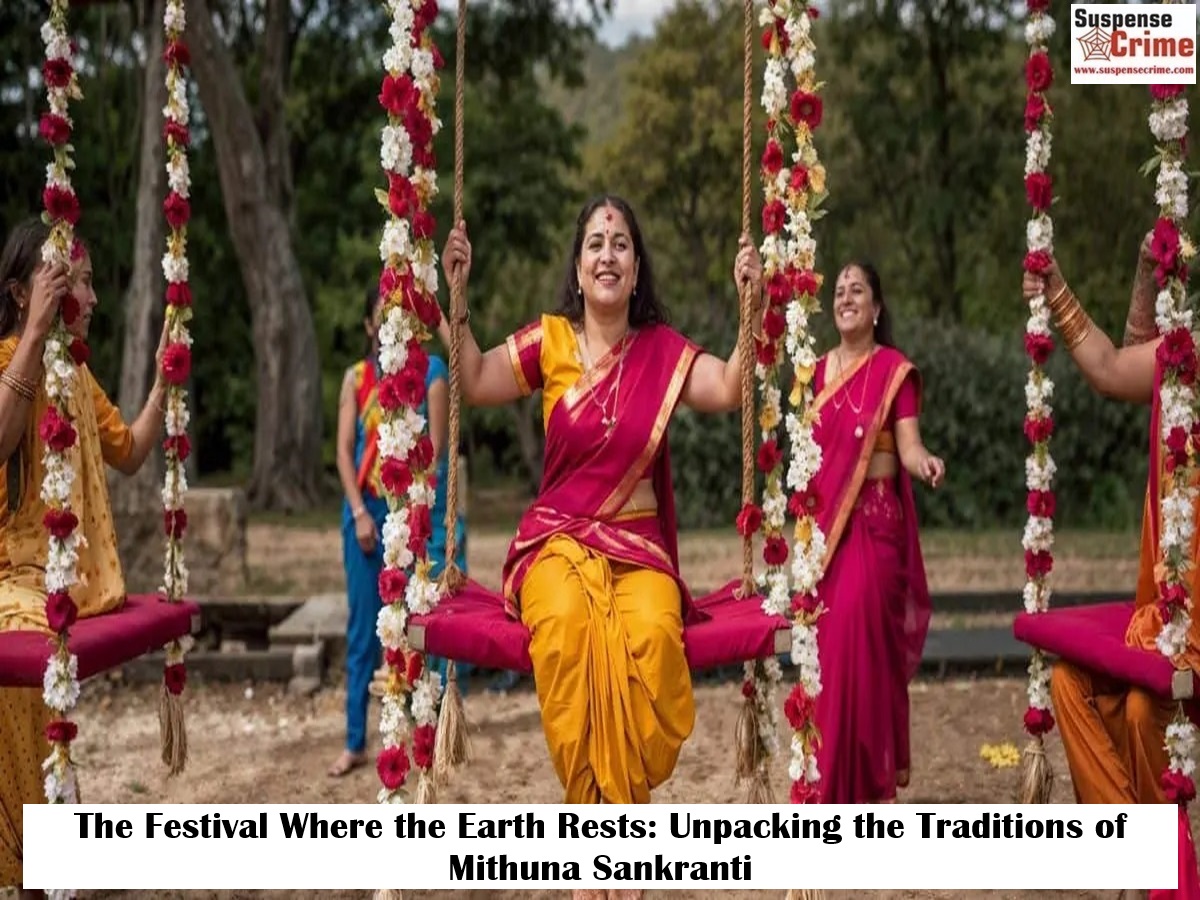
Suspense crime, Digital Desk : In the vast and colorful tapestry of Hindu festivals, some are tied not just to gods and goddesses, but to the rhythm of the cosmos itself. Mithuna Sankranti is one such festival, an event that marks the Sun's annual journey into the zodiac sign of Gemini (Mithuna). While observed across India with prayers and charity, it is in the state of Odisha that this celestial event blossoms into a unique and beautiful celebration of the Earth itself, known as Raja Parba.
On June 15, 2025, as the Sun enters Mithuna, many will mark the day with traditional rituals. The faithful will take a holy dip in sacred rivers, offer prayers to the Sun God, and perform acts of charity, donating clothes and food to those in need. These are acts of devotion and purification common to all Sankranti festivals.
However, the true heart of Mithuna Sankranti beats in Odisha, where it kicks off a four-day festival that honors Bhudevi, or Mother Earth. According to ancient belief, these first three days are the time when Bhudevi undergoes her annual menstruation—a symbolic period of rest, rejuvenation, and preparation for her future fertility with the coming monsoon rains.
This belief transforms the festival into a profound act of ecological reverence. All agricultural work comes to a standstill. The ground is not to be plowed, dug, or disturbed in any way. It is a time to let the Earth heal and rest, untouched.
This respect for the feminine principle extends to the women of the community. Raja Parba is a joyous celebration of womanhood. Girls and women are given a break from household chores. They dress in new clothes, adorn their feet with alata (a red dye), and spend their days swaying on decorated swings hung from tree branches, singing traditional songs. Special delicacies are prepared, most famously the Poda Pitha, a slow-cooked cake made of rice, jaggery, and coconut, baked in earthen ovens.
Mithuna Sankranti, through the lens of Raja Parba, is therefore more than just an astronomical event. It is a beautiful reminder of our deep connection to the Earth, a celebration of fertility and womanhood, and a lesson in the importance of giving nature the rest it deserves. It is a time when the heavens and the Earth are honored in unison.
_1570701464_100x75.jpg)
_1563449287_100x75.jpg)

_1025409548_100x75.jpg)
_1681775372_100x75.jfif)