
 Priyanka Tiwari
 Share
Share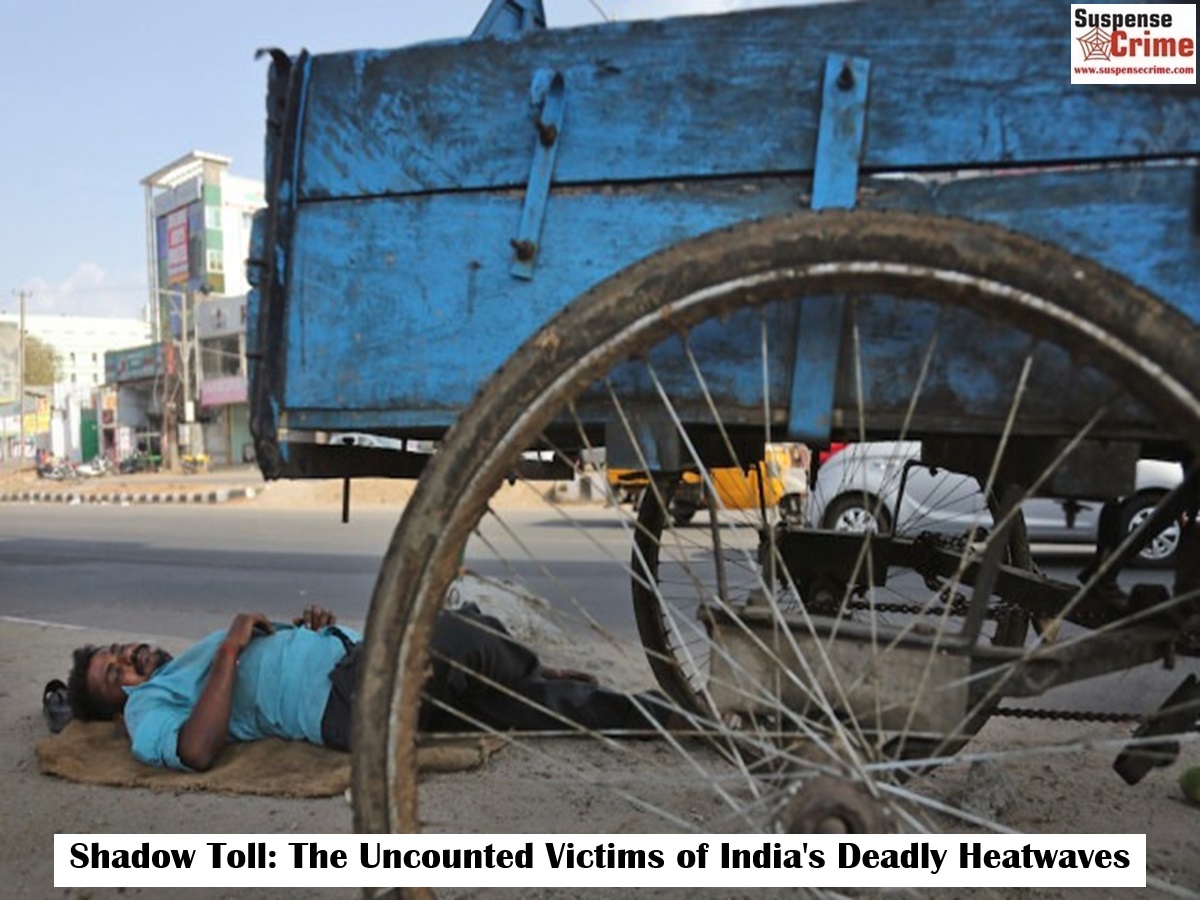
Suspense crime, Digital Desk : Across India, record-shattering heatwaves are becoming an annual ordeal, pushing temperatures to lethal extremes. While official reports list a number of heat-related casualties, a much larger and more tragic story is going untold. The true death toll from the intense heat is likely magnitudes higher than what is being reported, a hidden crisis affecting the nation's most vulnerable.
The core of the problem lies in how deaths are recorded. When a person succumbs during a heatwave, the immediate cause of death is often certified as a heart attack, kidney failure, or respiratory distress. While extreme heat is the trigger that pushes the body past its breaking point, "heatstroke" or "hyperthermia" rarely appears on the death certificate. Doctors often lack specific protocols or training to link fatalities to environmental heat, leading to a massive and systemic undercount.
The unseen victims of this data gap are often those on the margins of society. They are the construction laborers toiling under the sun, the farmers working in the fields, the rickshaw pullers, and the urban poor living in cramped, poorly ventilated homes that turn into ovens. These individuals often have pre-existing health conditions that are dangerously exacerbated by heat stress, yet their deaths are not officially counted as heat-related casualties.
This glaring lack of accurate data has severe consequences. Without a clear picture of who is dying, where, and under what circumstances, government interventions and Heat Action Plans (HAPs) remain generic and less effective. Policymakers cannot design targeted solutions—such as providing shaded rest areas, adjusting work hours for outdoor laborers, or setting up cooling centers in the most at-risk neighborhoods—if they don't know the true scope and nature of the problem.
Health experts and public officials are increasingly calling for urgent reforms. This includes implementing standardized protocols for certifying heat-related deaths, training medical professionals to recognize the signs of heat-exacerbated illnesses, and launching public awareness campaigns.
As climate change continues to intensify the frequency and severity of heatwaves, accurately counting every victim is not just a statistical exercise. It is the crucial first step toward creating effective policies, protecting the vulnerable, and saving lives in the face of a growing environmental health crisis.