










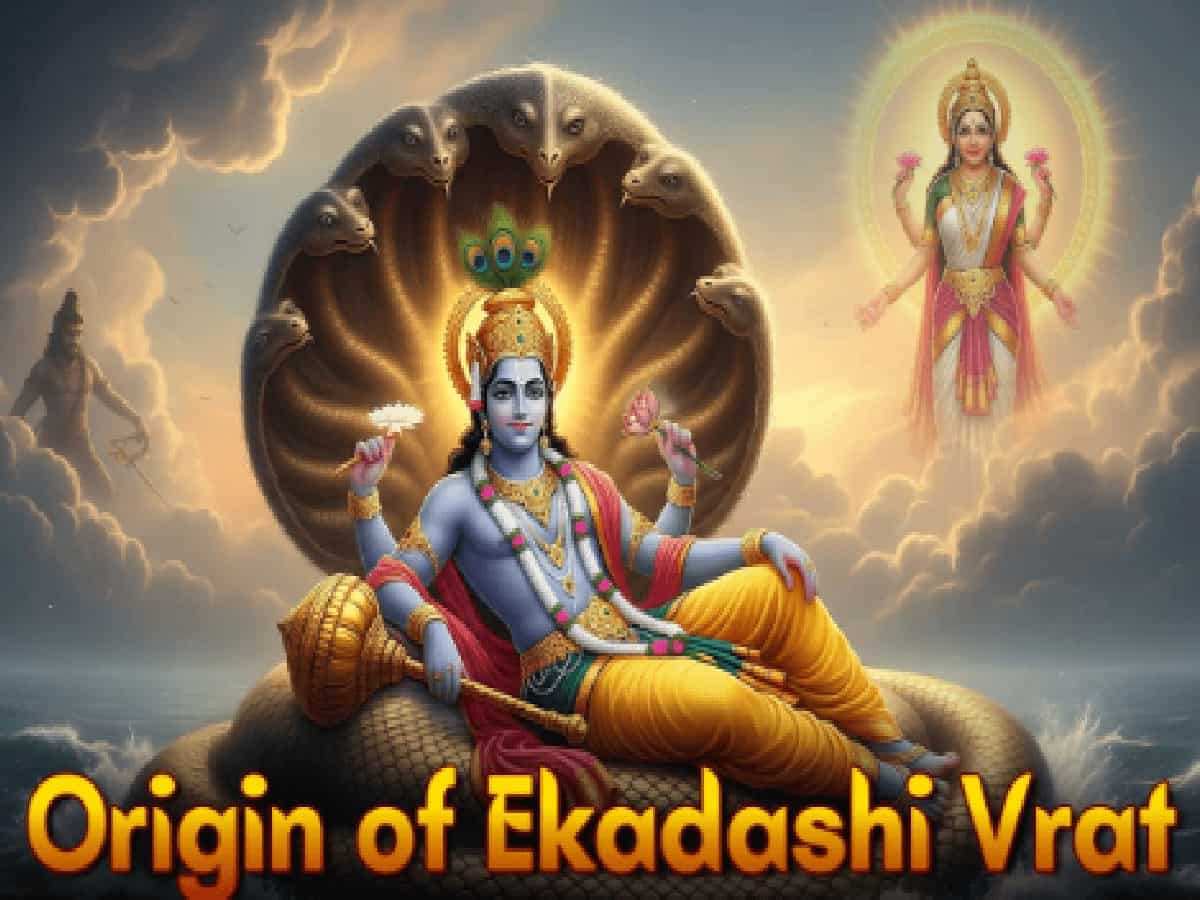
Ekadashi Origin Story: How the Goddess Emerged From Lord Vishnu
In Sanatan Dharma, Ekadashi—the eleventh lunar day (tithi) of both the waxing (Shukla Paksha) and waning (Krishna Paksha) fortnights of every Hindu month—is revered as one of the most spiritually potent days for fasting, self-restraint, and devotion to Lord Vishnu. Yet many observers who keep the fast twice every month are unaware that Ekadashi is not merely a calendar date, but a radiant warrior goddess (Devi Ekadashi) born directly from the divine energy of Lord Vishnu. Preserved in sacred Puranic texts such as the Padma Purana (Uttara Khanda) and the Brahmanda Purana, her manifestation explains both why the fast carries unmatched spiritual merit and why the annual cycle of 24 Ekadashis (or 26 in an Adhik Maas year) traces its origin to Utpanna Ekadashi—which falls next on Friday, December 4, 2026 (with the tithi beginning at 11:03 PM on December 3 and concluding at 11:44 PM on December 4). Across Uttar Pradesh—especially in state capital Lucknow and sacred spiritual centers such as Unnao, Kanpur, Prayagraj, and Varanasi, where temple congregations, Vaishnava households, and Panchang readers observe every Ekadashi with deep devotion—understanding the sacred legend behind Devi Ekadashi enriches both worship and observance.
The Demon Mura's Tyranny and Goddess Ekadashi's Manifestation From Shri Hari
According to Puranic tradition, a formidable demon named Mura (Murasura) once grew so powerful that he drove the deities out of heaven (Amaravati) and established his tyrannical rule over the celestial realms. Distressed by Mura's oppression, Devraj Indra and the celestials approached Lord Shiva for shelter; Lord Shiva advised them to seek the protection of Lord Vishnu, the preserver of cosmic order (Dharma). Responding to the gods' prayers, Lord Vishnu marched to battle Mura and his demonic legions. After a fierce, prolonged confrontation, Lord Vishnu withdrew briefly into a Himalayan cave (Himavati) to rest. Seizing what he believed was a moment of vulnerability, Mura crept inside the cave and raised his weapon to strike the sleeping Lord. At that exact instant, a dazzling, weapon-bearing goddess burst forth from Lord Vishnu's own radiant body. Challenging the arrogant demon with celestial might, she fought Mura fiercely and slew him—saving the cosmic order and protecting Lord Vishnu during his slumber.
| Sacred Aspect | Scriptural & Traditional Details |
| Scriptural Sources | Padma Purana (Uttara Khanda) and Brahmanda Purana |
| Origin of Devi Ekadashi | Emerged as a radiant, multi-armed goddess from Lord Vishnu's body inside a cave to slay the demon Mura. |
| Why Named 'Ekadashi' | Because she manifested on the eleventh lunar day (Ekadashi tithi) of the dark fortnight (Krishna Paksha) of Margashirsha. |
| Origin Vrat (Utpanna Ekadashi 2026) | Observed on Friday, December 4, 2026 (tithi from 11:03 PM on Dec 3 to 11:44 PM on Dec 4); Parana on December 5 (6:59 AM – 9:04 AM). |
| Core Boon Granted by Vishnu | Devotees who fast sincerely on Ekadashi are cleansed of past sins and attain liberation (Moksha / Vishnu's abode). |
How Lord Vishnu's Boon Launched the Sacred Ekadashi Vrat Tradition
When Lord Vishnu awakened and saw the slain demon Mura alongside the radiant maiden standing respectfully before him, he was deeply moved by her valor and devotion. Naming her Ekadashi because she had appeared on the eleventh lunar day of Margashirsha Krishna Paksha, Shri Hari invited her to ask for a boon. Placing the spiritual welfare of humanity above all personal desires, Goddess Ekadashi requested that any devotee who observes a sincere fast on her appearance day—and on every Ekadashi thereafter—be absolved of sins accumulated in life and granted salvation (Moksha) after death. Delighted by her selfless wish, Lord Vishnu blessed her vow, declaring that fasting on Ekadashi would stand supreme among all sacred observances—and marking the eternal beginning of the Ekadashi Vrat tradition.
Essential Guidelines for Observing Ekadashi Vrat With Devotion
-
Starting the Yearly Cycle: Because Utpanna Ekadashi commemorates the birth of Devi Ekadashi herself, scriptures regard it as the most auspicious day for devotees wishing to begin observing the Ekadashi fast for the first time.
-
Dietary Discipline and Sattvik Conduct: Observers abstain from rice, grains, legumes, onion, garlic, and tamasic foods from Dashami evening through Ekadashi, choosing either a waterless fast (Nirjala), fruit-and-milk fast (Phalahar), or simple grain-free meal according to health and capacity.
-
Worship and Dwadashi Parana: Worship centers on Lord Vishnu (and Goddess Lakshmi) with yellow flowers, incense, Tulsi leaves (plucked before Ekadashi), and chanting of Om Namo Bhagavate Vasudevaya, followed by breaking the fast (Parana) during the prescribed Dwadashi sunrise window on the following morning after offering food or charity to the needy






