Rajasthan Rajya Sabha Election 2026: Will BJP’s Masterstroke and Congress’s Internal Rift Reshape the Desert State's Politics?
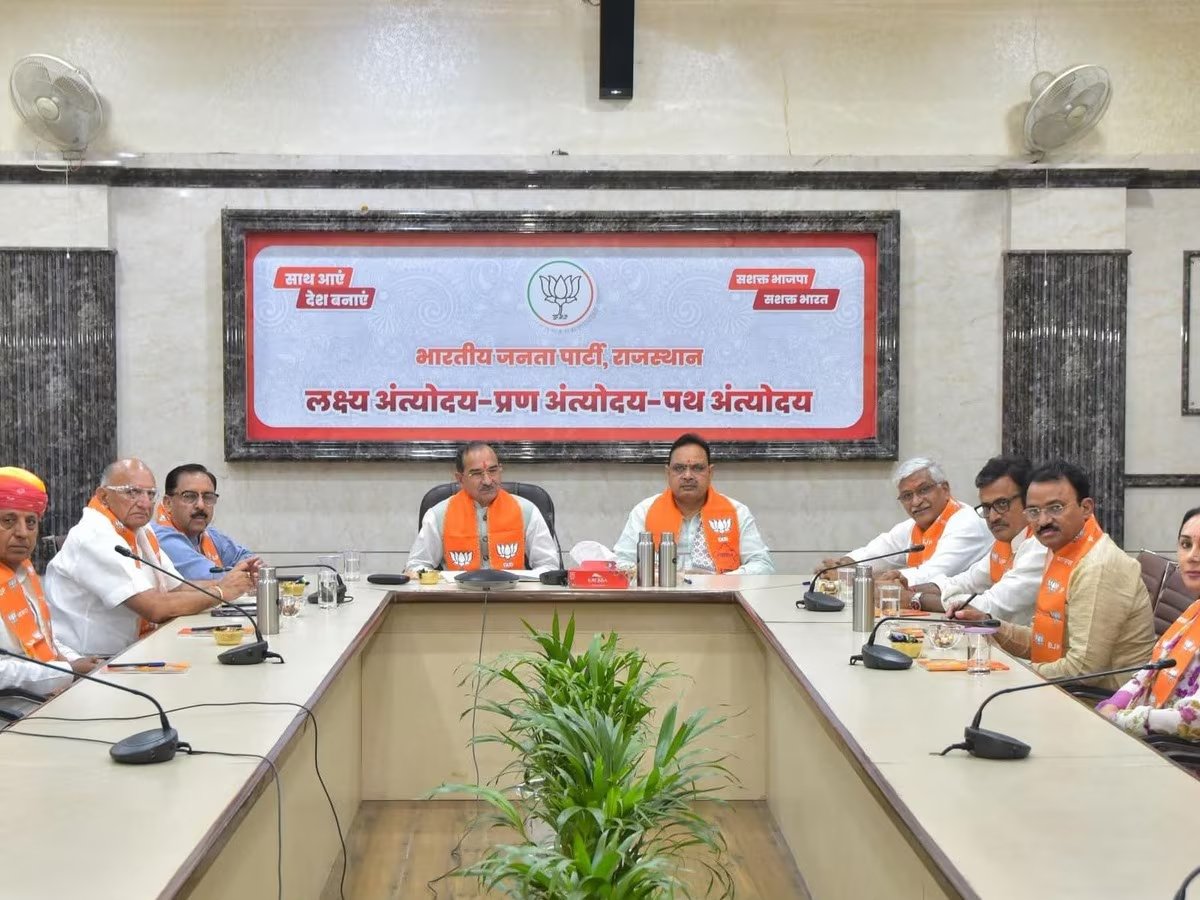
The political battlefield of Rajasthan is gearing up for another high-stakes showdown as the dates for the 2026 Rajya Sabha elections draw near. With three crucial upper house seats from the state vacant, political maneuvering, strategic calculations, and cross-party alignments have taken center stage. The current composition of the state assembly sets up a mathematical thriller where the ruling Bharatiya Janata Party (BJP) looks to maximize its gains, while the opposition Congress fights to hold its ground amidst simmering internal tensions.
The Assembly Arithmetic: Why Every Single Vote Counts
According to the current legislative strength in the Rajasthan Legislative Assembly, the numerical advantage heavily tilts toward the BJP. To secure a comfortable victory for a single candidate in a three-seat contest, parties must reach a specific quota of first-preference votes. Given the BJP's robust majority, the saffron party is comfortably placed to win two of the three seats without any external dependencies. Congress, on the other hand, possesses just enough numbers to guarantee a safe passage for one of its nominees. However, political analysts suggest that the actual contest might not be as straightforward as it appears on paper, with both camps keeping a close eye on independent lawmakers and smaller regional parties.
BJP’s Master Strategy to Force a Political Upset
The BJP leadership is renowned for turning predictable electoral battles into gripping contests, and the upcoming Rajya Sabha polls are expected to be no exception. Inside sources reveal that the party is formulating a meticulous blueprint not just to secure its own two seats, but to potentially exploit vulnerabilities within the opposition. By fielding a strategic third candidate or backing an influential independent, the BJP could test the loyalty of opposition lawmakers. The party's state leadership is working overnight to establish back-channel communication with disgruntled leaders outside their fold, aiming to engineer cross-voting that could completely alter the final outcome.
Congress Battles Intense Internal Lobbying and Candidate Dilemmas
While the BJP looks outward to expand its tally, the Congress party is deeply engrossed in managing its internal house. With only one seat within definite reach, the queue of high-profile ticket aspirants inside the Congress camp has grown exceedingly long. Senior leaders, including former union ministers, state heavyweights, and central observers, are actively lobbying with the party high command in New Delhi. Additionally, local cadres are strongly advocating for a native face rather than nominating candidates from outside the state, adding another layer of complexity to the party’s decision-making process.
The Minority Representation Factor and Social Balancing Act
Adding a major twist to the selection process, various social organizations and minority groups have significantly intensified their demands for representation. A substantial section within the Congress is pushing hard to field a minority candidate, arguing that the community has consistently backed the party during general and state elections. Concurrently, both the BJP and Congress are forced to execute a delicate social balancing act, trying to appease crucial caste equations including Rajputs, Jats, and Brahmins, keeping the upcoming local body and future assembly dynamics in mind.
What Lies Ahead for Rajasthan’s Political Future?
As the election machinery swings into full gear, the coming days will be critical for both major political blocks. Will the Congress manage to keep its flock together and smoothly send its lone representative to the parliament, or will the BJP pull off an unexpected coup through tactical brilliance? One thing is absolutely certain: the ripples of this Rajya Sabha battle will be felt across Rajasthan's political corridors for a very long time, setting the tone for the future of governance and opposition politics in the state.