

PM Surya Ghar: Over 2.23 lakh rooftop solar units installed under ULA model
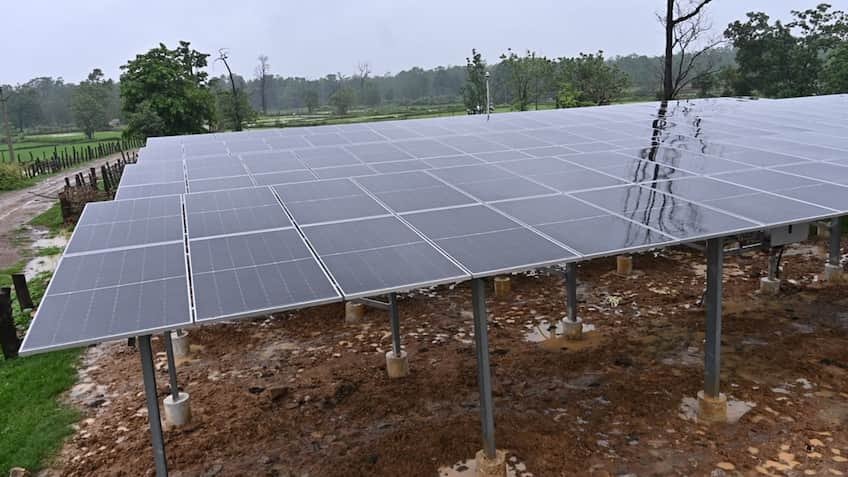
The government’s Utility-Led Aggregation (ULA) model under the PM Surya Ghar: Muft Bijli Yojana has crossed 2.23 lakh completed rooftop solar installations, with the model aimed at making solar power more accessible to low-income and vulnerable households.
According to the government, 2,23,446 installations have been completed across five states and Union territories, with Rs 525.69 crore in subsidies released. Andhra Pradesh leads with 1,41,242 installations, followed by Odisha with 73,867 and Telangana with 7,442.
The Ministry of New and Renewable Energy (MNRE) has also given final approval to the ULA model in 12 states and Union territories for around 16.58 lakh installations.
The government has set a target of 30 lakh rooftop solar installations through the ULA mechanism by March 2027. This will form part of the overall target of one crore rooftop solar installations under the PM Surya Ghar scheme.
What is the ULA model?
The ULA model is designed to address the financial and operational challenges that can prevent low-income households from installing rooftop solar systems.
Under the conventional model, households have to arrange the initial investment, select a vendor and manage the installation process. The ULA model shifts these responsibilities to state electricity distribution companies (DISCOMs) and state agencies.
DISCOMs aggregate demand from thousands of households in a particular area and conduct bulk tenders for rooftop solar systems. This can help reduce equipment costs and make the installation process simpler for consumers.
The model can also help states focus on low-income, below-poverty-line and other subsidised households requiring rooftop solar systems of up to 3 kW.
Why has the government introduced ULA?
Standard rooftop solar installations under the Rs 75,021 crore PM Surya Ghar scheme have crossed 44.88 lakh across 53.5 lakh households, with 15.86 GW of installed capacity.
More than 60% of these installations are in the 3 kW category. However, the government has identified the upfront cost of rooftop solar systems as a barrier for many low-income households.
A typical rooftop solar installation can require an upfront investment of around Rs 1 lakh to Rs 2 lakh, making it difficult for some households to participate even when government subsidies are available.
The ULA model is intended to bridge this gap by using bulk procurement and state-led implementation to bring down costs and expand access.
Two types of ULA models
The ULA framework operates through two main models.
Under the Utility-Owned Model, the DISCOM funds the installation and retains ownership and responsibility for operating and maintaining the system for at least five years. After this period, ownership is transferred to the homeowner.
Under the Consumer-Owned Model, the homeowner owns the rooftop solar system from the beginning. Bulk procurement and government subsidies cover most of the cost, while the consumer's contribution is capped at around 10%, or approximately Rs 5,000 per kW.
The model can also help states reduce their electricity subsidy burden by increasing rooftop solar adoption among eligible households.
Five-year maintenance and payment security
The government has made a five-year free Comprehensive Maintenance Service (CMC) commitment mandatory for developers under the ULA framework.
The initiative also includes Domestic Content Requirement (DCR) rules to promote the use of eligible domestically manufactured solar modules and cells.
A dedicated Rs 100 crore Payment Security Mechanism (PSM) has also been established to protect developers against utility payment delays of more than 15 days.
The PM Surya Ghar: Muft Bijli Yojana aims to expand rooftop solar adoption across the country and help eligible households generate their own electricity, with the scheme designed to provide up to 300 units of free electricity per month.