Bengal Crackdown On Illegal Infiltrators: CM Suvendu Adhikari Hands Over 27 KM Border Land To BSF For Fencing
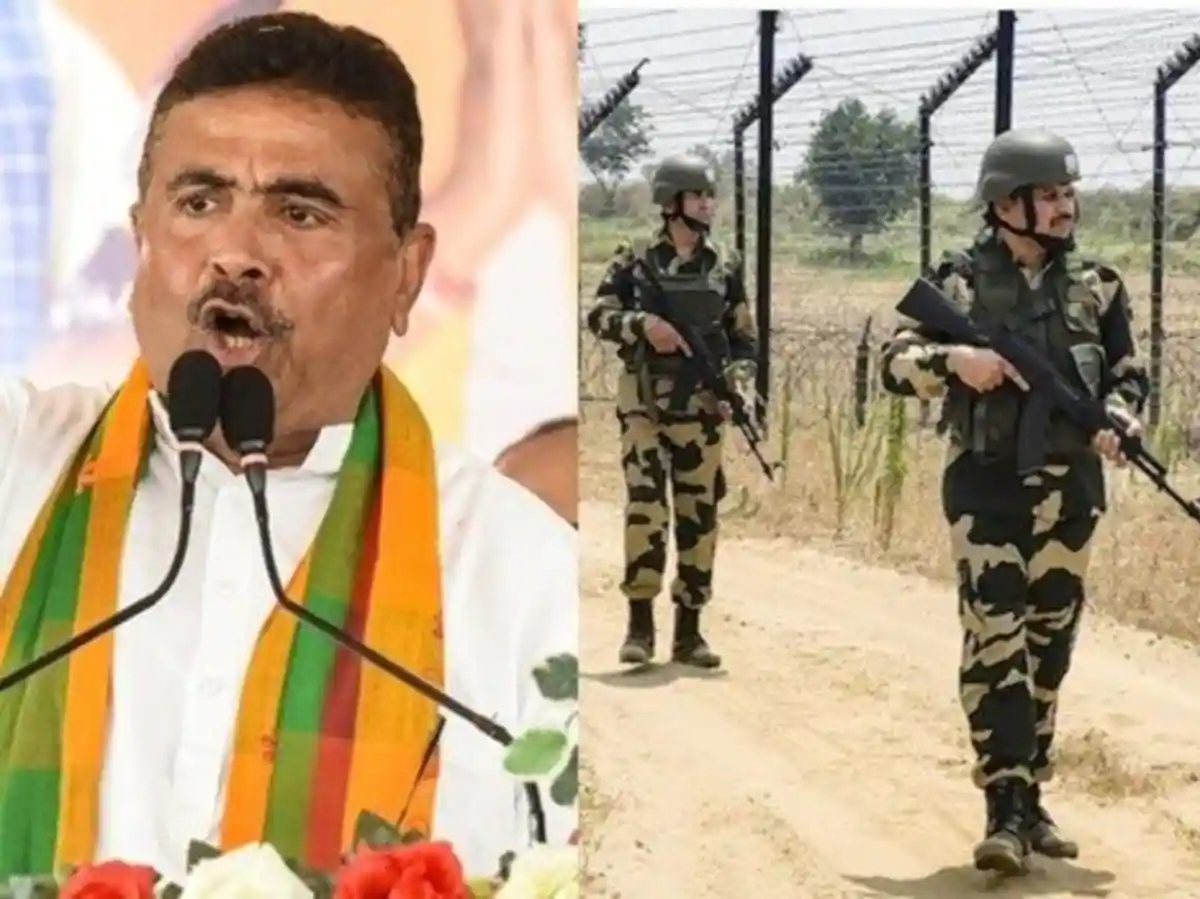
In a major policy shift aimed at eliminating cross-border infiltration, the newly formed Bharatiya Janata Party (BJP) government in West Bengal, led by Chief Minister Suvendu Adhikari, has launched a massive crackdown on illegal infiltrators from Bangladesh. In a decisive move, the state government has officially handed over a 27-kilometer stretch of land along the international border to the Border Security Force (BSF) to expedite the construction of border fencing and bolster security infrastructure.
Addressing a high-level meeting regarding border management, Chief Minister Suvendu Adhikari made it clear that this initiative is just the beginning of a comprehensive national security campaign. The designated land will be completely transferred to the BSF within two weeks. Adhikari emphasized that this 27-km stretch represents the first phase of a broader mission, and the state government is fully committed to providing additional land wherever necessary to fortify the country's borders.
Shifting Focus To Unfenced Borders And Strategic Infrastructure
The Chief Minister highlighted the critical need to accelerate infrastructure development along the sensitive India-Bangladesh border. Providing statistical context, Adhikari noted that West Bengal shares a massive 2,200-kilometer long international border with Bangladesh. While approximately 1,600 kilometers of this border have already been secured with physical fencing, nearly 600 kilometers still remain porous and unfenced, presenting a continuous security challenge.
To eliminate these vulnerabilities, the Bengal government has adopted a proactive stance. The administration has assured the central security forces that any land required for erecting fences, setting up outposts, or building security infrastructure will be identified and handed over to the BSF without any administrative delays.
Crushing The Legacy Of Appeasement And Vote-Bank Politics
Taking a direct swipe at the previous Trinamool Congress (TMC) administration, Suvendu Adhikari accused the former government of compromising national security for political gains. He alleged that the previous regime deliberately non-cooperated with central agencies and failed to provide land to the BSF due to its deeply entrenched vote-bank politics and appeasement policies.
According to the Chief Minister, this political resistance led to a severe breakdown in communication between crucial stakeholders over the past few years. He pointed out that coordination meetings between the BSF, the West Bengal State Police, and district administrations had completely ceased under the previous government, leaving border areas highly vulnerable to anti-national elements and smugglers.
Implementing A Strict Zero-Tolerance Policy Against Infiltration
To correct these past lapses, the Suvendu Adhikari administration has systematically revived the district-level coordination mechanism. Coordination meetings between local administrative bodies, state police, and BSF officials have formally resumed and will now be conducted on a regular, mandatory basis to ensure real-time intelligence sharing and seamless border monitoring.
In addition to strengthening infrastructure, the Bengal government has enacted a strict, zero-tolerance operational policy against illegal entry. Under the newly implemented guidelines, any illegal infiltrator apprehended by the West Bengal State Police anywhere in the state will no longer be kept in local custody indefinitely but will be immediately handed over directly to the BSF for legal processing and deportation. This strict mandate marks a defining moment in how West Bengal secures its borders and handles illegal immigration moving forward.




_978266808_351x234.jpeg)