
 Priyanka Tiwari
 Share
Share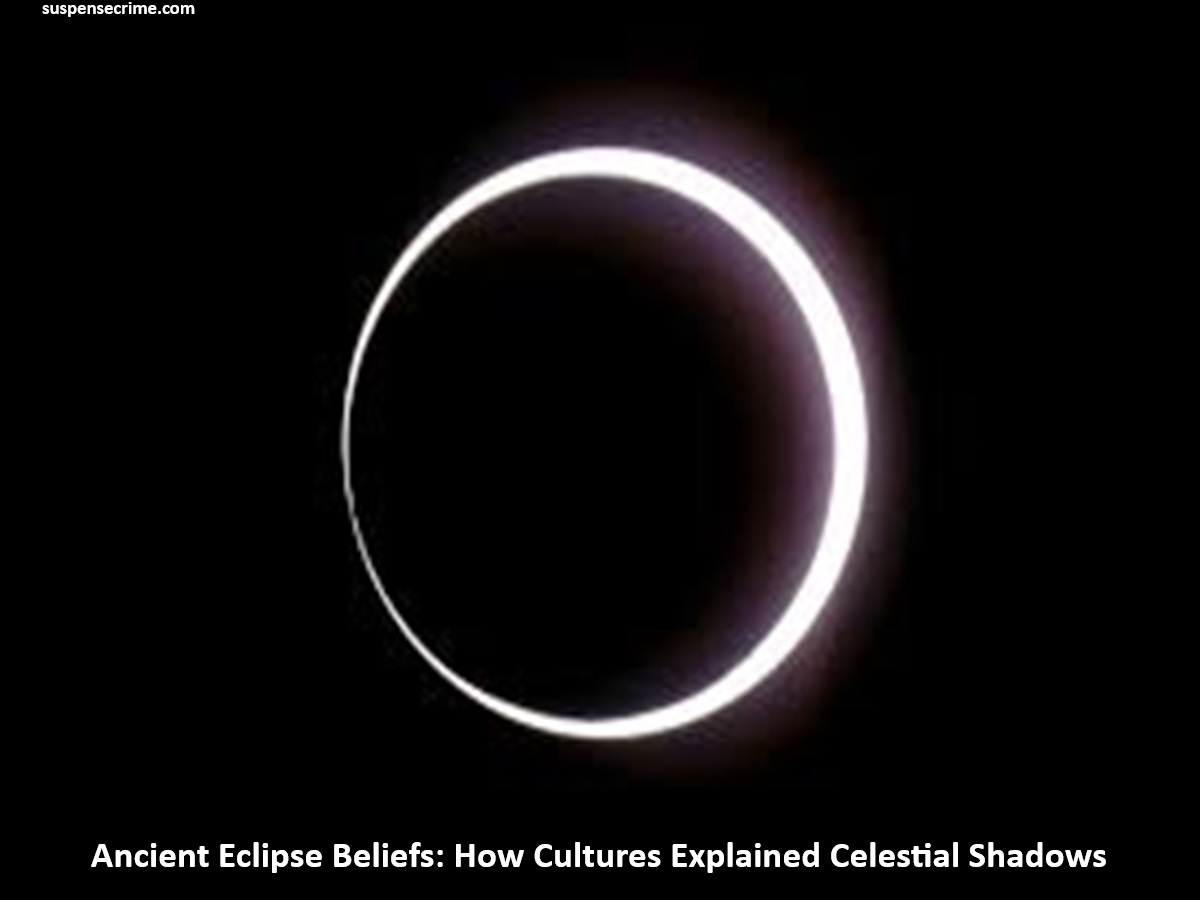
Suspense crime, Digital Desk : For millennia, solar and lunar eclipses have amazed and confused people. Ancient societies interpreted these eclipses as powerful signs or divine messages as science had not yet been invented. These interpretations, were a reflection of culture, fear, and spirituality. Here are eclipse stories from different civilizations.
1. Chinese: A Dragon Devours The Sun
Ancient Chinese believed the sun was eclipsed when there was a solar eclipse because a dragon was trying to eat it. Phrases such as “the Sun has been eaten” has been found in texts going back 4000 years. In order to scare off the dragon, they hit drums and created loud noises. Interestingly, lunar eclipses were not regarded with the same seriousness – some writings even dismissed them as ordinary.
2. Indian: Rahu and the Chase For The Sun
The story about eclipse in Indian culture id derived from Hindu mythology. It speaks about a demon named Rahu who drank the elixir of immortality while in disguise. Lord Vishnu caught him and before the nectar could pass his throat, Rahu was beheaded. The demon's head immortal head wanders on the skies and occasionally catches the Sun or Moon which creates an eclipse. Since the body of Rahu is absent, the celestial body comes back immediately.
3. Incan: Signs of the Angered Sun God
Inti, the Sun God of the Inca, was truly revered. An eclipse was designated as his rage. Priests explored the reasons behind his wrath and most of the time performed rituals to appeal to him. Rarely, an eclipse would be so severe and intense that the only option left would be human sacrifice.
4. Native American: Squirrels and Snares
The Native American tribes have different stories for eclipses. The Choctaw tribe thought that the black squirrel would chew the sun and cause an eclipse so they made noise in order to scare it away. The Ojibwa and the Cree spun the tale of Tcikabis, a boy who caught the sun in a snare. Eventually, a mouse came and chewed through the strings to set it free.
5. West African: Conflict in the Sky
The Batammaliba tribe residing in Togo and Benin thought of solar eclipses as the Moon and Sun battling due to disputes caused by humankind. During eclipses, people attempted to resolve conflicts and sought inner peace, hoping their actions would help restore balance among the deities in the skies.
6. Egyptian: Silence around the Phenomenon
Ancient Egyptians provided no specific texts detailing eclipses, despite having sophisticated astronomy systems and revering their Sun god Re. Scholars are divided on the reasons for this; one side proposes eclipses were too hazardous to speak of while others point to metaphoric terms such as “blindness” as allusions to these phenomena.
Read More: Mark Your Calendars Everything You Need to Know About the Eid 2026 Moon Sighting



_1416678513_100x75.jpg)