Desk
Desk Share
Share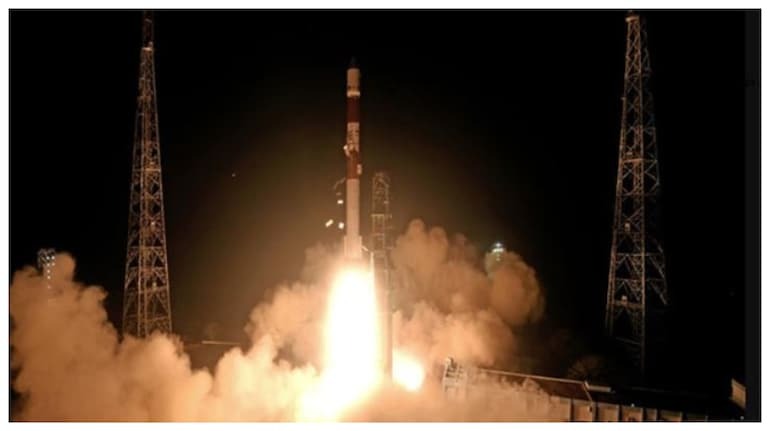
The Indian Space Research Organisation (ISRO) made history by successfully launching the NVS-02 navigation satellite through its GSLV rocket during a landmark moment for India's space program. CIOSRO's 100th mission represented a pivotal moment because it demonstrated three decades of pioneer space exploration together with relentless scientific development and advanced space technology research.
At the Satish Dhawan Space Centre in Sriharikota, Andhra Pradesh, the Geosynchronous Satellite Launch Vehicle (GSLV) executed its timeframe correctly for this mission. Through this mission ISRO continues to cement its standing as a worldwide leader in space technology science.
**A Leap Forward in Navigation Technology**
The NVS-02 satellite forms part of India's indigenous Navigation with Indian Constellation (NavIC) satellite network. The satellite brings forward major advancements to India's satellite-based navigation system through precise positioning and location tracking and timing capabilities that extend across multiple sectors.
An indigenous atomic clock installed on NVS-02 drives precision advancements in NavIC system capabilities. The achievement advances India's national directive for space technology self-sufficiency while decreasing dependence on foreign navigation frameworks such as GPS.
As NavIC operates as India's vital infrastructure backbone it supports precise navigation alongside real-time tracking to serve defense needs along with transportation services and disaster management programs and agricultural operations. The successful installation of NVS-02 ensures that this system maintains its reliability to meet all civilian and strategic requirements.
GSLV staged an essential role in achieving ISRO's success.
As ISRO's primary workhorse the GSLV proved crucial for achieving this mission's success. The GSLV's indigenous cryogenic upper stage has enabled the critical payload delivery capability into geostationary orbits.
Within 20 minutes after the launch process started experts established the NVS-02 satellite successfully in its predefined geosynchronous orbit at a weight of more than 2,200 kilograms. The superior performance of GSLV identifies ISRO's expert capabilities in spacecraft navigation as well as orbital mechanics control systems.
From this mission ISRO demonstrates ongoing advancements across rocket technology through strides in propulsion system efficiency as well as innovative payload integration systems.
**ISRO’s Legacy: A Journey of 100 Missions**
NVS-02 represents more than technological triumph because it honors what ISRO continues to achieve as an institution. ISRO developed from its initial launch of the Aryabhata satellite during the 1960s to become a respected global space agency through its Chandrayaan and Mars Orbiter missions.
ISRO has shown exceptional progress in satellite innovation alongside rocket building while expanding deep space capabilities through its successful 100 missions. Through the development of the PSLV and GSLV rocket series and missions Chandrayaan and Mangalyaan India has rendered space science both accessible and economically viable for its citizens as well as for international audiences.
**Global Implications of the NVS-02 Launch**
India takes a significant step forward in its participation in the international space competition through the outstanding NVS-02 mission success. India has demonstrated through this NVS-02 launch that it can operate its own independent navigation system which serves both defense needs and economic developmental goals.
The enhanced NavIC system enabled by NVS-02 secures India's leading position in the international market for navigation technology systems. Favorable international partnerships and technological cooperation become possible for NavIC service users throughout Asia and Africa and other regions.
TheIndian Space Research Organisation prioritizes self-dependency alongside creative approaches to ensure space science reaches everyone while benefiting the entire society. Through its mission to transform space technology into economic progress and social development ISRO performs its activities with complete alignment to its established goals.
**Looking Ahead: ISRO’s Ambitious Future**
ISRO marks its 100th mission while developing plans to explore uncharted space domains. The agency plans to execute three major developments which include a human spaceflight program known as Gaganyaan along with the solar exploration mission called Aditya-L1 and science-focused interplanetary projects.
The GSLV and NVS-02 mission'experiences and developed technologies should support ISRO's planned upcoming missions. Through its relentless focus on innovation along with excellence ISRO positions itself as one of the leading space exploration entities globally.
**A Nation’s Pride, A Global Inspiration**
A moment of extraordinary national pride for India emerged when ISRO launched the NVS-02 satellite on its 100th mission. India demonstrates through this mission its exceptional research achievements together with innovative technological development alongside its independent capability in vital technological domains.
People around the world look at ISRO's upcoming space initiatives with both admiration and deep respect. This landmark accomplishment represents both a national victory for India while remaining a poignant reminder of space exploration dreams which unite all human beings.
Read More: Uniform vs. Suit: The Hidden Meaning Behind General Asim Munir’s Wardrobe Diplomacy