










'Putin Is Under Pressure': UK Intel Chief Warns of Russia Miscalculation
More than four years into the grinding war between Russia and Ukraine, diplomatic breakthroughs remain elusive even as cross-border strikes and geopolitical friction intensify across Europe. Now, Britain's top military intelligence officer has issued a stark caution that the most immediate danger of a wider European war may not be a deliberate Kremlin invasion, but a catastrophic miscalculation driven by mounting pressure on Russian President Vladimir Putin. Speaking at the Cambridge Intelligence Seminar at Corpus Christi College on Friday, November 20, 2026, Lieutenant General Matthew Jones, the United Kingdom's Chief of Defence Intelligence, warned that Moscow's increasingly reckless behavior toward Western nations has repeatedly come perilously close to triggering a major escalation. For international affairs followers across India—including readers in Uttar Pradesh cities such as Lucknow, Kanpur, and Unnao tracking global security and economic stability—the assessment highlights just how razor-thin the margin for error has become between Russia and NATO.
'My Greatest Fear Is the Risk of a Significant Miscalculation'
In his address—published over the weekend—Lieutenant General Jones drew a critical distinction between Moscow's strategic intentions and its day-to-day operational conduct. Expressing measured confidence that Russia does not actively want a direct military conflict with NATO, Jones stressed that Moscow's growing risk appetite is creating dangerous flashpoints.
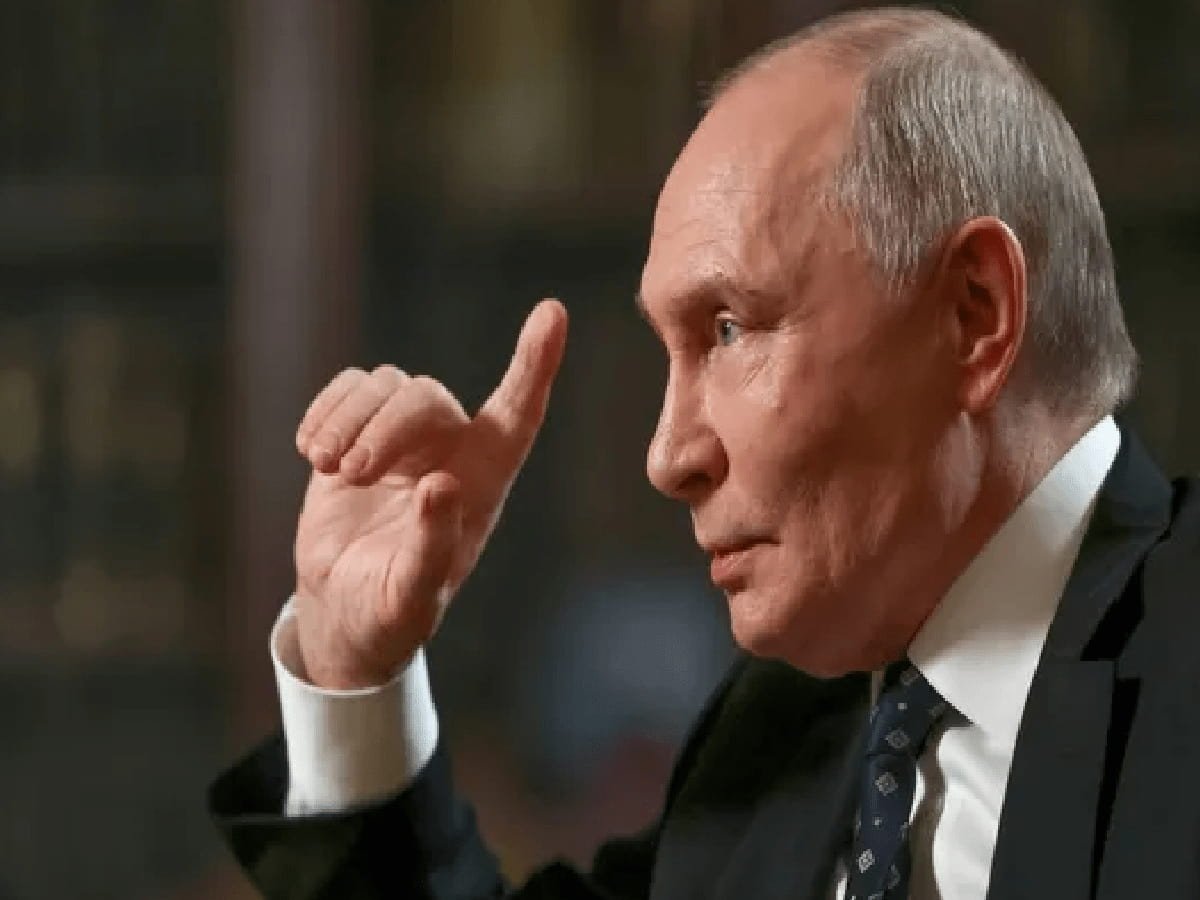
Explaining why Moscow's posture has sharpened, Jones noted that Vladimir Putin is facing significant internal and external strain, pushing the Russian leadership toward a far more assertive and confrontational approach as it seeks to test Western resolve. According to the intelligence chief, there have already been far too many recent instances of reckless Russian activity where even a slight shift in circumstances could have produced severe, irreversible consequences.
Rising Flashpoints Across Europe: Poland, Germany, Denmark, and the Black Sea
Jones's warning lands amid a troubling cluster of security incidents stretching across NATO's eastern and northern flanks:
-
Poland and Germany: On Friday morning, Warsaw reported that two Russian missiles and a suspected drone came down on Polish territory while nearby military exercises involving European troops—including British forces—were underway. NATO Secretary-General Mark Rutte condemned the breach as a grave violation of Polish airspace, while British Prime Minister Andy Burnham called the incident "utterly unacceptable". Security officials have also pointed to serious air-cargo and drone threats in Germany, including the Leipzig airport parcel-bombing plot linked to Russian intelligence networks.
-
Denmark and the Black Sea: Danish authorities recently announced they had thwarted an alleged plot backed by Russian intelligence to assassinate a Ukrainian-American citizen on Danish soil—prompting UK Foreign Secretary Ed Miliband to affirm British solidarity with Copenhagen in deterring hostile state threats on NATO territory. Security concerns have also been heightened by commercial shipping incidents in the Black Sea near NATO ally Romania and close aerial encounters involving British reconnaissance aircraft.
-
Lessons From Past Hostile Activity: The remarks also echo Britain's experience with Russian state-linked operations on UK soil, from the 2018 Salisbury Novichok nerve-agent poisoning that claimed the life of Dawn Sturgess to proxy arson attacks targeting Ukraine-linked commercial premises in east London.
Why Britain's 2030 Readiness Warning Is About Deterrence, Not Prophecy
Lieutenant General Jones also addressed recent warnings from British Defence Secretary Wes Streeting, who has urged that the United Kingdom must be prepared for potential war by 2030. Clarifying the intent behind that timeline, Jones emphasized that 2030 is not a fixed forecast or prophecy of when Britain and its allies will inevitably come under military attack; rather, the scale of present-day threats makes serious readiness and deterrence an "eminently sensible" precaution.
Reiterating that Britain neither seeks confrontation with Russia nor wishes to escalate tensions, Jones underscored that London and its NATO partners will defend their national and collective security firmly whenever challenged—making clear that preventing a spark from turning into an all-out war depends on steady deterrence and avoiding fatal misjudgments.