









What Will Jharkhand Look Like in 2050? CM Hemant Soren Outlines Vision
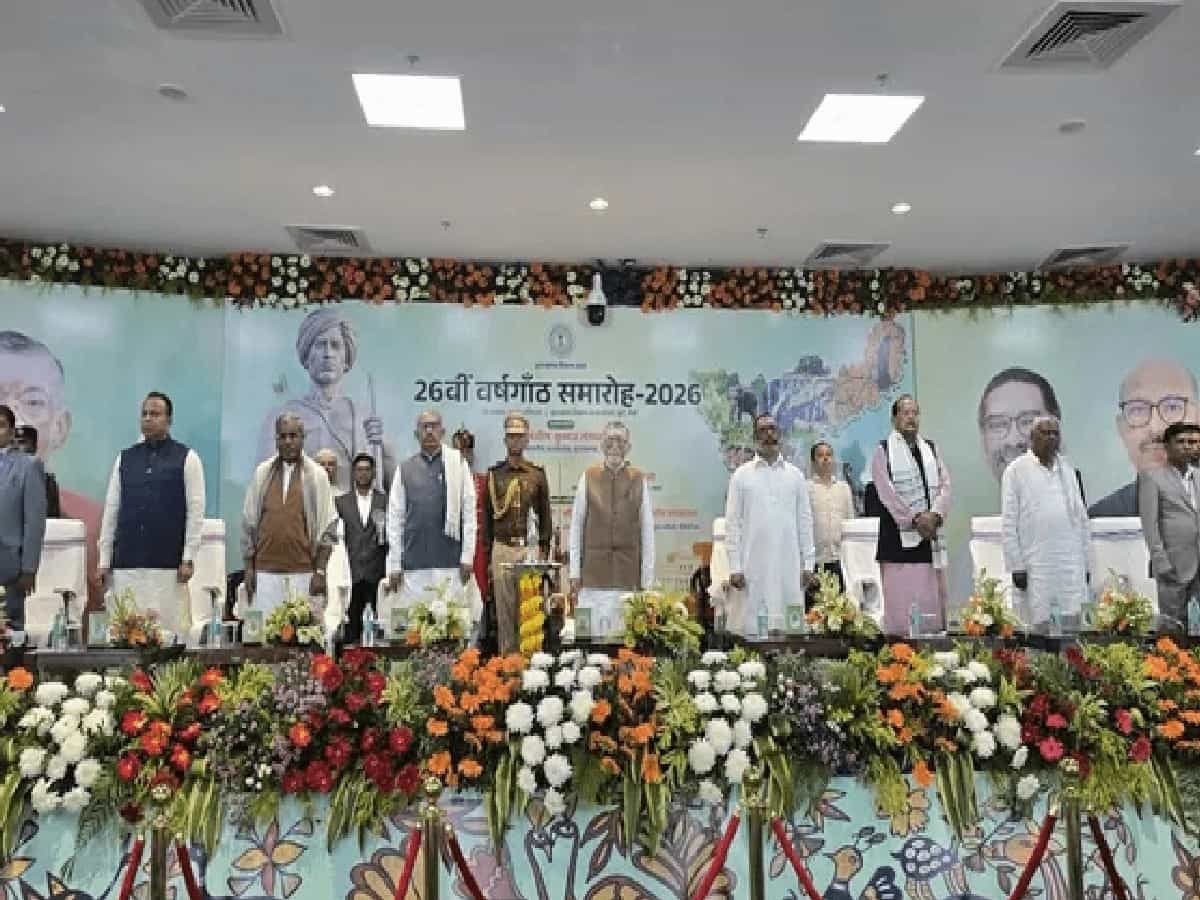
As Jharkhand marks 26 years since its creation, Chief Minister Hemant Soren has laid out a long-range governance roadmap designed around what the state should look like in the year 2050. Addressing lawmakers, former legislators, and officials inside the Central Hall of the Jharkhand Legislative Assembly in Ranchi on Sunday, November 22, 2026, during the Assembly's 26th Foundation Day celebrations, Soren stated that his administration is formulating policies and structural reforms with a 25-year horizon so that future generations inherit stronger public institutions and improved civic infrastructure. For policy watchers, governance analysts, and citizens across northern and eastern India—including readers in Uttar Pradesh cities such as Lucknow, Kanpur, and Unnao following state-level development models—the Ranchi conclave blended forward-looking development pledges with sharp institutional debate.
Acknowledging that Jharkhand has recorded meaningful milestones over its first 26 years, the Chief Minister candidly added that substantial work remains to streamline administrative systems, eliminate institutional bottlenecks, and prepare the mineral-rich state for emerging social and economic challenges.
Assembly Is the State's 'Largest Temple,' Says Chief Minister Hemant Soren
Describing the Legislative Assembly as Jharkhand's largest temple of democracy, Hemant Soren emphasized that the House belongs equally to every citizen—transcending caste, religion, economic status, or social background. He noted that the world recognizes the strength of India's parliamentary institutions and asserted that his government's welfare schemes are steadily reaching people standing on the lowest rung of the socioeconomic ladder.
Highlighting the role of legislative committees in guiding executive action, Soren reiterated that every elected representative must return to the electorate every five years to account for their performance, making public-interest decision-making the true measure of governance.
Governor Santosh Gangwar and Speaker Rabindra Nath Mahato Stress Legislative Quality
Speaking at the ceremony, Jharkhand Governor Santosh Kumar Gangwar underscored the pivotal responsibility of elected representatives in strengthening parliamentary democracy. While expressing concern over declining attendance of legislators inside the House, the Governor voiced optimism that with sustained focus and collective effort, Jharkhand can emerge as India's number-one state by 2050.
Assembly Speaker Rabindra Nath Mahato echoed the call for substantive legislative work, stating that the success of a legislature is measured not merely by the total number of sittings, but by the depth of debate, effective government accountability, and concrete solutions delivered for citizens' problems. Citing data on bills passed during the Fifth Jharkhand Legislative Assembly, Mahato noted that approximately 30 percent pertained to finance and taxation, 27 percent to education, 17 percent to administration and personnel, 9 percent to law and justice, 5 percent to local governance, 3 percent to labor, and 6 percent to other areas—underscoring that nearly a third of legislative focus centered on education.
Majhgaon MLA Niral Purti Honored With Bhagwan Birsa Munda Excellence Award
As part of the 26th Foundation Day ceremony, Governor Santosh Kumar Gangwar and Chief Minister Hemant Soren conferred the Bhagwan Birsa Munda Outstanding Legislator (Excellence) Award 2026—which carries a citation and a cash honorarium of ₹51,000—upon four-time Jharkhand Mukti Morcha (JMM) MLA Niral Purti from the Majhgaon constituency in West Singhbhum district. Praising Purti's grounded, low-profile dedication to constituency work, Soren noted that real public service lies in consistent grassroots delivery rather than media visibility. Several former MLAs and top-performing Assembly secretariat staff members were also felicitated on the occasion.
Babulal Marandi Writes to CM Soren Over Vacant Constitutional Posts and DGP Row
Even as Vision 2050 dominated the Assembly podium, Leader of the Opposition Babulal Marandi used Sunday to raise sharp institutional concerns in a formal letter addressed to Chief Minister Hemant Soren—with copies marked to the Chief Justice of India and judges of the Supreme Court Collegium. Marandi argued that while the Chief Minister has written to the Supreme Court raising concerns over judicial appointments and institutional continuity, key statutory and constitutional bodies within Jharkhand have remained paralyzed for years due to unfilled posts.
Specifically pointing to long-pending vacancies in the State Women's Commission, State Commission for Protection of Child Rights, State Human Rights Commission, State Information Commission, and Jharkhand Public Service Commission (JPSC), Marandi also flagged ongoing legal and administrative controversies surrounding the appointment of the state's Director General of Police (DGP) and Supreme Court observations on the matter. Calling on the state government to fulfill its own constitutional duties at home before lecturing on institutional propriety elsewhere, the Opposition leader urged immediate appointments to restore full accountability across Jharkhand's governance institutions.