


China’s New Strategic Gambit: Eyeing the Bay of Bengal Through a Bangladesh-Myanmar Corridor
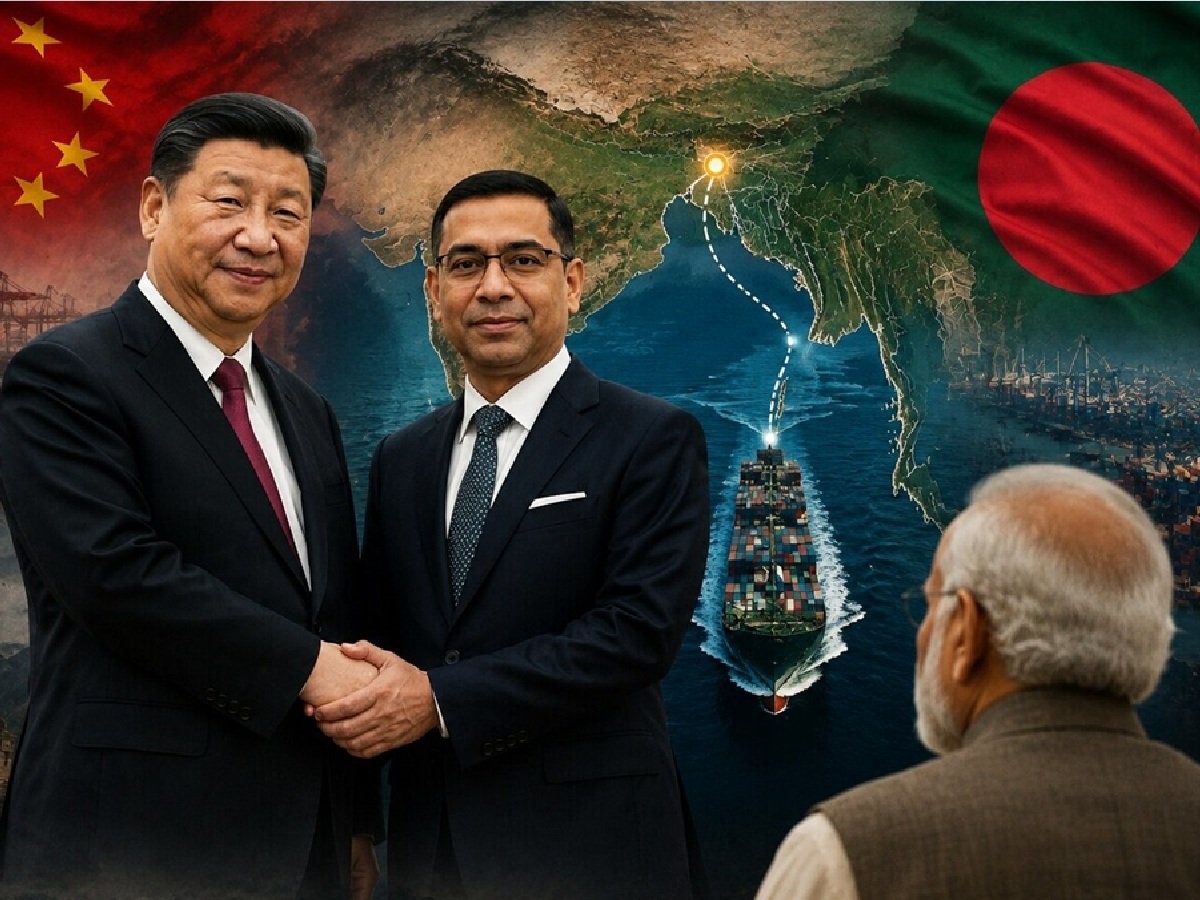
Suspense Crime, Digital Desk : The proposed corridor is designed to be a multimodal transport route, combining rail and road networks. According to Bangladeshi officials, including spokesperson Mahdi Amin, the route is slated to originate in Kunming, China’s Yunnan province. It would then traverse through Mandalay in Myanmar before terminating at the strategic ports of Chittagong and Cox’s Bazar in Bangladesh. The official narrative from Beijing promotes this as a purely economic venture aimed at boosting regional trade and connectivity, but defense analysts see a deeper, more concerning intent behind the infrastructure push.
Bypassing India: The Shift from BCIM
Years ago, the concept of the BCIM (Bangladesh-China-India-Myanmar) corridor was introduced as a collaborative regional framework. However, the plan was effectively shelved after India voiced strong concerns over China’s Belt and Road Initiative (BRI) and its implications for national sovereignty. By carving out this new route that deliberately excludes India, Beijing appears to be executing a "plan B" to bypass New Delhi’s influence. This development also serves a secondary strategic purpose for China: reducing its heavy reliance on the narrow Strait of Malacca, a critical maritime choke point that Beijing has long feared could be blocked during geopolitical conflicts.
Strategic Encirclement in the Indian Ocean
This eastern corridor mirrors the China-Pakistan Economic Corridor (CPEC) to India's west. With CPEC providing Beijing access to the Arabian Sea via Pakistan’s Gwadar port, this new corridor would grant China a foothold in the Bay of Bengal, effectively bridging its presence across the entire northern Indian Ocean region. Defense experts warn that this constitutes a classic encirclement strategy. By establishing logistics and potential naval-dual-use infrastructure in Chittagong and Cox’s Bazar, China is significantly enhancing its capability to project power, monitor maritime traffic, and exert diplomatic pressure on India from two sides.
A Growing Security Challenge
The project is already drawing scrutiny from global powers, including the United States, which remains wary of China’s expanding maritime footprint. For India, the challenge is twofold: managing its diplomatic relationships with neighboring nations that are increasingly drawn to Chinese infrastructure investment, and fortifying its own maritime defenses in the Bay of Bengal. As the project gains momentum, New Delhi will likely need to intensify its regional engagement strategy to ensure that the growing economic influence of China in the neighborhood does not translate into long-term strategic vulnerability for the Indian mainland.



_1736346125_351x234.jpg)
_1917852898_351x234.jpg)
_1402647970_351x234.jpg)
_1930453543_351x234.jpg)