
 Ziya
Ziya Share
Share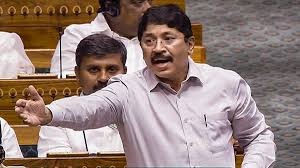
Politics in India has a way of staying heated, but every once in a while, a statement comes along that feels like it’s set the internet on fire. If you’ve been scrolling through social media lately, you’ve likely seen the name Dayanidhi Maran trending. The DMK MP is at the center of a massive storm right now, and it’s all because of some comments he made regarding people from North India.
The Comparison That Sparked the Fire
It all started with a video that began circulating online. In the clip, Maran compares the professional lives of people in South India specifically Tamil Nadu with those from Bihar and Uttar Pradesh. According to Maran, while the youth in Tamil Nadu are making waves in the global IT sector and taking up high-skilled jobs, the scenario is very different for those migrating from the North.
The controversy really peaked when he mentioned the types of jobs North Indians take up in the South. He suggested that because of a lack of English education and specific skills, many migrants from states like UP and Bihar end up doing menial work, such as cleaning toilets or working on construction sites.
The Discussion on Education and Girls’ Careers
Beyond just the jobs, Maran touched on a very sensitive social nerve: how families treat their daughters. He claimed that in North India, there is a cultural reluctance to let girls pursue higher education or take up professional jobs. He contrasted this with the South, where he says women are encouraged to study and build careers.
As you can imagine, this didn't go down well. People are calling it out as an unfair stereotype that ignores the millions of North Indian women who are leading in fields like medicine, law, and tech.
Why Is This Blowing Up?
The reason this has become such a massive talking point isn’t just about the words—it’s about the "North vs. South" divide that keeps popping up in our political landscape. For many, these remarks feel less like a policy critique and more like a dig at regional identity.
Critics argue that making blanket statements about an entire region’s work ethic or culture is not only divisive but also harmful. On the other hand, some of his supporters believe he was trying to highlight the "Tamil Nadu model" of education, though they admit the delivery was, at the very least, quite harsh.
The Reaction
Opposition leaders were quick to jump on this. Many are asking if this reflects the internal mindset of the I.N.D.I.A. bloc, while others are calling for an apology, saying that India is one nation and every worker—whether they clean streets or write code deserves dignity.
In an age where every word is recorded and shared, this serves as a reminder of how quickly a localized speech can become a national controversy. Whether it was a slip of the tongue or a deliberate comparison, the conversation it has started about migration, language barriers, and education in India isn't going away anytime soon.
Read More: The Nitin Nabin Promotion: What BJP’s Rajya Sabha Move Means for Bihar’s Future

_1152292510_100x75.jpg)

_1445939941_100x75.jpg)