Keshav Maurya called upon the Japanese to help transform Uttar Pradesh into the country's largest food processing hub, guided by the vision of "Farm Gate to Global Plate.
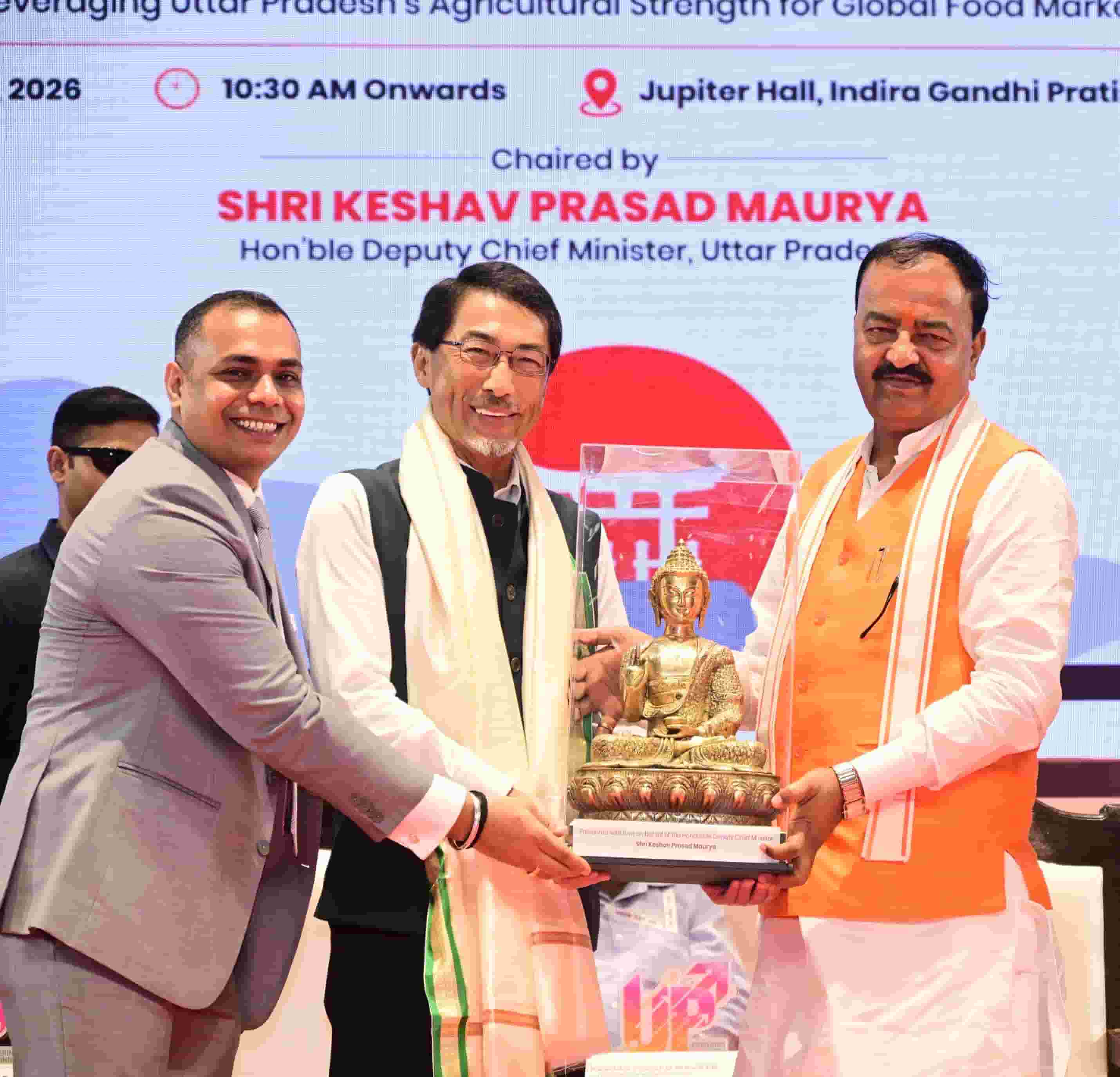
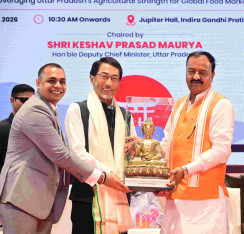
Presiding over the Japan-India Business Networking event organized by 'Invest UP' at the Indira Gandhi Pratishthan in Gomti Nagar, Lucknow, today, Deputy Chief Minister Shri Keshav Prasad Maurya welcomed and felicitated the Japanese Ambassador, Mr. Ono Keiichi, by presenting him with a bouquet and a memento of Lord Buddha. Addressing the gathering, Shri Maurya stated that the relationship between India and Japan is not limited merely to trade and economic partnership; rather, it is rooted in a centuries-old cultural and spiritual bond. The teachings of Lord Buddha—emphasizing compassion, peace, non-violence, and human welfare—have long served to bring the people of both nations closer together. He noted that Uttar Pradesh is the land where the sacred memories of Lord Buddha reside; Lord Buddha delivered his first sermon at Sarnath, while Japan, too, has a profound Buddhist tradition. This shared heritage offers immense potential to further strengthen the ties between India and Japan.
Shri Maurya highlighted that Uttar Pradesh possesses vast agricultural resources, adequate irrigation facilities, diverse crops, rich agricultural produce, and a large human resource base. In contrast, Japan excels in modern technology, high-quality standards, processing, packaging, traceability, and production aligned with global market demands. The synergy between Japanese technology and the scale of operations in Uttar Pradesh could transform the food processing sector. Combining these capabilities could create new opportunities for the state's farmers, youth, women, and entrepreneurs. The Uttar Pradesh government aims to go beyond merely enabling farmers to sell raw produce; the goal is to integrate them into the entire food processing and value-addition chain, ensuring they receive fair prices for their products and see an increase in their income. Urging Japanese investors and the industrial community to invest in Uttar Pradesh's agriculture and food processing sectors, he affirmed that the state government is committed to providing necessary support and facilities to investors at every level. The Deputy Chief Minister stated that investors setting up industries under Uttar Pradesh's Food Processing Policy-2023 are being provided with various special subsidies and facilities. He urged Japanese investors to avail themselves of these incentives and establish modern food processing units in the state. He remarked that the food processing industry is not merely a vehicle for investment but also an effective means of generating employment, increasing farmers' income, strengthening the rural economy, and taking local products to the global market. Highlighting women's entrepreneurship, he noted that over ten million rural women in Uttar Pradesh are associated with self-help groups, and the government is continuously working towards their economic empowerment. He mentioned the provision of a solar subsidy of up to 90 percent for food processing units established in the name of women. He called upon Japanese investors and domestic entrepreneurs to seize this opportunity and promote women-led food processing units. The Deputy Chief Minister stated that Uttar Pradesh offers a conducive environment for investment, featuring robust law and order, an ample land bank, and excellent rail, road, and air connectivity. He noted that international airports in cities like Lucknow, Varanasi, Kushinagar, and Jewar-Noida are connecting the state to major markets across the country and the world. This has made it easier for investors to access raw materials and manage production, logistics, and transportation, as well as the distribution of finished goods to domestic and international markets. Discussing the state's unique agricultural products, he highlighted that many of them possess the potential to carve a niche for themselves in the global market. He made special mention of the renowned 'Kala Namak' rice—also known as 'Buddha Rice'—noting its distinct identity, quality, and high demand. This GI-tagged product, with an annual production of approximately 15,000 metric tonnes, can be transformed into a premium global brand through modern processing, packaging, branding, and traceability. The Deputy Chief Minister stated that the Uttar Pradesh government is continuously working in the sectors of agriculture, industry, investment, and employment to realize Prime Minister Narendra Modi's vision of a 'Viksit Bharat' (Developed India). By integrating the state's immense agricultural production potential with modern technology and investment, Uttar Pradesh can be developed into the country's largest food processing hub. He added that a partnership with Japan could play a pivotal role in this endeavor.
Welcoming the Japanese delegation and domestic investors to Uttar Pradesh, he affirmed the state government's commitment to providing necessary facilities, a secure environment, and a conducive business climate for investors. He expressed confidence that such business networking events would not only impart fresh momentum to India-Japan economic ties but also create new opportunities for investment, employment, and technical collaboration in Uttar Pradesh.
The event was attended by Mr. Ono Keiichi, Ambassador of Japan to India; Mr. Harry Hakui Kosato, Director, Kikkoman India Pvt. Ltd.; and Mr. Sudeep Goenka, Director, Goldie Group; alongside representatives from the Japanese and Indian industrial sectors, investors, and senior officials.
_675761727_351x234.jpg)
_1491970290_351x234.jpg)