










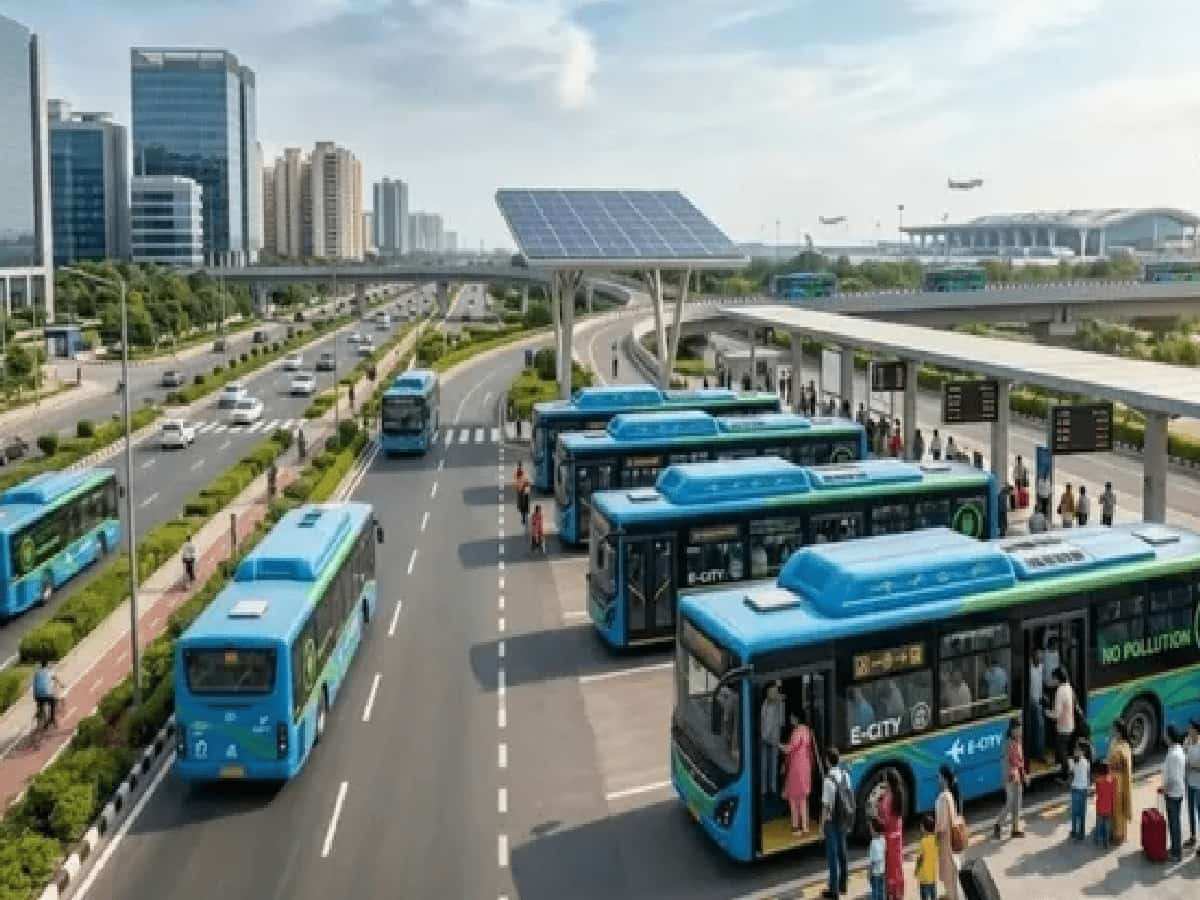
100 Electric Buses to Run in Noida From Sector 82 Terminal Soon
Daily commuters navigating Noida's rapidly expanding residential sectors, IT corridors, and industrial belts are set to receive a major boost in clean, air-conditioned public transit. Under the Uttar Pradesh government's statewide electric mobility expansion, Noida will soon induct 100 new electric city buses, which will operate primarily out of the City Bus Terminal in Sector 82. Procured and operated under the Gross Cost Contract (GCC) model—where private operators manage fleet procurement, drivers, and maintenance over a 12-year tenure while the state regulates fares and service benchmarks—the 100-bus allocation forms part of the 1,725 air-conditioned electric buses approved across 18 cities in Uttar Pradesh. To resolve bottlenecks surrounding land allotment for dedicated charging stations and maintenance depots, the Directorate of Urban Transport (Uttar Pradesh) has convened a high-level video-conferencing review meeting at 4:00 PM on Thursday, November 26, 2026—rescheduled from November 23 due to administrative exigencies. Senior officials, including the Chief Executive Officers (CEOs) of the Noida Authority and the Yamuna Expressway Industrial Development Authority (YEIDA), have been directed to attend with complete land and project status records. For urban commuters, transit planners, and clean-energy watchers across Uttar Pradesh—not only in Noida and Greater Noida, but also in major state transit hubs such as Lucknow (headquarters of the Directorate of Urban Transport, which itself is receiving 300 e-buses alongside Kanpur's 300 and Varanasi's 250) and neighboring cities like Unnao and Prayagraj—the upcoming deployment marks both a major green-transport milestone and a long-awaited revival for Noida's ₹157.9-crore Sector 82 terminal.
Why Sector 82 Bus Terminal Was Chosen Despite Space Concerns From UPSRTC
Constructed at a cost of roughly ₹157.9 crore across ~30,643 square metres near Bhangel and the Aqua Line's Sector 83 metro station, Noida's Sector 82 City Bus Terminal has remained largely underutilized since its inauguration in November 2022. During a recent joint site inspection, officials of the Uttar Pradesh State Road Transport Corporation (UPSRTC) flagged that the terminal's existing bay layout is too compact to simultaneously house and service a full 100-bus electric fleet.
However, the Noida Authority has clarified that no alternative ready-built bus terminal is currently available within city limits for immediate fleet operations. Consequently, authorities have decided to initiate bus operations directly from the Sector 82 terminal while developing dedicated off-site charging stations and heavy-maintenance depot facilities on separate authority-allotted land parcels.
Inside the November 26 Urban Transport Meeting and UP's 1,725 E-Bus Rollout
Thursday's 4:00 PM video conference chaired by the Directorate of Urban Transport aims to finalize land handover timelines and project execution across both Noida and the Yamuna Expressway region (including connectivity toward Noida International Airport at Jewar):
| Mobility & Policy Parameter | Verified Project & Statewide Scheme Details (November 2026) |
| Noida E-Bus Fleet & Operating Base | 100 air-conditioned electric buses allocated for Noida (including Jewar corridor); primary route operations to be anchored at Sector 82 City Bus Terminal. |
| November 26, 2026 Review Meeting | Convened at 4:00 PM via video conferencing by the Directorate of Urban Transport (postponed from Nov 23); CEOs of Noida Authority and Yamuna Authority (YEIDA) instructed to present land-allotment and project records. |
| Operating & Subsidy Framework | 12-year Gross Cost Contract (GCC) model; state provides capital subsidies of ₹35 lakh per 9-metre bus and ₹40 lakh per 12-metre bus, while authorities provide free land for charging depots. |
| Statewide 1,725 E-Bus Architecture | Total 1,725 electric city buses across 18 UP cities: 1,225 buses under the general state scheme and 500 buses under the World Bank-funded UPCAMPA (Uttar Pradesh Clean Air Management Project Authority) initiative—all backed by new charging stations and maintenance workshops. |
What This Means for Daily Commuters and Urban Air Quality in Noida
Once land clearance for the charging depots is locked in at Thursday's review, the induction of 100 zero-emission electric buses will bridge critical last-mile gaps between Sector 82/83 Aqua Line metro stations, residential clusters in Noida Extension (Greater Noida West), industrial zones in Phase-2, and the Yamuna Expressway–Jewar airport belt. Simultaneously, under the World Bank-backed UPCAMPA programme and the general GCC scheme, standardized charging infrastructure across 18 cities will curb tailpipe particulate emissions and modernize everyday public commuting across Uttar Pradesh.






