










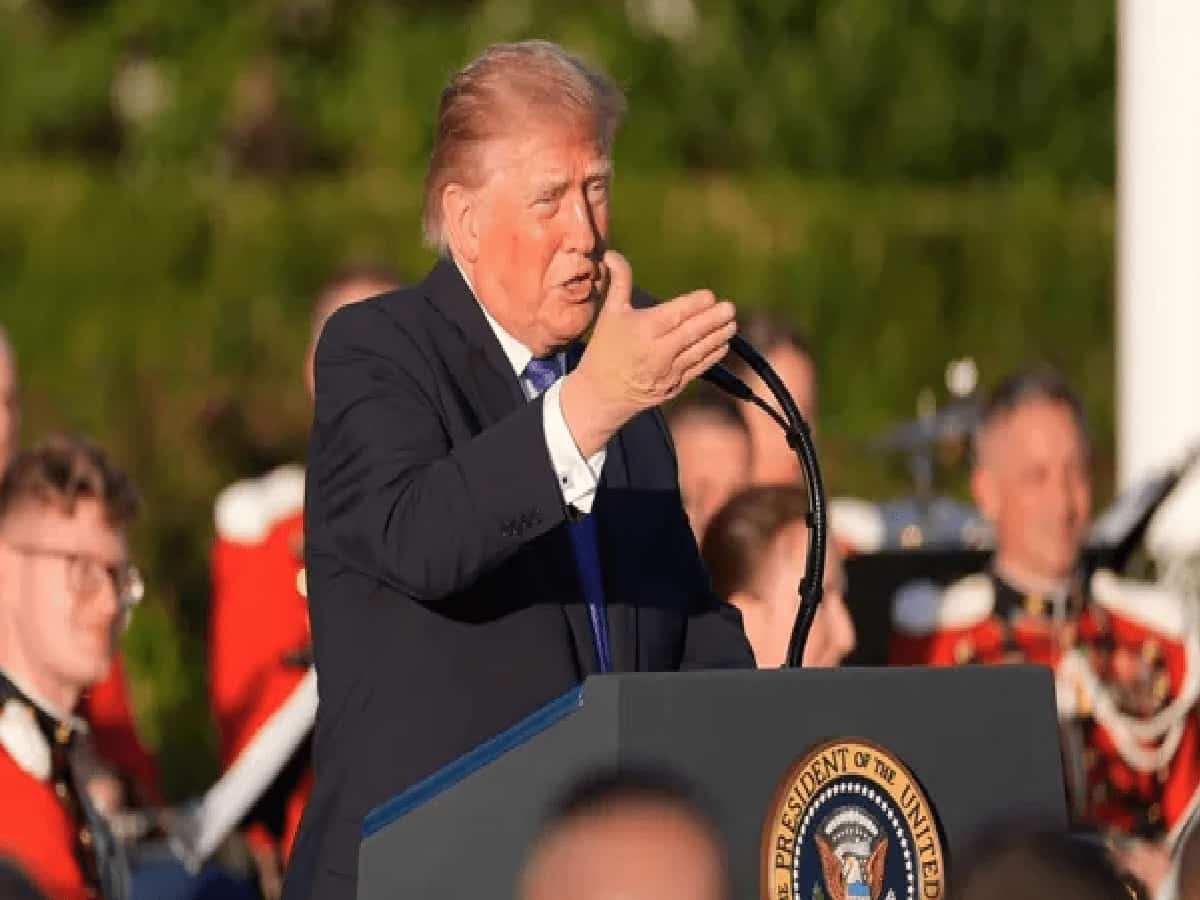
Trump Proposes Up to 25% Tariffs on 14 Nations, Including India
Undeterred by his Republican Party's setback in the US midterm elections, President Donald Trump has once again sent ripples through global supply chains and financial markets. On Wednesday, November 25, 2026, the Office of the United States Trade Representative (USTR), led by US Trade Representative Jamieson Greer, unveiled sweeping proposals to impose new Section 301 tariffs on 14 major trading partners—including India, China, the European Union, Japan, and South Korea—following an eight-month investigation into what Washington calls "structural excess industrial capacity". Under the proposed framework, India faces import duties of up to 25 percent on affected goods, though Washington has offered a pathway to lower that rate to 17 percent if New Delhi and Washington conclude a bilateral trade agreement. Meanwhile, China bears the heaviest blow, with the administration proposing an additional tariff of up to 20 percent on top of existing duties—pushing cumulative US tariffs on several Chinese sectors toward 40–45 percent—as Washington accuses Beijing of distorting global markets through heavily subsidized steel, electric vehicles (EVs), and solar products. Notably, the China proposal carves out roughly $30 billion worth of Chinese products currently under bilateral review for reduced tariff treatment, while Mexico and Norway have been excluded from new levies for now. For Indian exporters, manufacturers, and trade-linked industries across northern India—particularly leather, footwear, and engineering-goods clusters in Kanpur and Unnao, carpet and handloom exporters in Varanasi, and MSME hubs in Lucknow and Prayagraj, for whom the United States is the single largest overseas buyer—understanding how these non-stacking tariff rules work is critical.
Why China Takes the Hardest Hit—And What Is Exempted Under the $30 Billion Clause
Washington's Section 301 determinations target state-backed overproduction that US officials argue floods international markets and undercuts American factories. China sits squarely at the center of the action:
-
20% Additional Duty on Chinese Imports: The USTR has proposed tariffs of up to 20 percent on Chinese goods not listed in special annexes (and up to 10 percent on Annex A items), stacking atop roughly 25 percent duties imposed during Trump's first term to bring effective tariffs on key industrial lines near 40–45 percent.
-
Focus on Steel, EVs, and Solar Gear: US officials cited persistent overcapacity in steel, electric vehicles, and solar manufacturing as primary drivers of the penalty.
-
$30 Billion Trade-Board Exclusion: Goods listed under Annex B—covering roughly $30 billion worth of Chinese imports on the US–China Board of Trade's "30-For-30" list recommended for tariff relief—are exempted from the new hike. Beijing's Foreign Ministry dismissed the "overcapacity" argument as a "false issue" used for political manipulation while stopping short of immediate retaliation.
Country-by-Country Breakdown of Trump's Proposed Tariffs Across 14 Trading Partners
Out of 16 economies investigated by the USTR, 14 trading partners face proposed duties scheduled to take effect early next year following public comments and hearings, while Mexico and Norway were spared:
| Trading Partner / Bloc | Proposed New Section 301 Tariff Rate | Key Conditions, Caps & Trade-Deal Relief |
| India | Up to 25% | Can be reduced to 17% if India signs a bilateral trade deal with Washington; does not stack on top of July's 10% forced-labour tariff. |
| China | Up to 20% additional | Stacks on existing first-term tariffs (totaling ~40%–45% on several goods); excludes ~$30 billion in Annex B goods. |
| Vietnam | Up to 35% | Highest headline rate among Southeast Asian nations; can drop to 20% upon reaching a trade agreement. |
| Bangladesh, Cambodia, Indonesia, Malaysia, Thailand | Up to 18% (19% cap benchmark for Malaysia) | Proposed 18% structural excess-capacity rate across South and Southeast Asian manufacturing hubs. |
| Singapore | Up to 20% | Can be lowered to 10% subject to bilateral commitments addressing USTR findings. |
| European Union (EU), Japan, South Korea, Switzerland, Taiwan | Up to 15% (net of MFN & existing duties) | Capped at 15% in line with existing bilateral trade frameworks and Most Favoured Nation (MFN) schedules. |
| Mexico & Norway | Excluded (0% new levy) | Spared from new excess-capacity duties following USTR review. |
Will Export Costs Jump Sharply for Indian Businesses? Why Non-Stacking Rules Matter
While a headline figure of 25 percent initially sparked concern among Indian exporters, senior US officials clarified a crucial silver lining: the proposed structural excess-capacity tariffs will not stack on top of the 10 percent to 12.5 percent duties imposed on 60 countries in July. Instead, US importers will pay whichever single rate is higher—meaning Indian shipments currently paying 10 percent would face an effective incremental jump of 7 percentage points (to 17%) if New Delhi finalizes an ongoing trade pact, or 15 percentage points (to 25%) without a deal.
With public hearings and bilateral negotiations set to unfold over the coming weeks before any duties take effect in early 2027, Indian policymakers and export councils across Kanpur, Unnao, Varanasi, and New Delhi will closely watch whether an early US–India trade understanding locks in the lower 17 percent ceiling.






