
 Priyanka Tiwari
 Share
Share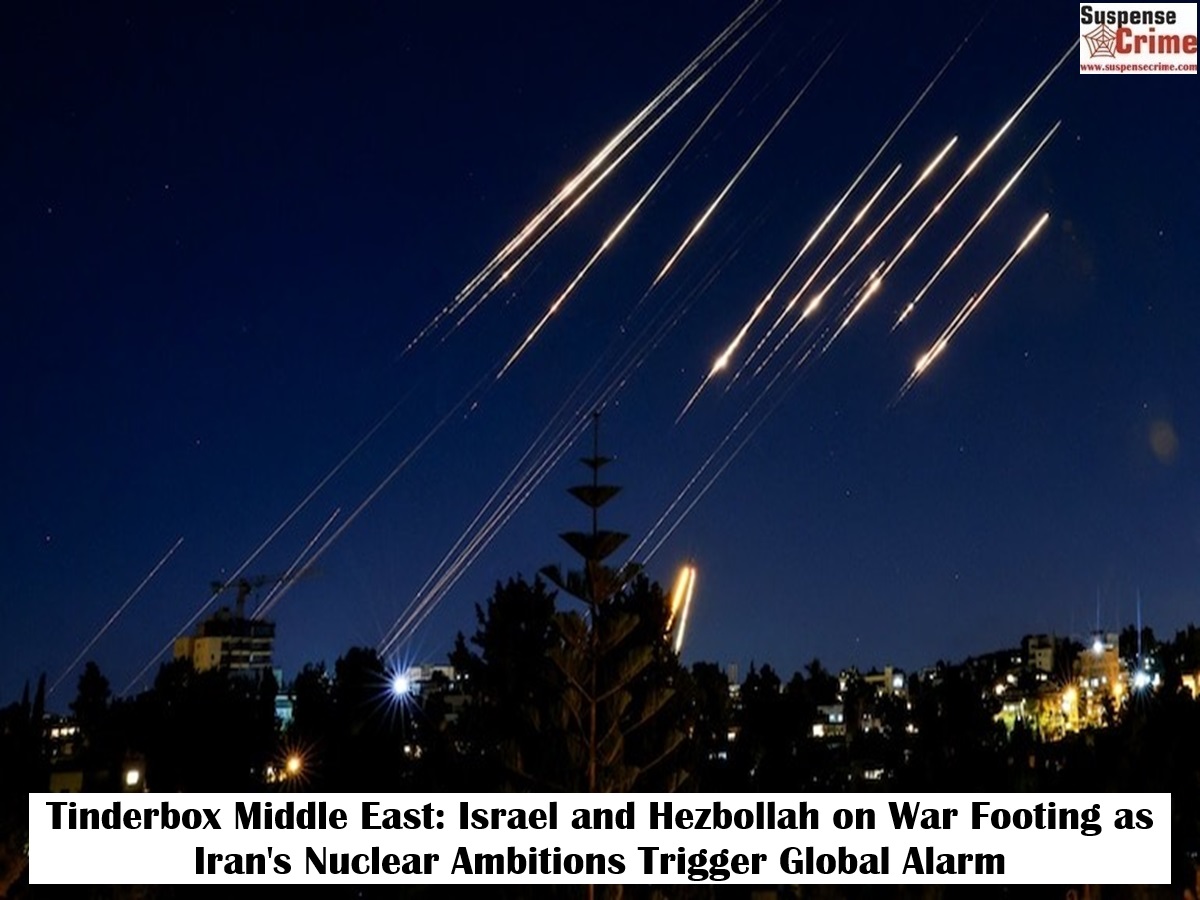
Suspense crime, Digital Desk : The Middle East is teetering on the brink of a major escalation as two critical flashpoints intensify simultaneously: the volatile Israel-Lebanon border and Iran's rapidly advancing nuclear program. Recent developments have pushed the region closer to an all-out war, drawing in new players and prompting stark warnings from international watchdogs.
The Northern Front: All-Out War Looms
The long-simmering conflict between Israel and the Iran-backed militant group Hezbollah has reached a boiling point. In a significant and unprecedented threat, Hezbollah leader Hassan Nasrallah warned that the group would consider Cyprus "part of the war" if the island nation continues to allow Israel to use its airports and bases for military drills. This is the first time Cyprus, an EU member state, has been directly threatened, dramatically expanding the potential conflict zone.
Israel's response was swift and uncompromising. Foreign Minister Israel Katz declared that a decision on an "all-out war" with Hezbollah is imminent. He vowed that in such a conflict, Hezbollah would be destroyed and Lebanon would be "severely hit." This verbal escalation follows the Israeli military's approval of "operational plans for an offensive in Lebanon," signaling that preparations for a full-scale invasion are complete.
The human cost is already staggering, with daily cross-border attacks having displaced tens of thousands of civilians on both sides of the border. While U.S. envoy Amos Hochstein is making diplomatic efforts to de-escalate the situation, the rhetoric and military posturing suggest that a major conflict may be unavoidable.
The Nuclear Clock: Iran's Defiance
Adding fuel to the fire, the International Atomic Energy Agency (IAEA), the UN's nuclear watchdog, has issued a grave warning about Iran's nuclear activities. IAEA chief Rafael Grossi confirmed that Iran is escalating its uranium enrichment capabilities by installing more advanced centrifuges at its key nuclear facilities, including the heavily fortified Fordow site.
This move is a direct defiance of international oversight and brings Iran closer to being able to produce weapons-grade uranium. Grossi expressed frustration, stating that Iran's actions are creating a situation where the international community will lose visibility into its nuclear program. He has given Tehran a two-week window to provide satisfactory explanations and improve cooperation before the IAEA board is forced to consider further action.
These two crises are dangerously intertwined. An Israeli war with Hezbollah could easily draw in its primary patron, Iran. Simultaneously, Iran's nuclear advancements are seen by Israel as an existential threat, increasing the likelihood of preemptive military action. The combination of these factors has placed the entire Middle East in a highly volatile and unpredictable state.
_1570701464_100x75.jpg)
_1563449287_100x75.jpg)
_1025409548_100x75.jpg)
_1681775372_100x75.jfif)