
 Priyanka Tiwari
 Share
Share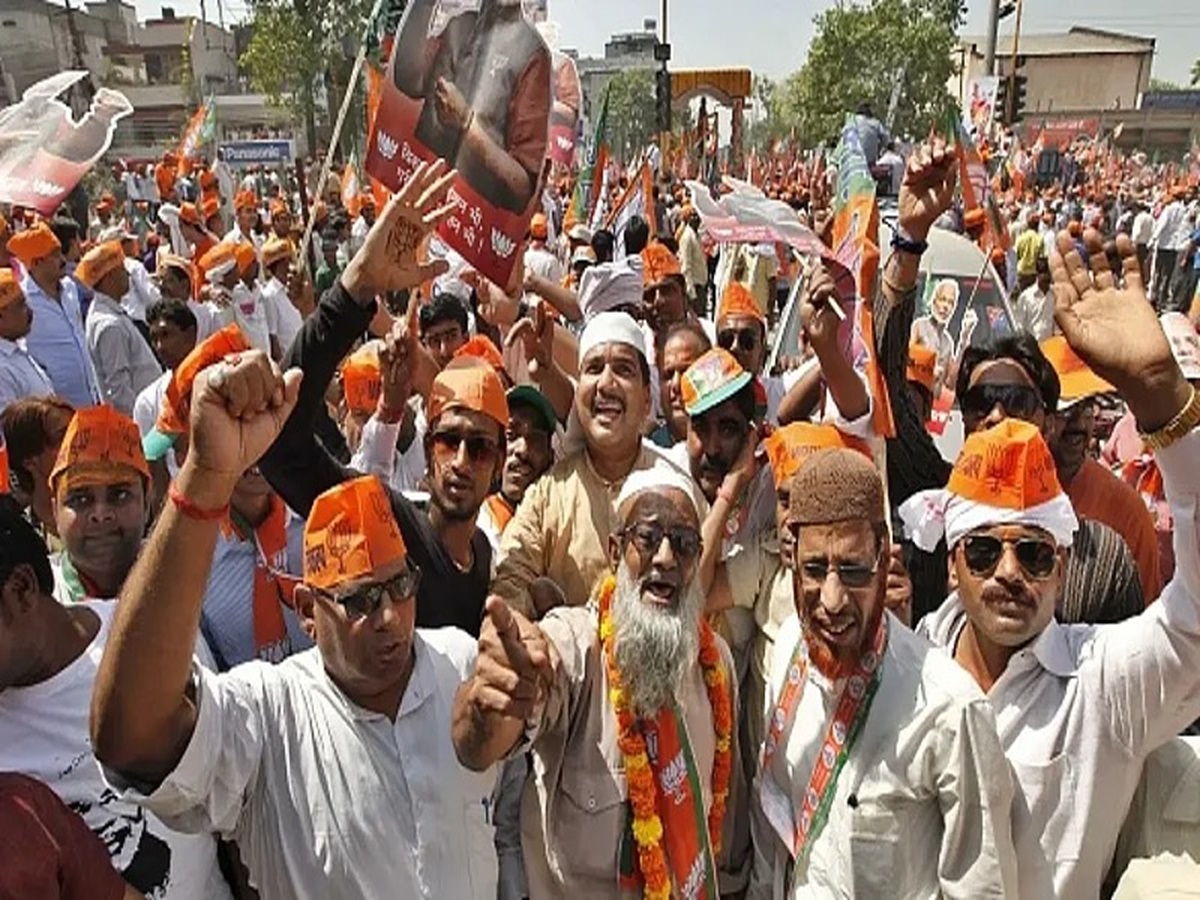
Suspense crime, Digital Desk : A high-stakes political battle is heating up in Uttar Pradesh, India's most populous state, as the ruling Bharatiya Janata Party (BJP) and the opposition Samajwadi Party (SP) vie for the support of a crucial voting bloc: the Pasmanda Muslims. This clash represents a significant shift in Indian politics, moving beyond religious identity to focus on the deep-seated caste and class divisions within the Muslim community.
Who are the Pasmanda Muslims?
The term "Pasmanda," a Persian word meaning "those left behind," refers to Muslims belonging to backward, Dalit, and tribal castes. They constitute a massive majority—estimated at over 80%—of India's Muslim population but have historically been marginalized and underrepresented in leadership, both within their community and in national politics.
The BJP's Strategic Outreach
Prime Minister Narendra Modi and the BJP have launched a targeted campaign to win over this demographic. Their narrative is simple but powerful: for decades, "secular" parties like the SP have treated Muslims as a monolithic vote bank, taking their support for granted while only empowering the elite "Ashraf" (upper-caste) Muslims.
The BJP's pitch is one of inclusive development under its "Sabka Saath, Sabka Vikas" (Together with all, Development for all) slogan. By highlighting the socio-economic struggles of the Pasmandas, the BJP aims to break the traditional voting patterns and portray itself as the true champion of the poor and marginalized, regardless of their faith. The appointment of Danish Azad Ansari, a Pasmanda leader, as a minister in the UP government is a key part of this strategy.
The Samajwadi Party's Defense
For the Samajwadi Party, this move is a direct threat to its core "M-Y" (Muslim-Yadav) vote bank. In response, the SP and its leader, Akhilesh Yadav, have dismissed the BJP's outreach as a political gimmick ("jumla") designed to divide the Muslim community.
The SP's counter-narrative warns Pasmandas not to fall for the BJP's "deceptive" tactics, arguing that the party is fundamentally anti-minority. They are urging for Muslim unity, framing the upcoming political contest as a fight to protect secularism and prevent the fragmentation of their support base.
At its heart, this is a battle of narratives. The BJP is attempting to redefine political identity along class and caste lines, while the SP is fighting to maintain its traditional hold by emphasizing religious unity and secular credentials. The outcome of this struggle for the Pasmanda vote could very well reshape the future of politics in Uttar Pradesh and beyond.
Read More: PM Modi and Kharge’s Viral Moment: A Rare Handshake and Laughter at Ambedkar Tribute Event