
 Ziya
Ziya Share
Share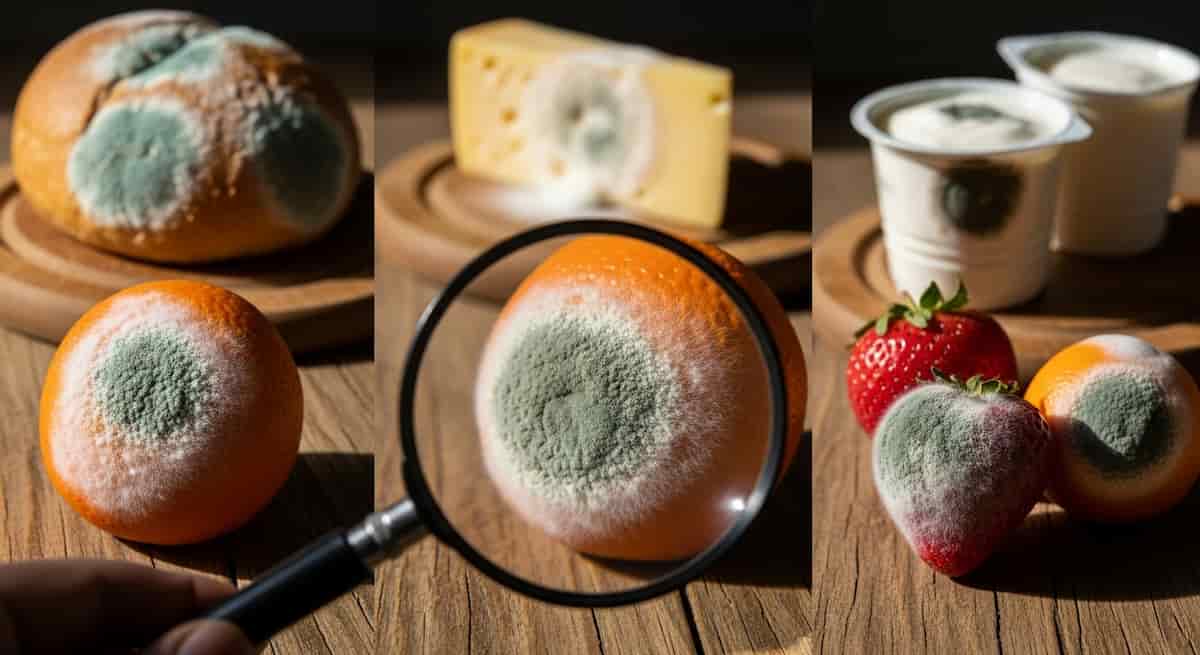
We’ve all been there. You’re about to make a sandwich and you see a tiny, fuzzy green spot on the bread. Or you pull out a block of cheese and notice a small patch of white fuzz. The immediate question is always the same: Is it safe to just cut off the moldy part and eat the rest?
The answer, it turns out, isn't a simple yes or no. It really depends on the type of food. Understanding the nature of mold can help you make a safer choice.
What You See Isn't All You Get
That little spot of mold you see on the surface is just the tip of the iceberg. Molds are a type of fungus that have a root-like structure, called hyphae, which can spread deep into the food, much like the roots of a tree spread into the soil. These invisible threads can carry bacteria with them.
More concerning is that some types of molds produce mycotoxins, which are poisonous substances that can cause allergic reactions, respiratory problems, and in some cases, serious illness. And unfortunately, you can't see these toxins.
When to Toss and When it's (Maybe) Okay
So, how do you decide what to do? Here’s a general guide based on food type:
Throw It Out Immediately: Soft and Porous Foods
For foods that are soft or have a high moisture content, mold can spread its invisible roots easily. It's best to discard these items entirely. This list includes:
- Bread and Baked Goods: The porous nature of bread means mold can be growing far beyond what you can see.
- Soft Cheeses: Cream cheese, cottage cheese, and soft cheeses like Brie and Camembert should be thrown away if they have mold.
- Soft Fruits and Vegetables: Items like tomatoes, cucumbers, berries, and peaches have high moisture content, allowing mold to penetrate deeply.
- Yogurt and Sour Cream: These are easily contaminated and should be discarded.
- Jams and Jellies: While you might be tempted to scoop out the mold, mycotoxins can be present throughout the jar.
- Cooked Leftovers, Casseroles, and Meats: These are all susceptible to mold contamination.
Okay to Salvage (with caution): Hard and Firm Foods
For dense, hard foods, the mold generally can't penetrate as deeply. In these cases, it is often safe to cut away the moldy part and use the rest. The key is to cut a generous margin around the spot. A good rule of thumb is to trim off at least one inch around and below the visible mold. Be careful not to let the knife touch the mold itself to avoid cross-contamination.
This applies to:
- Hard Cheeses: Think Parmesan, Cheddar, and Swiss. You can safely cut off the moldy section.
- Firm Fruits and Vegetables: Cabbage, carrots, and bell peppers are firm enough that you can usually just cut away the moldy spot with a good margin.
What About Molds That Are Supposed to Be There?
Of course, some molds are an essential part of the food, like in Blue cheese, Gorgonzola, Brie, and Camembert. These are safe to eat because they are not the kind that produce harmful mycotoxins. However, if you see a different type of fuzzy mold growing on these cheeses (something that wasn't there when you bought it), it’s a sign of spoilage, and it's best to be cautious.
In short, while it’s tempting to save food, when it comes to mold, it's always better to be safe than sorry. When in doubt, the best advice is to throw it out.
Read More: Beat the Heat: 5 Hydrating Fruits Recommended by Health Experts to Stay Cool This Summer