Priyanka Tiwari
 Share
Share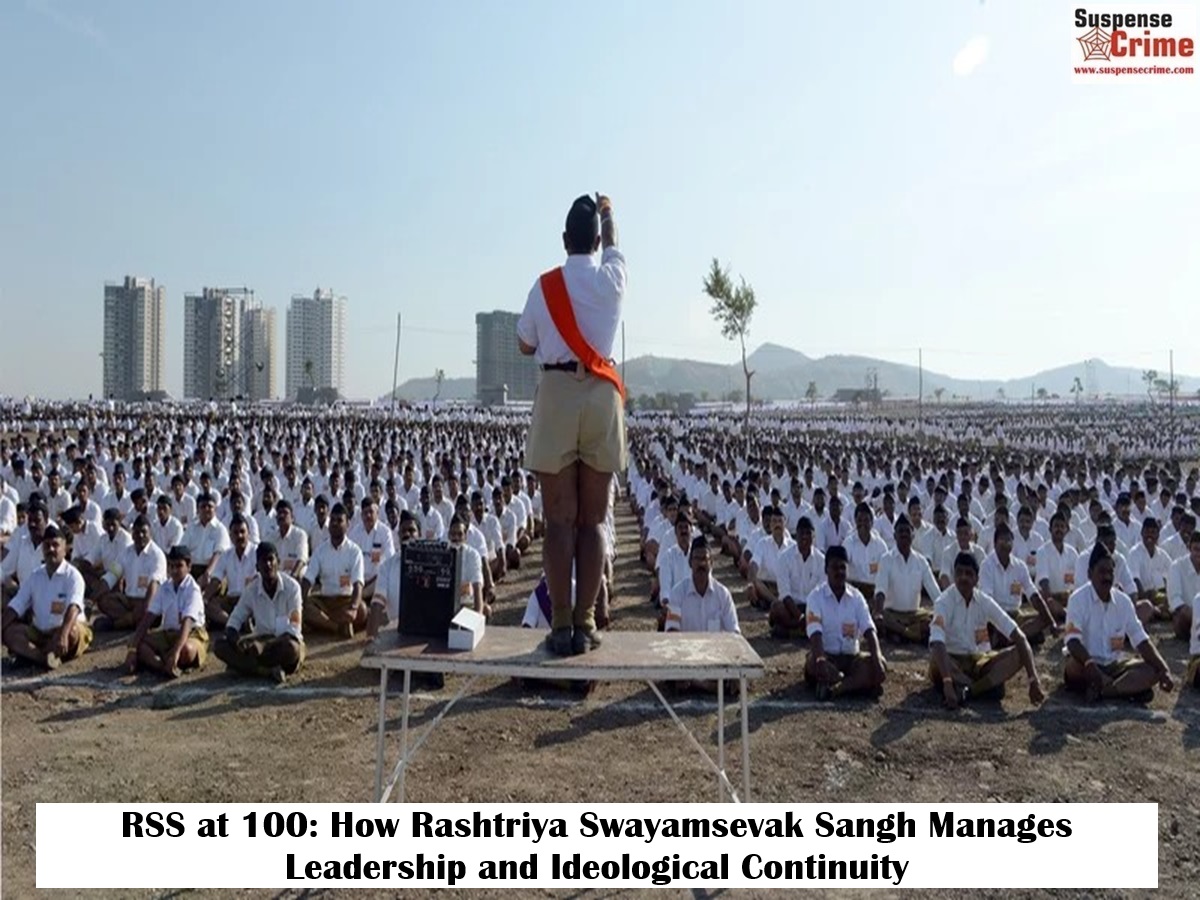
Suspense crime, Digital Desk : The Rashtriya Swayamsevak Sangh (RSS) is completing 100 years. It gives remarkable perspectives about leadership succession, social integration, and ideological continuity. Globally recognized as the largest voluntary organization, the RSS has had only six Sarsanghchalaks, each selected from a smooth nomination-based leadership succession process.
Succession in Leadership Within the RSS
Nomination of successors by still-active Sarsanghchalak’s provides uninterrupted stability to the organization. This was perceptibly evident when the second and longest-serving Sarsanghchalak, M.S. Golwalkar, known as ‘Guruji’, passed away in 1973. He left behind three sealed letters. One was to Balasaheb Deoras wherein he appointed him as his successor. Other two letters wished him no memorial and contained Gurujis final prayer by Saint Tukaram, showcasing one’s spirituality and humility.
Growth of Organizational After Golwalker’s Leadership
Expansion of the RSS into a national network was one of the major achievements during Golwalkar’s leadership. This also led to the creation of major affiliates like:
- Akhil Bharatiya Vidyarthi Parishad (ABVP)
- Vishwa Hindu Parishad (VHP)
- Bharatiya Mazdoor Sangh (BMS)
- Vanvasi Kalyan Ashram
- Vidya Bharati
- Bharatiya Jan Sangh, the forerunner to the BJP
Golwalkar spearheaded Samajik Samrasta, which means social harmony, thus initiating the removal of caste based discrimination. Inculcating unity among different factions of Hinduism, he organized the World Hindu Conference during Kumbh Mela in 1966.
The 6 Ideological pillars of the First World Hindu Conference
Guruji’s talk in 1966 set the stage for the RSS international hindu vision. The six ideological points are:
Reconstruct Hindu Identity: The colonisation muddled the framework of Hindu identity; reconnecting with Dharma along with culture is primordial.
Abroad Maintain Hindu Values: The Hindu diaspora does not have any structures to transmit values to the new generations. This will lead to dismantling of the culture.
Fight the Hinduism inferiority complex: A good number of people in India are reticent to come out as Hindus. There is a need to revive pride in our traditions for strength and unity.
Comprehensive Hinduism: Other faiths are not the RSS’s direct opponents. In this way, Hindutva is the acceptance of love, purity, and oneness.
Dharma for All Sanatana: An eternal principle including Budhism and Sikhism united under Dharmic paths promoting diversity.
Aid vanawasi communities: Ongoing socio-political discriminations toward tribal societies need redress. They are an essential part of the Hindu social structure.