Punjab Political Shake-up: Veteran Akali Dal Leader and Former Minister Surjit Singh Rakhra Joins Aam Aadmi Party in Major Blow to SAD
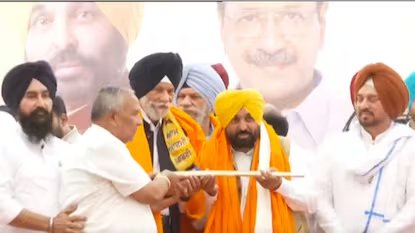
In a massive political development that has sent shockwaves through the political corridors of Punjab, veteran Shiromani Akali Dal (SAD) leader and former Cabinet Minister Surjit Singh Rakhra has officially defected to the Aam Aadmi Party (AAP). This high-profile induction comes as an unprecedented setback for the Akali Dal leadership, especially for party president Sukhbir Singh Badal, who is already battling severe internal dissent and structural shifts within the regional outfit.
Rakhra’s transition to the ruling party is expected to radically alter the electoral equations and power dynamics in the politically volatile Malwa region of Punjab.
The Official Induction: Top AAP Leadership Welcomes the Veteran into the Fold
The veteran politician made his formal entry into the Aam Aadmi Party at an official event attended by the party's top brass and state leadership. Senior AAP leaders formally presented Rakhra with the party’s traditional yellow-and-white sash (siropa), marking his official integration into the ruling dispensation.
Welcoming him to the party, AAP leaders stated that the entry of a seasoned statesman like Surjit Singh Rakhra reflects the growing public and political trust in the governance model led by Chief Minister Bhagwant Mann and party national convener Arvind Kejriwal. They emphasized that his immense administrative experience would prove to be an invaluable asset in accelerating the development of the state.
Decades of Loyalty Broken: Why the Rakhra Family Ditched the Akali Dal
Surjit सिंह Rakhra has historically been regarded as one of the most trusted pillars of the Shiromani Akali Dal. Hailing from a highly influential NRI political family, Rakhra served as the Higher Education and Water Supply Minister during the erstwhile SAD-BJP coalition government. His family has maintained a deeply rooted political stranglehold on the Patiala rural and Samana assembly segments for decades.
According to close political analysts, Rakhra's departure stems from a growing disillusionment with the current functional style and strategic decisions of the SAD core leadership. Over the past few months, deep ideological rifts and a perceived lack of clear direction within the Akali high command had left several senior leaders feeling marginalized, eventually prompting Rakhra to break his decades-long allegiance to the Badal family.
Strengthening the Base: AAP Solidifies its Grip on the Malwa Fortress
The timing of Surjit Singh Rakhra’s entry into the Aam Aadmi Party is strategically significant for the ruling government. By pulling a heavyweight leader of Rakhra’s stature into its fold, AAP has effectively consolidated its political footprint in the Malwa belt, particularly in the Patiala district—a region that has historically been a fierce battleground involving the Akalis, the Congress, and Capt. Amarinder Singh’s loyalists.
Political strategists suggest that Rakhra's formidable grassroots network, combined with his family’s substantial financial and NRI backing, will significantly strengthen AAP’s organizational structure ahead of upcoming local body and crucial regional polls, making it increasingly difficult for the opposition to mount a significant challenge.
Shock and Introspection: What Lies Ahead for a Weakened Shiromani Akali Dal?
For the Shiromani Akali Dal, the exit of Surjit Singh Rakhra is an incredibly bitter pill to swallow. The party has been consistently losing its traditional Panthic and rural vote base, and the desertion of its core loyalists signals a deep-seated crisis of confidence within its ranks.
While Rakhra expressed his absolute faith in AAP's policies aimed at absolute transparency and welfare, his departure forces the remaining Akali leadership into a strict mode of self-introspection. The massive political shift proves once again that the political landscape of Punjab is undergoing a historic transformation, with traditional family-centric politics paving the way for newer structural alignments.