Priyanka Tiwari
 Share
Share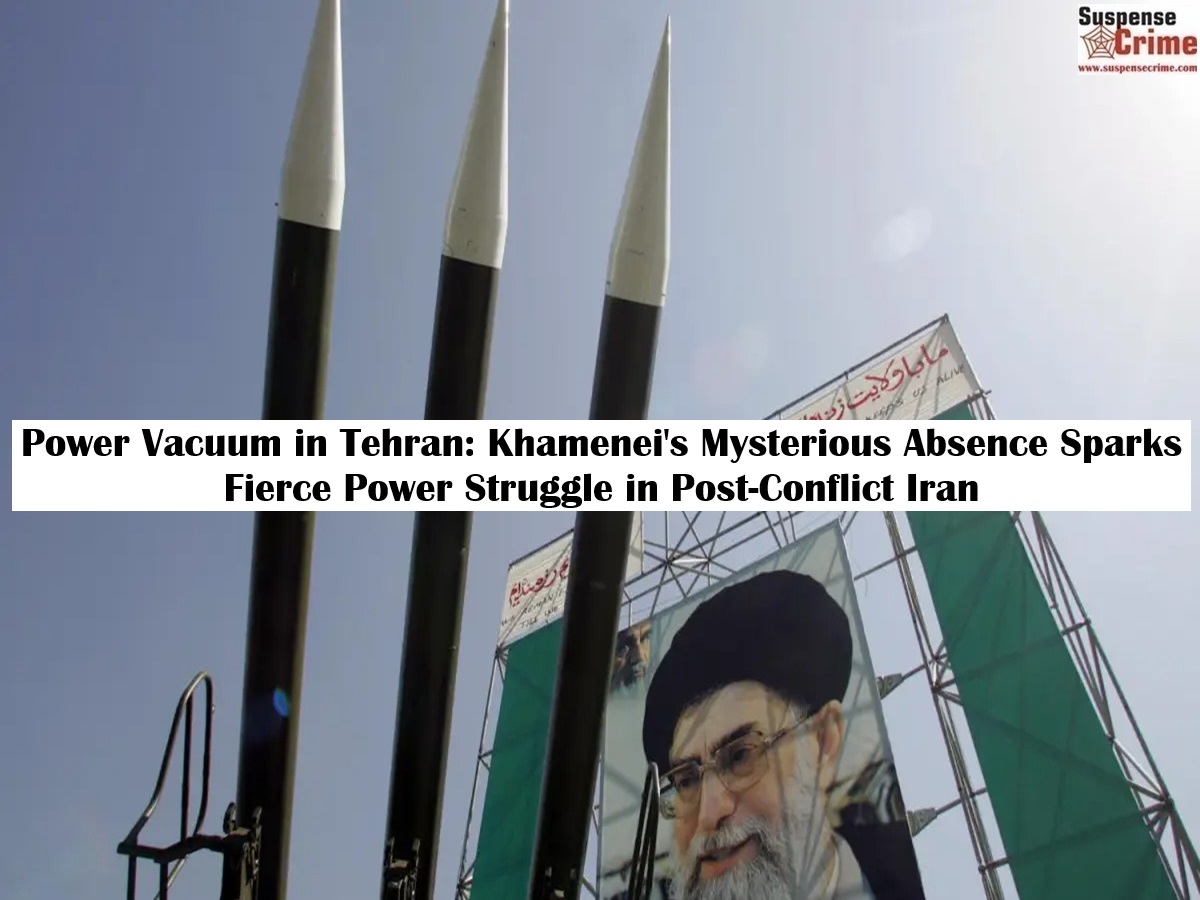
Suspense crime, Digital Desk : TEHRAN, IRAN – Iran is facing a profound internal crisis as its Supreme Leader, Ayatollah Ali Khamenei, has mysteriously vanished from public view, sparking a fierce and shadowy power struggle between the country's hardline military establishment and the political government.
The Supreme Leader's prolonged absence, coming just days after a fragile ceasefire with Israel was established, has created a dangerous power vacuum at the heart of the Islamic Republic, threatening to unravel the truce and plunge the nation into internal chaos.
Official state media has remained conspicuously silent on Khamenei's whereabouts, offering no explanation for why he has missed several key public appearances, including leading Friday prayers and chairing crucial national security meetings. This silence has fueled intense speculation, with rumors ranging from a severe health crisis to a potential internal coup.
This leadership void has unleashed a behind-the-scenes battle for control. The two main factions vying for influence are:
- The Islamic Revolutionary Guard Corps (IRGC): The powerful military and ideological hardliners who view the recent ceasefire as a humiliating concession. They are reportedly seeking to assert their dominance, believing that any sign of weakness will be exploited by Iran's enemies.
- The Political Establishment: Led by the President and other senior government figures, this faction is seen as more pragmatic. They likely view the ceasefire as a necessary step to avoid a devastating war and are trying to maintain stability and control through established political channels.
This internal conflict puts the fragile ceasefire at extreme risk. Any move by the IRGC to break the truce and provoke a new conflict could be a bid to consolidate their power. Conversely, the political wing understands that another war would be disastrous for the country's crippled economy.
The international community, including the United States and Israel, is watching the situation with deep concern. The uncertainty over who is truly in command in Tehran makes diplomatic engagement impossible and dramatically increases the risk of a deadly miscalculation.
As the shadowy battle for control intensifies in the corridors of power, the future of Iran, and the stability of the entire Middle East, hangs precariously in the balance. The nation is at a crossroads, where the outcome of this internal power struggle will have profound consequences both at home and abroad.
Read More: High-Stakes Drama at Sea Pakistani Oil Tanker Shalamar Defies US Blockade in Strait of Hormuz