Priyanka Tiwari
 Share
Share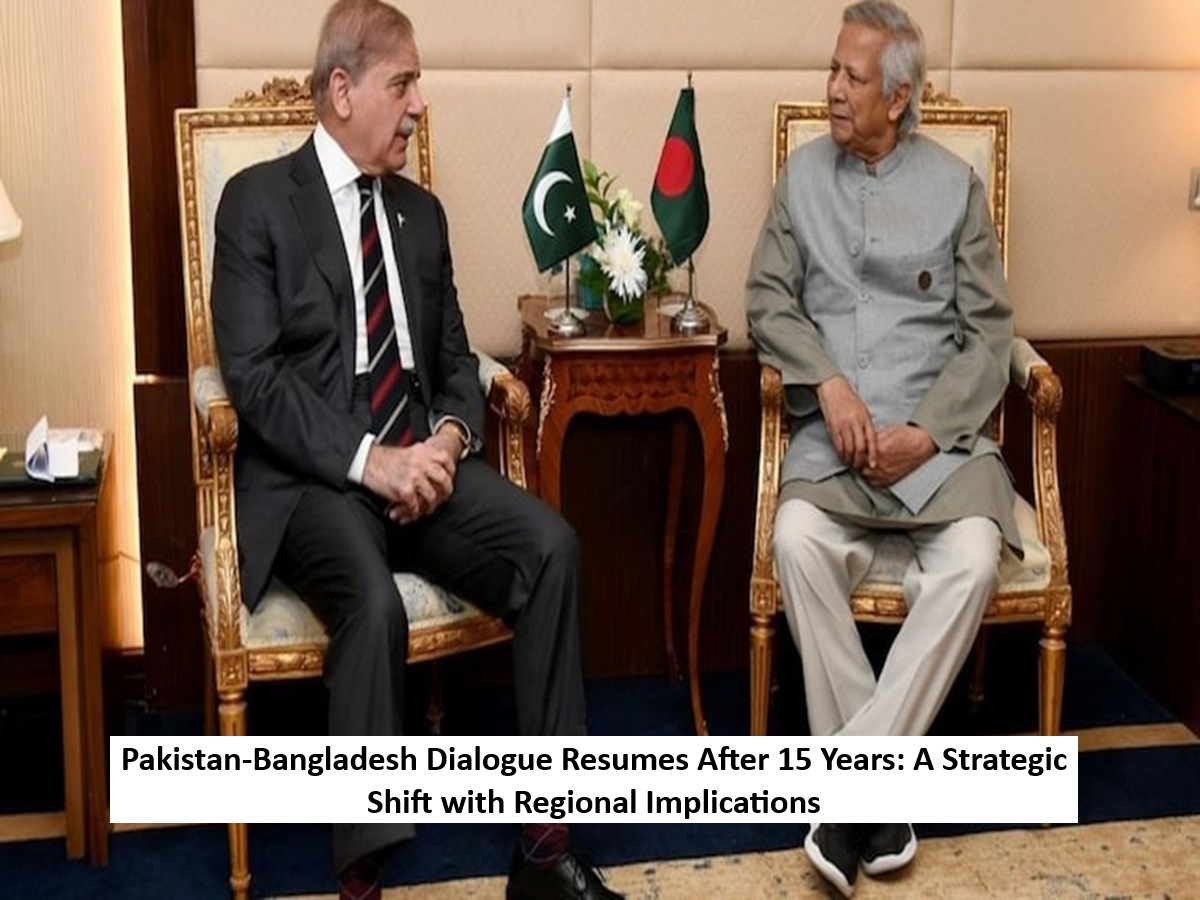
In a landmark development, Pakistan’s Foreign Secretary Amna Baloch arrived in Dhaka to meet her Bangladeshi counterpart Md Jashim Uddin as part of the Foreign Office Consultations (FOC), marking the first high-level diplomatic engagement between the two countries in over 15 years. The initiative signals Islamabad’s renewed push to recalibrate regional ties in South Asia.
Historical Context: From War to Estrangement
Tensions between Pakistan and Bangladesh have persisted since the 1971 Liberation War, which led to Bangladesh’s independence from Pakistan. Successive governments in Dhaka, especially under Sheikh Hasina, kept diplomatic ties cold due to war crimes trials and unresolved historical grievances.
However, the recent political transition in Bangladesh—after Muhammad Yunus assumed leadership following a student-led uprising in August 2024—has opened a window for possible rapprochement between the two nations.
Why Pakistan is Reaching Out Now
Break Regional Isolation: With deteriorating ties with India and instability in Afghanistan, Pakistan seeks to reestablish relevance in South Asian diplomacy.
Trade and Connectivity: Pakistan views Bangladesh’s economic growth and strategic location near the Bay of Bengal as critical to new trade corridors.
Counterbalance India: Islamabad aims to dilute India’s influence in Dhaka, leveraging cultural diplomacy and economic incentives.
Align with China: As both Pakistan and Bangladesh deepen engagement with Beijing’s Belt and Road Initiative, Pakistan could be fostering a China-aligned strategic bloc.
Strategic Implications for India
India is closely monitoring the evolving dynamics between Pakistan, Bangladesh, and China. Bangladesh's growing proximity to both Islamabad and Beijing may challenge India’s traditionally strong ties with Dhaka.
Security Concerns: Both Pakistan and Bangladesh are sourcing military equipment from China. A potential trilateral defense collaboration may pressure India on both eastern and western fronts.
Naval Threat: China’s expanding maritime footprint in the Bay of Bengal, bolstered by ties with Bangladesh and Pakistan, could impact India’s naval dominance and maritime security.
Diplomatic Maneuvering: Improved Pakistan-Bangladesh ties could enable coordinated diplomatic pressure on India in multilateral forums.
India's Diplomatic Calculations and Challenges
Relations between India and Bangladesh have seen strain post-Hasina’s ouster. Attacks on minority Hindus in Bangladesh have raised security and humanitarian concerns in New Delhi.
During a recent meeting at the BIMSTEC summit, PM Narendra Modi expressed concern over the safety of minorities, while Yunus pressed for Sheikh Hasina’s extradition. The diplomatic exchange highlighted growing friction. Yunus’s remark that Bangladesh is the “only guardian of the ocean” for the region further aggravated India.
Despite these tensions, Modi emphasized India’s people-centric development efforts in Bangladesh and expressed the desire for constructive engagement rooted in pragmatism.
Strategic Way Forward for India
Naval Readiness: India must continue strengthening its maritime capabilities to secure its position in the Bay of Bengal.
Economic Outreach: Expanding trade, infrastructure, and investment partnerships with Bangladesh is essential to counter Chinese influence.
Cultural Diplomacy: Reaffirming shared heritage and values can reinforce India-Bangladesh ties and build goodwill beyond government dynamics.
Regional Forums: India should leverage BIMSTEC and other multilateral platforms to reinforce its leadership role and regional stability agenda.
Read More: BLA Forms Own Navy? Balochistan Liberation Army Claims First-Ever Naval Strike in Major Escalation