










Delimitation Bill 2026: 850 Lok Sabha Seats & INDIA Bloc Rift
Ahead of Parliament's four-day special sitting beginning Monday, November 30, 2026, the Union government's revised legislative package—centered on the Constitution (132nd Amendment) Bill, 2026 alongside companion delimitation measures—has reshaped both the constitutional design of seat redistribution and the political math inside the opposition INDIA bloc. Unlike the earlier April 2026 constitution amendment bill that was defeated in the Lok Sabha by 54 votes, the new draft proposes raising the maximum strength of the Lok Sabha from 550 to 850, lifting the ceiling on state legislative assemblies from 500 to 650, expanding existing Lok Sabha and Assembly seats by a uniform 50% across states and Union Territories, redrawing constituency boundaries using 2011 Census figures, freezing the resulting seat allocation until 2051, and operationalizing 33% reservation for women. By addressing southern states' primary fear—that population-based redistribution would shrink their parliamentary share—the revised formula has drawn positive signals from DMK president MK Stalin and Sharad Pawar's Nationalist Congress Party (Sharadchandra Pawar) [NCP (SP)], creating visible strain within the opposition camp. For political observers, students of governance, and voters across Uttar Pradesh—especially in state capital Lucknow and neighboring centers such as Unnao, Kanpur, Prayagraj, and Varanasi, where parliamentary representation and national coalition dynamics draw close attention—the November 30 sitting marks a pivotal test of constitutional consensus and Lok Sabha numbers.
Key Provisions of the Constitution (132nd Amendment) Bill, 2026
Cleared by the Union Cabinet on November 27, 2026, the updated legislative framework introduces major changes across constitutional articles governing parliamentary and assembly composition:
| Legislative Feature | Proposed Provision in the 2026 Bill | Why It Matters |
| Lok Sabha Strength Cap | Raised from 550 to 850 (up to 815 from states and 35 from Union Territories). | Creates headroom for a uniform expansion of parliamentary seats without reducing any state's tally. |
| State Assembly Cap | Maximum strength increased from 500 to 650 members. | Allows proportional seat growth and women's quota implementation in state legislatures. |
| Uniform 50% Seat Expansion | Existing Lok Sabha and Assembly seats increased equally by 50% across states/UTs. | Preserves each state's existing percentage share in Parliament rather than shifting weight purely by population. |
| Census Base & Freeze Period | Boundaries redrawn using 2011 Census data; seat division frozen until 2051. | Delays population-ratio shifts for 25 years while updating internal constituency boundaries. |
| Delimitation Commission | Three-member body chaired by a sitting or former Supreme Court judge appointed by the Centre. | Determines seat allocation, redraws constituency boundaries, and designates seats reserved for women. |
| 33% Women's Reservation | 33% seats reserved for women in Lok Sabha and Assemblies (including within SC/ST quotas) for 15 years from the 2023 amendment's commencement, with cyclical rotation. | Directly links the new delimitation exercise to activating the women's reservation mandate. |
Why MK Stalin and Sharad Pawar's Stance Puts Pressure on INDIA Bloc Unity
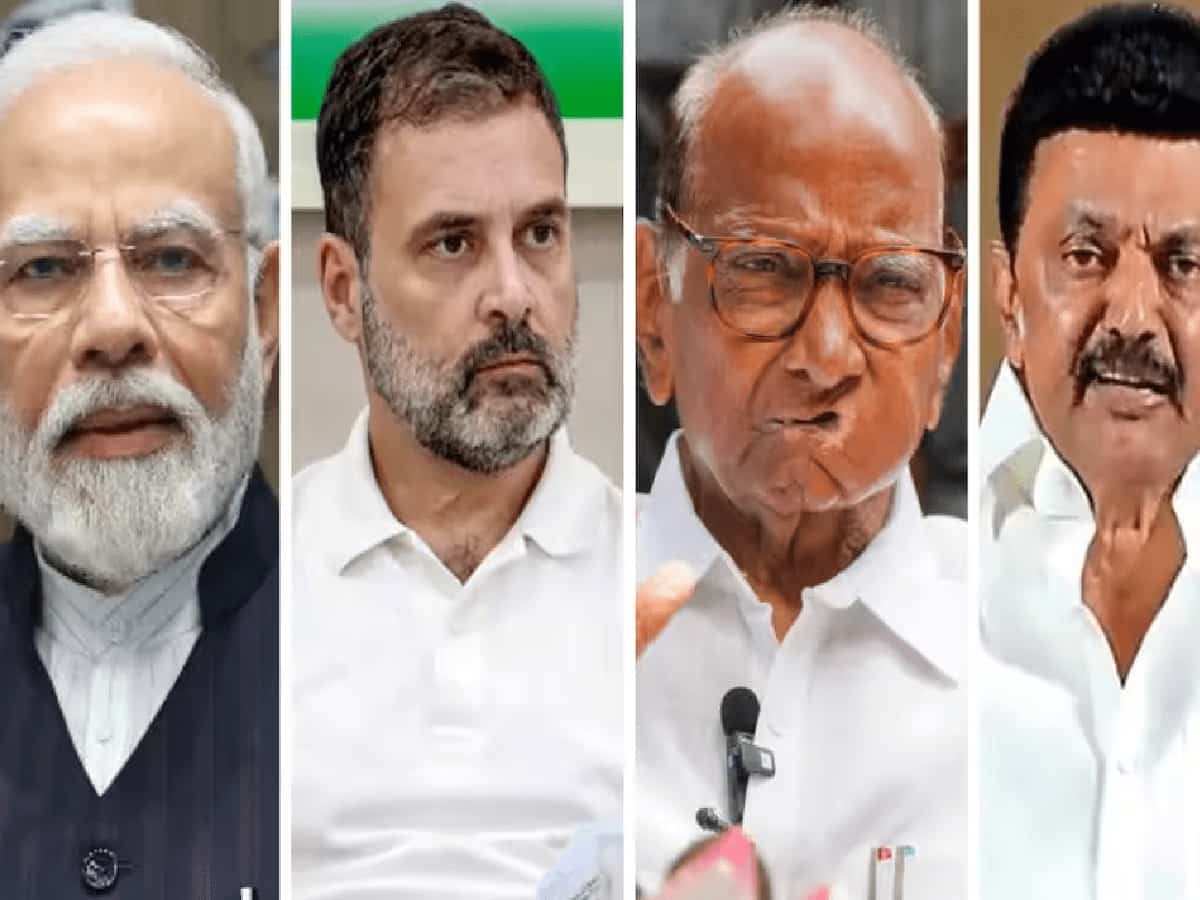
The sharpest political fallout from the revised draft lies in how it splits parties that stood united against the government in April. DMK chief MK Stalin had consistently insisted on two conditions: safeguarding Tamil Nadu's existing 7.18% share in the Lok Sabha and extending the inter-state representation freeze for another 25 years. Because the 50% uniform increase and 2051 freeze directly align with those demands, the DMK—with 22 Lok Sabha MPs—has moved toward backing the measure. Meanwhile, NCP (SP) leader Jitendra Awhad announced his party's support for a uniform 50% expansion across states, even as working president Supriya Sule noted she would examine the final draft text before confirming the formal floor position for the party's eight Lok Sabha MPs.
How the Lok Sabha Two-Thirds Majority Math Has Shifted Since April
On April 17, 2026, the earlier Constitution Amendment Bill secured 298 votes in favor and 230 against, falling 54 votes short of the special two-thirds majority required for a constitutional amendment. Since then, floor dynamics have shifted noticeably:
-
April Defeat vs. November Outreach: With the DMK's 22 MPs and NCP (SP)'s 8 MPs potentially moving from the opposition column into support, the government closes much of the two-thirds gap.
-
TMC Defections and Speaker Decisions: In June, 20 rebel Trinamool Congress MPs broke away and merged with the pro-NDA Nationalist Citizens Party of India (NCPI), though disqualification petitions remain pending before Lok Sabha Speaker Om Birla, while TMC leader Abhishek Banerjee has written to the Speaker seeking the revocation of Kalyan Banerjee's suspension ahead of Monday's sitting.
-
Voting Threshold in the House: With 540 sitting members (three seats vacant) and 539 eligible if Kalyan Banerjee's suspension continues, a vote involving 538 members (excluding the Speaker) would require 359 votes for a two-thirds majority—making the final positions of regional parties decisive on November 30.






