Battle for Education Accountability: Sonam Wangchuk Sets Conditions to End 23-Day Fast from Hospital Detention Amid CJP's Parliament March
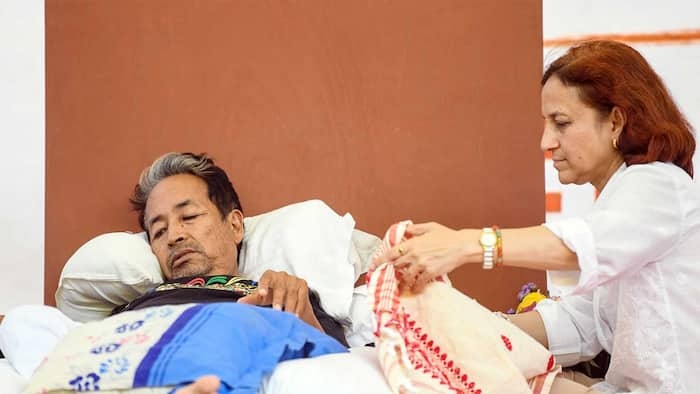
As the Monsoon Session of Parliament convenes on July 20, 2026, the political confrontation over examination paper leaks and structural education reforms has reached a critical flashpoint. Climate activist and education reformer Sonam Wangchuk, speaking from what he characterised as "illegal detention" at Safdarjung Hospital, has formally outlined three specific terms under which he will call off his ongoing hunger strike.
Wangchuk, whose fast entered its 23rd consecutive day on Monday, was forcibly removed by Delhi Police from the Jantar Mantar protest site on July 18 following a medical assessment citing critical health risks.
Sonam Wangchuk’s Three Terms to End the Fast
In a handwritten note shared via social media from Safdarjung Hospital, Wangchuk declared that he is prepared to break his fast on July 20 if any of the following conditions are met:
Government Accountability: The Union Government formally accepts responsibility for systemic failures in the national education system, including recent leaks of examination papers.
Parliamentary Representation: Wangchuk and the leadership of the Cockroach Janata Party (CJP) are permitted to reach the doorsteps of Parliament, where Members of Parliament (MPs) across political parties provide concrete assurances that education reforms will be prioritised during the Monsoon Session.
Hospital Outreach by Lawmakers: Should health constraints or police restrictions block physical movement to Parliament, MPs and floor leaders from various parties visit him at Safdarjung Hospital to extend the required assurances regarding education accountability.
Excerpts from Wangchuk's Statement: "From the illegal detention at Safdarjung Hospital, where my freedom of movement, speech, and communication are restricted... I will end my fast on 20th July if the government takes accountability or if leaders assure us they will take up the issue in Parliament."
Legal Battle and Public Mobilisation
The activist's hospitalisation has sparked significant legal and political friction. The Delhi High Court declined an urgent petition filed by Wangchuk's wife, Gitanjali J. Angmo, seeking his transfer to a private facility, and asked Wangchuk to cooperate with Safdarjung Hospital's medical staff, while directing the authorities to submit a detailed health status report. Angmo publicly alleged that Wangchuk's personal doctors were denied access to him and announced that she would lead the CJP's 'Chalo Sansad' march in his stead.
The student-led movement, organised under the banner of the Cockroach Janata Party (CJP) alongside student bodies like KYS, AISA, and SFI, has been staging continuous sit-ins at Jantar Mantar since June 20. The alliance is demanding the resignation of Union Education Minister Dharmendra Pradhan, an overhaul of national entrance testing mechanisms, and justice for students affected by exam cancellations.
Delhi Fortified as Police Enforce Strict Restrictions
Concurrently, the Delhi Police has converted New Delhi into a fortress to prevent demonstrators from approaching the Parliament complex. Prohibitory orders under Section 163 of the Bharatiya Nagarik Suraksha Sanhita (BNSS) remain enforced, making unauthorised gatherings of five or more people, marches, or processions illegal.
Over 5,000 security personnel and 25 battalions of the Central Armed Police Forces (CAPF) have been deployed across 15 designated security zones, with police categorically confirming that no permission has been granted for the 'Chalo Sansad' rally.

_1358420202_351x234.jpg)
_516018675_351x234.jpg)
_257526532_351x234.jpg)
_1336121670_351x234.jpg)