Priyanka Tiwari
 Share
Share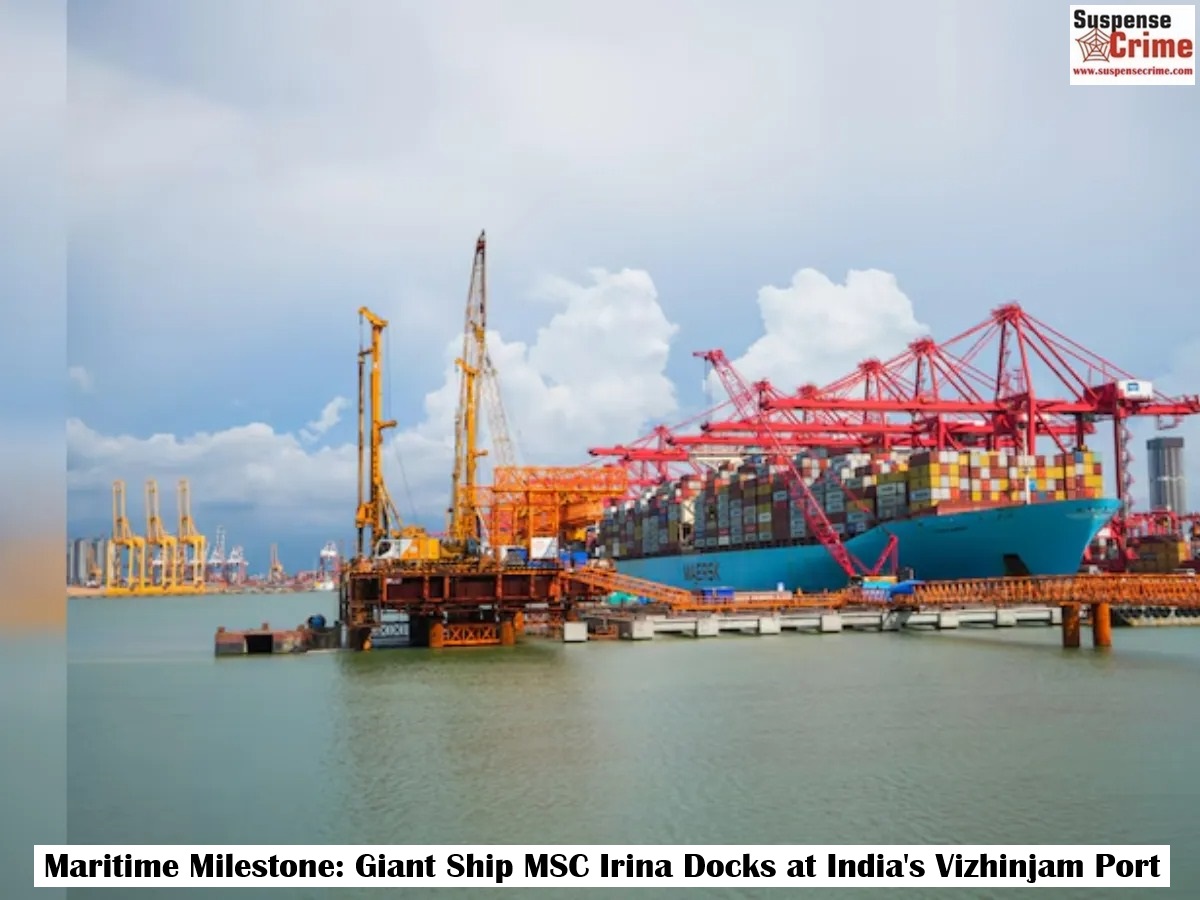
Suspense crime, Digital Desk : In a significant display of its growing maritime prowess, India has welcomed one of the world's largest container vessels, the MSC Irina, at the new Vizhinjam International Seaport in Kerala. The arrival of the colossal ship, which is roughly four times the size of a football field, marks a historic milestone for the port and the nation's logistics sector.
Operated by Adani Ports and Special Economic Zone (APSEZ), the Vizhinjam Port has been developed to handle ultra-large container vessels like the MSC Irina, which has a massive capacity of over 24,000 Twenty-foot Equivalent Units (TEUs). This docking serves as a powerful validation of the port's state-of-the-art infrastructure and deep-draft capabilities.
Ashwani Gupta, CEO of APSEZ, celebrated the event, calling it a "momentous day" and a testament to the port's ability to handle mega-ships, which in turn will position Vizhinjam as a leading transshipment hub.
The Strategic Importance of Vizhinjam
For decades, India has relied on foreign ports such as Colombo in Sri Lanka, Salalah in Oman, and Singapore for transshipping a significant portion of its container cargo. This dependency resulted in additional time and costs for Indian importers and exporters.
The operationalization of Vizhinjam Port is set to change this dynamic. Its strategic location near major international shipping routes and its natural deep-water draft of 20 meters make it an ideal hub for mother ships like the MSC Irina to dock directly. This will allow smaller "feeder" vessels to transport cargo to and from other Indian ports, streamlining the supply chain and significantly reducing logistics costs.
The arrival of the MSC Irina is more than just a single event; it heralds a new chapter for India, signaling its readiness to compete on the global maritime stage and solidifying its path toward becoming a self-reliant and dominant player in international trade.

_1329446650_100x75.jpg)