Major Controversy Errupts Over Draft Forms; Punjab SC Commission Demands Immediate Removal Of 'Derogatory' Caste Terms
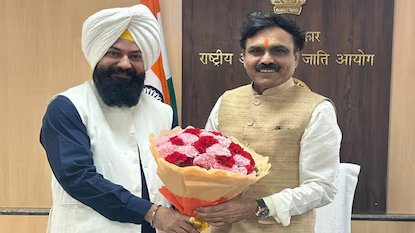
In a major development that could alter the administrative framework of the upcoming Census 2027, the Punjab State Scheduled Castes Commission has officially intervened against the usage of allegedly discriminatory and taboo language. Taking a aggressive stand for community dignity, Punjab SC Commission Chairman S. Jasvir Singh Garhi traveled to New Delhi for an emergency high-level meeting with the Chairman of the National Commission for Scheduled Castes (NCSC).
The urgent rendezvous follows an outpouring of formal public grievances and systemic complaints flagged within Punjab. The state body has discovered deeply objectionable and historically derogatory terminology embedded within the digital self-enumeration portals and provisional draft forms slated for the national Census 2027 rollout.
The Constitutional Violation: Garhi Cites Articles 14, 17, and 21
During his extensive interaction with the national panel, Jasvir Singh Garhi presented a comprehensive memorandum outlining how the inclusion of such obsolete and offensive caste slurs directly infringes upon the foundational legal protections of the Indian Constitution. The delegation argued that government-sanctioned digital apps and paperwork cannot continue to perpetuate vocabulary that undermines social equality.
Garhi explicitly stated that allowing these words to pass into official records violates Article 14 (Right to Equality), Article 17 (Abolition of Untouchability), and Article 21 (Protection of Life and Personal Liberty) which explicitly guarantees every citizen the right to live with absolute human dignity. The commission emphasized that the state cannot systematically use classification terms that invoke historical trauma or caste-based bias under the guise of demographic data collection.
The Target Communities: Outrage Among Valmiki and Mazhabi Sikh Outfits
The friction point primarily centers around targeted nomenclature concerning the Valmiki and Mazhabi Sikh communities across Northern India. Historically, specific localized idioms and administrative labels used during older colonial-era census drafts have carried derogatory societal undertones. Local civil rights groups realized these outdated classifications had mysteriously resurfaced on the modern digital self-enumeration platforms designed for Census 2027.
"We received serious complaints from representatives of various socio-religious organizations highlighting that their communities were being cataloged using highly objectionable vocabulary on public portals," an official spokesperson from the Punjab State Scheduled Castes Commission confirmed. The commission has demanded not only the immediate expunging of these words but also a permanent technical block on the digital database to ensure such phrases can never be entered manually or automatically generated in future exercises.
Institutional Friction: Demand For Permanent Safeguards On National Portals
The meeting in New Delhi marks a critical phase of institutional accountability. While the National Commission for Scheduled Castes oversees country-wide grievance redressal, the immediate field realities highlighted by the Punjab unit have forced federal administrators to re-evaluate the digital parameters of the upcoming census infrastructure.
The memorandum explicitly calls for a national auditing committee to scan all translated vernacular forms of Census 2027 across multiple Indian languages. Garhi urged national authorities to implement strict pre-publishing filters so that regional translators or IT contractors do not accidentally or willfully include terms banned under the Scheduled Castes and Scheduled Tribes (Prevention of Atrocities) Act.
Escalating Pressure On Digital Self-Enumeration Systems
As India transitions heavily toward digital-first data capturing, Census 2027 relies immensely on citizen-led online updates and self-enumeration apps. Activists argue that without immediate algorithmic corrections, millions of Scheduled Caste citizens logging into the portal would face humiliating experiences on official government platforms.
The NCSC Chairman reportedly assured the Punjab delegation that the matter would be processed with high priority, promising to look into the technical and administrative corrections with the Registrar General and Census Commissioner of India. With regional sentiments escalating ahead of national demographic surveys, all eyes are now on New Delhi to see how quickly the objectionable digital drafts are modified.
_1358958779_351x234.jpeg)