
 Priyanka Tiwari
 Share
Share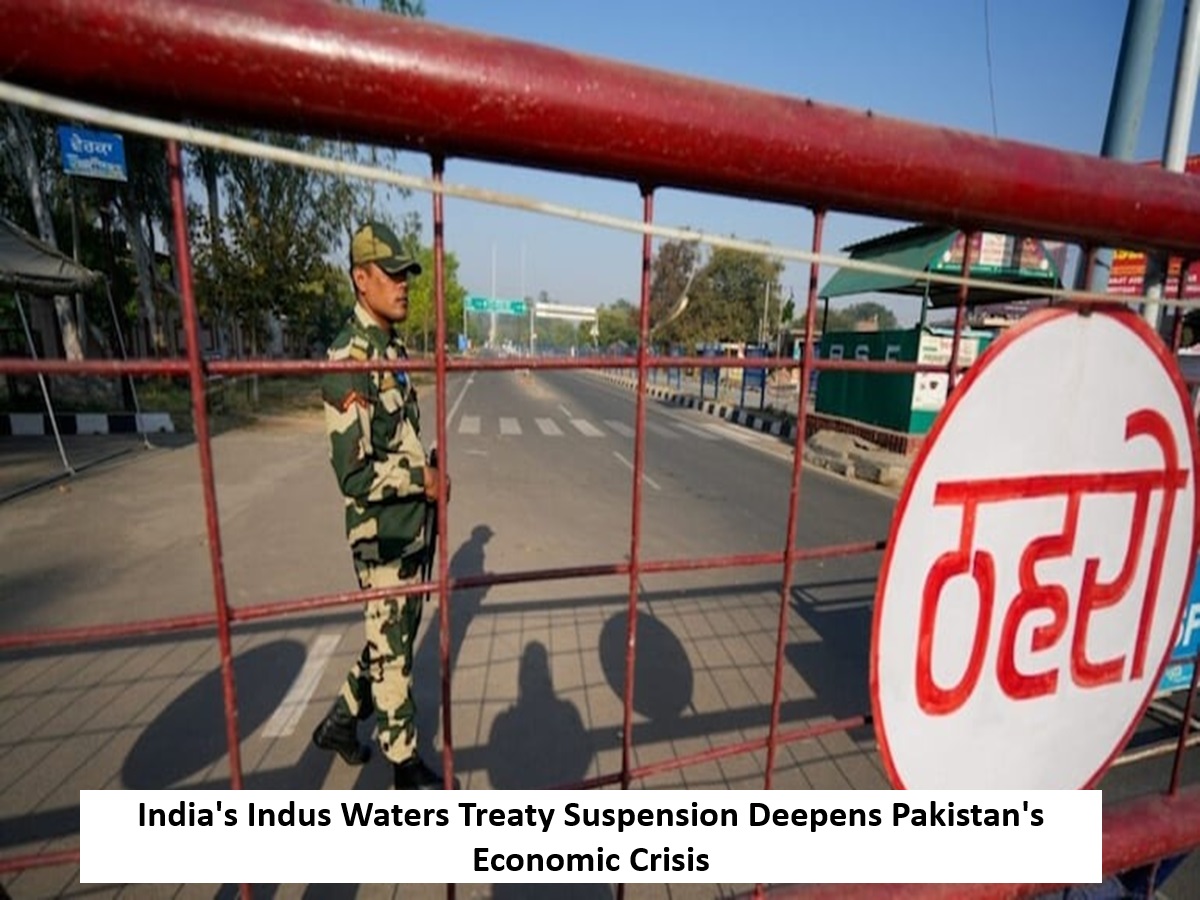
Suspense crime, Digital Desk : In response to the Pahalgam terror attack, India suspended Indus Waters Treaty (IWT), ceased bilateral trade, and prohibited the export of medicines to Pakistan. These have worsened the conditions of Pakistan's already struggling economy, creating new challenges for agriculture, healthcare, and water supply.
As per the IWT, Pakistan gets almost 80% of the water from the western rivers - Indus, Jhelum, and Chenab that flow from India. With the treaty stalled, Pakistan has serious concerns which are far more dire than any possible repercussions to India.
Happymon Jacob, an associate professor at Jawaharlal Nehru University, captured the move as “a clever, popular, and populistic measure” as per his statement to the New York Times.
Agriculture: Pakistan’s Economic Backbone Under Threat
With an estimated contribution to GDP of around 20% and employment rates over 38%, agriculture remains a pivotal sector in Pakistan. Pakistan’s agriculture highly relies on the waters of the Indus basin, meaning around 80% of it uses its waters, and it also accounts for about one-third of hydropower generation.
New Delhi made hints that it might try to restrict or divert waters from the eastern rivers - Ravi, Beas, Sutlej - to Indian use. Any reduction in the water levels even by a small margin would spell disaster for the irrigation systems in Punjab and Sindh, Pakistan’s main agricultural hubs, and crucial regions for the cultivation of wheat, rice, cotton, and sugarcane.
USDA statistics illustrates that Punjab is responsible for 77% of the wheat output in Pakistan, Sindh accounts for 15%, Khyber Pakhtunkhwa 5%, and Balochistan comes in last at 3.5%. Rawalpindi, Sialkot, Multan, and Bahawalpur, primary wheat-producing regions that are fed by rivers, have now become extremely vulnerable.
Wheat scarcity will likely also lead to expensive grain imports putting a strain on the limited foreign exchange reserves that the country has. Combined with soaring food prices, Pakistan may face an even greater inflation alongside heightened rural suffering and greater poverty levels.
Healthcare Crisis: Imminent Lack of Medical Supplies
With the halting of imports, the health sector in Pakistan will now face unfunded voids with core medicines that are considered essential. 30-40% of Islamabad’s pharmaceutical active ingredients and sophisticated therapeutics dependent raw materials also come from India.
Backtracking their steps, India’s Pharmaceuticals Department has directed export overseeing agencies to draw up the list of the pharmaceutical commodities that were previously exported to Pakistan. In countermove, the Drug Regulatory Authority of Pakistan (DRAP) has urgently began searching for other suppliers in China, Russia, and Europe.
Not obtaining substitutes in a timely manner puts Pakistan at great risk of facing extreme shortages of critical medication which drives up the price and makes it impossible for many vulnerable citizens. The country could suffer heightened public health risks as the supporting infrastructure is still helplessly outdated turning vulnerable citizens, victims of an exploding black market that trades in smuggled or subpar medicines.
Fertilizer Shortage: Harvest Threatened
Like many countries, Pakistan depend on trade partners for soutable fertilisers. Till recently Pakistan was able to get doppers, ure and other fertilisers from India, however owing to trade restrictions, Pakistan is now forced to use far flung and expensive options from the gulf, China or Central Asia.
As a secondary effect it is likely that a greater reliance will be put on these less stable foreign countries leading to delays in obtaining goods and overall higher costs. This situation may lead to a worsened state of food crisis as productivity in Pakistan is underconfirm.

_1412932328_100x75.jpg)