
 Priyanka Tiwari
 Share
Share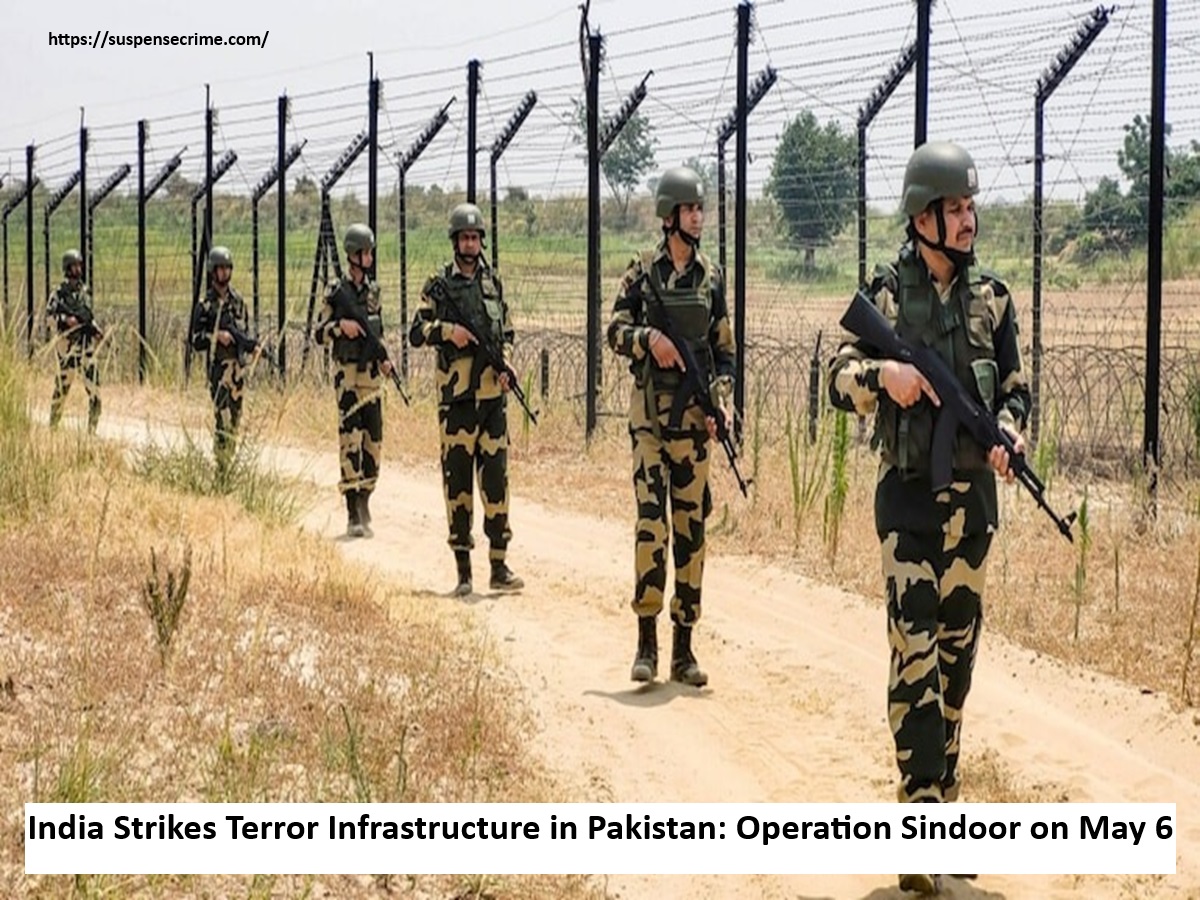
Suspense crime, Digital Desk : On May 6, India's armed forces executed a surgical strike against nine terror-linked sites in Pakistan, following the Indian government's response to the slaughter of 26 unarmed civilians in Pahalgam, Jammu & Kashmir. New Delhi, in the past, had made it clear that they would take action against such incursions and Operation Sindoor was executed in accordance with that commitment.
Widening the Combat Box: Deeper Than the LoC
Previously, India’s counter-terrorism operations were restrained to the vicinity of the Line of Control, and even during the 2019 Balakot strike. However, this time Indian forces hit Bahawalpur, a former Jaish-e-Mohammed stronghold, and Muridke that hosts Lashkar-e-Taiba, deep into the Punjabi heartland of Pakistan. These places are well away from the LoC, which indicates that terror infrastructure from any part of Pakistan could be targeted without hesitation.
Military Integration Across All Services
All three of India's military forces participated in Operation Sindoor, which hasn’t been the case since the 1971 war. This shows movement in the direction of India’s aim of adopting unified theatre commands, which is designed to improve inter-service coordination for domestic military operations during peacetime.
Calculated Response: Restraint and No Escalation
India's reaction show planning and control; there was no movement of large contingents or a focus on the Pakistani army. Anticipating the response, Pakistan did prepare its forces. India’s constraining of only terror infrastructure actions serves an aim of restraint.
Global Responses and Strategic Calculations
China was the sole opposing voice of the global community that, in general, supported India's vendetta. Major global players make it clear that any further escalation will be counter-productive and unhelpful amid existing global tensions in West Asia, Ukraine, and fragile economic conditions.
Long-Term: Strategy before Economic Growth and Stability
For India, cross-border terrorism is not new, having withstood it for more than 30 years, all while ensuring the implementation of favorable economic policies positioned the nation as an emerging global power. Since 1991, India's economy has consistently outpaced Pakistan's; India's per capita GDP reached $2,481 in 2023, while Pakistan lagged at $1,365. India’s recently negotiated Free Trade Agreement with the U.K. further consolidates such advancements.
On the other hand, Pakistan grapples with economic volatility, repeated rescues by the IMF, and mounting reliance on China. This trend underscores the context within which military and strategic decisions are made.