Priyanka Tiwari
 Share
Share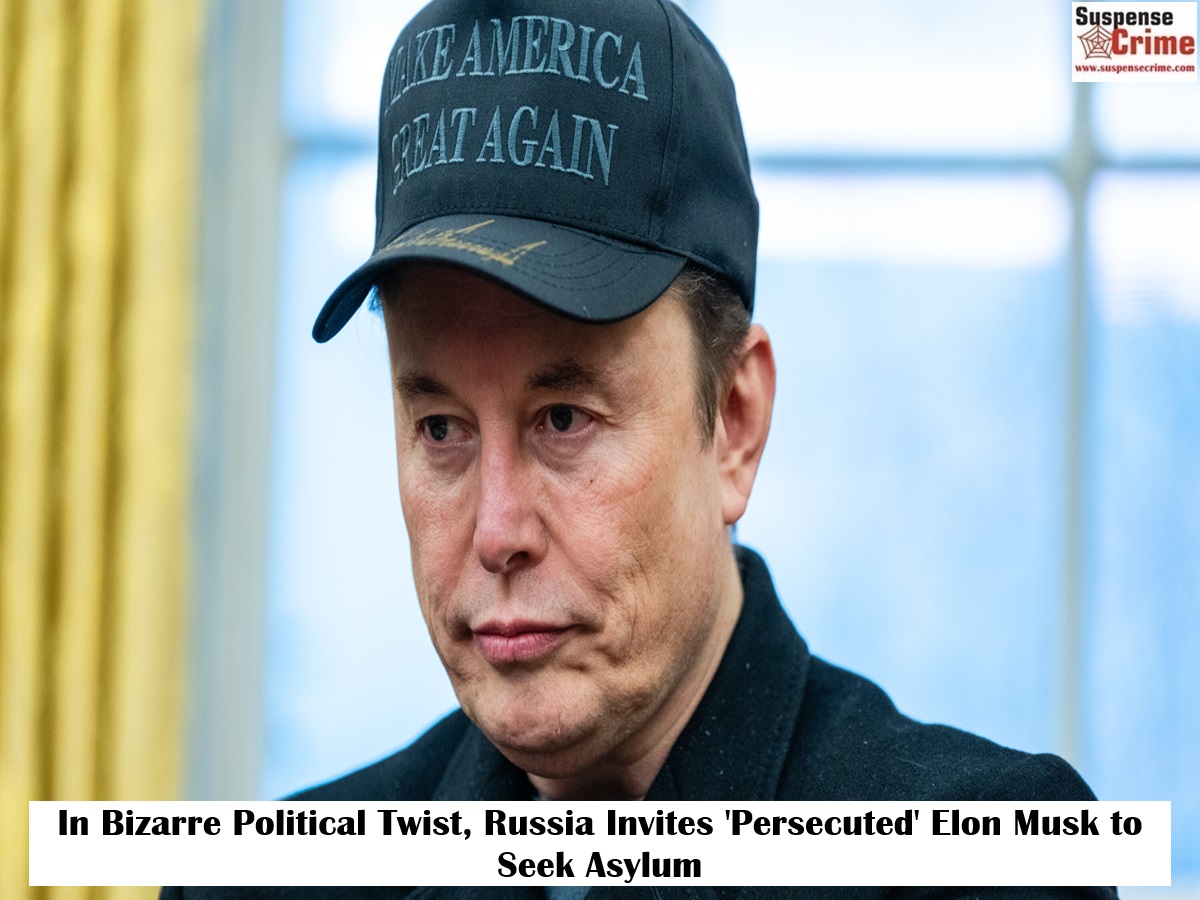
Suspense crime, Digital Desk : In a move that blends political satire with geopolitical strategy, high-ranking Russian officials have publicly extended an offer of political asylum to billionaire entrepreneur Elon Musk. The strange invitation comes directly on the heels of a public and bitter feud between the tech mogul and former U.S. President Donald Trump.
The Kremlin's opportunistic invitation appears to be a direct attempt to exploit the high-profile spat and frame Musk as a victim of American political persecution. The most prominent offers came from two powerful figures in Moscow.
Dmitry Medvedev, the deputy chairman of Russia's Security Council and a former president, made his pitch directly to Musk on X (formerly Twitter), the very platform Musk owns. Referring to Musk as a "persecuted political dissident," Medvedev formally invited him to seek refuge in Russia.
Echoing this sentiment, Vyacheslav Volodin, the speaker of Russia's State Duma, posted a similar message on the Telegram app. Volodin lamented that the U.S. was punishing a "decent and talented businessman" simply because he holds different political opinions. He urged Musk to "not be afraid" and to "come to Russia," where he promised safety from the "arbitrariness of the American justice system."
This diplomatic theater was sparked by a recent war of words between Musk and Trump. At a campaign rally, Trump sharply criticized Musk, calling his business empire a "mess" and questioning the government subsidies his companies have received.
Musk fired back on X, stating he would not be donating to any presidential candidate and questioning Trump's cognitive abilities. The billionaire suggested it was time for the former president to "hang up his hat and sail into the sunset."
While the offer of asylum from Moscow is almost certainly a propaganda maneuver rather than a serious proposal, it serves as a stark illustration of modern geopolitics. Russia is using the internal political squabbles of its primary adversary to mock the state of American democracy and portray itself—ironically—as a haven for free speech. By positioning Musk as a "dissident," Moscow aims to score a symbolic victory and sow further division within the U.S. political landscape.
As of now, Elon Musk has not publicly responded to the Kremlin's invitation. The entire episode highlights the bizarre intersection of social media feuds, billionaire influence, and the strategic games played on the international stage.
Read More: BLA Forms Own Navy? Balochistan Liberation Army Claims First-Ever Naval Strike in Major Escalation