Zero Counsellors for 2.5M Students in Haryana
The harrowing echoes of a brutal assault on a young student within a government school premises in Panchkula have laid bare deep systemic vulnerabilities across India’s educational infrastructure. Despite widespread public outrage and urgent calls for enhanced student safety, the Directorate of Education in Haryana has faced scathing criticism for failing to deploy institutional psychological support systems.
Today, a staggering 25.21 million (25.2 lakh) students enrolled across 14,297 government-run schools spanning 23 districts in the state are navigating their formative academic years without access to a single dedicated, school-level counsellor or child psychologist. With 12.83 million male and 12.38 million female students walking school corridors daily, the glaring absence of mental health professionals leaves administrators blind to rising stress, behavioral distress, and peer-on-peer aggression.
The Panchkula Horror: A Wake-Up Call That Remained Unheeded
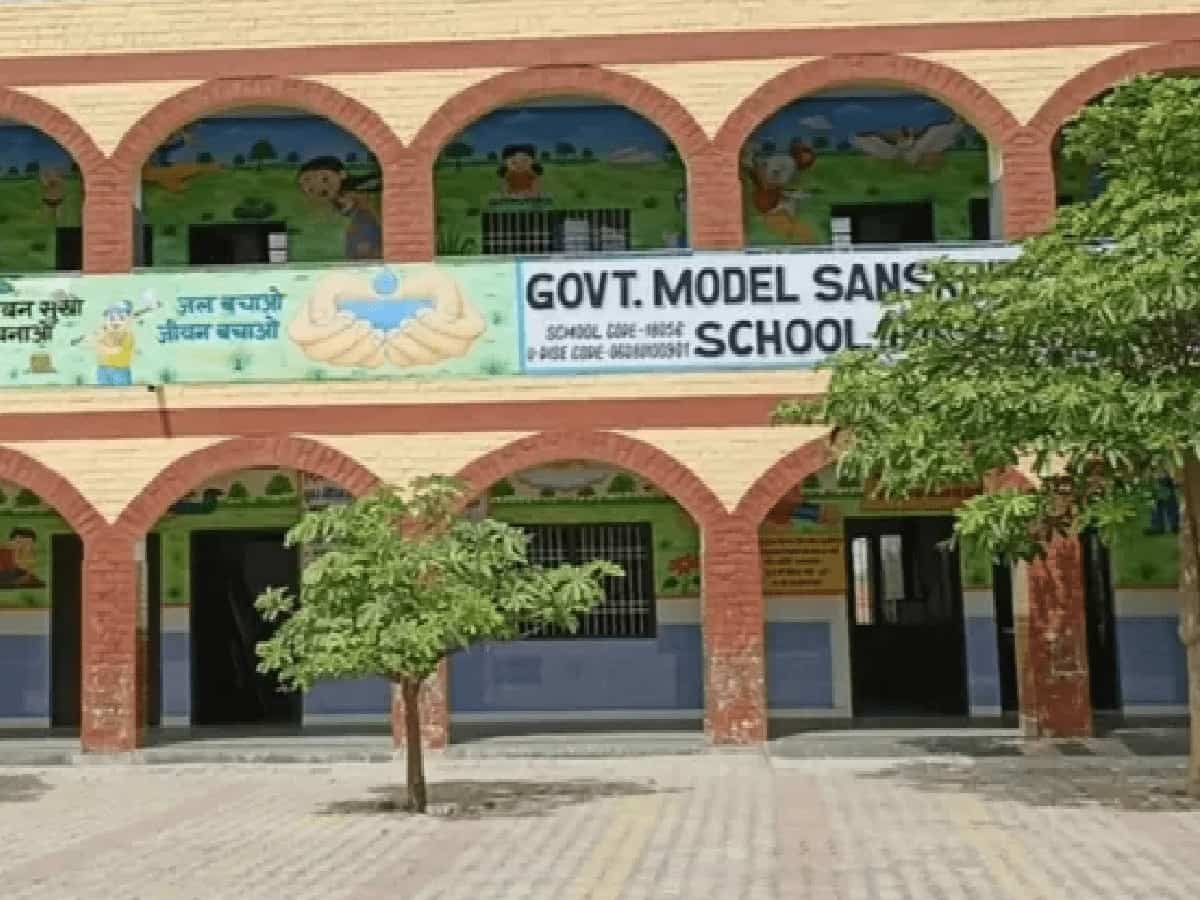
The urgency of this crisis stems directly from a horrific incident that shook the conscience of the state. On October 28, a shocking act of violence occurred at the Shaheed Major Anuj Rajput Government Model Sanskriti Senior Secondary School in Sector 20, Panchkula.
According to police and school reports, an eight-year-old Class 3 student lured an unsuspecting six-year-old kindergarten student into an empty classroom on the pretense of taking her to her father. Inside the secluded room, the older child subjected the young girl to brutal physical violence, striking her with stones, bricks, and flower pots, dragging her across the floor, and repeatedly slamming her head against school benches.
The victim suffered severe, life-threatening injuries, leaving her unconscious and necessitating an extended, intensive hospitalization. While the physical wounds slowly healed, the incident raised terrifying questions regarding child supervision, peer monitoring, and the psychological health of young children within state-run educational institutions.
Hastily Assembled Workarounds: The Illusion of Support
In the immediate aftermath of the Panchkula tragedy, when administrative negligence became impossible to ignore, the Directorate of Education rushed to implement a makeshift solution. The department launched an initiative titled "Saath," hastily outsourcing mental health counselling duties to overworked psychiatrists stationed at district Civil Hospitals.
Because these medical professionals are already stretched to their limits managing general public healthcare workloads, school-level intervention was effectively nonexistent. No resident counsellors were appointed inside individual campuses, leaving the administrative apparatus in the same precarious limbo as before.
Gross Violation of CBSE and Model School Accreditation Norms
The crisis extends far beyond standard state-run schools into premier institutions boasting national affiliations. The Central Board of Secondary Education (CBSE) maintains strict, non-negotiable regulatory standards mandating that schools must employ a permanent, qualified student counsellor as a mandatory prerequisite for institutional recognition and accreditation.
Yet, a shocking audit of the ground reality reveals that 468 CBSE-approved PM Shri schools and government-managed Model Sanskriti schools across Haryana operate without a single dedicated counsellor on their payrolls. This direct violation of mandatory board guidelines raises serious questions as to how these institutions secured and maintained their formal accreditations in the absence of fundamental student welfare infrastructure.
A History of Abandoned Projects: The Rise and Fall of Umeed Centers
The current failure of leadership is compounded by a recurring cycle of administrative starts and stops. Recognizing the need for psychological intervention years prior, the Directorate of Education had launched the "Umeed Center" scheme in August 2018. Under this program, specialized counselling cabins were established at district headquarters, staffed by psychology instructors tasked with overseeing student well-being across local schools in 16 districts.
However, due to administrative apathy, poor funding, and a lack of measurable oversight, the initiative floundered. In July 2024, the Directorate quietly discontinued the Umeed Center scheme altogether. Subsequent digital and online counselling campaigns launched in its place yielded practically zero tangible results. Meanwhile, comprehensive civil society proposals—such as the "Antarman" project, presented to the Chief Minister by the Disabled Economist Rehabilitation Trust to institutionalize student mental health care—have languished in bureaucratic limbo for over a year.
Government Officials Respond Amid Public Outrage
As pressure mounts from parent associations, child rights activists, and opposition parties, state authorities have pledged to review safety frameworks. Tripti Sheoran, Chairperson of the Child Protection Commission in Panchkula, acknowledged the gravity of the situation, stating, "We will issue special guidelines regarding the safety of children in schools, and discussions are underway. A meeting of top officials from the Directorate of Education will be held to ensure children's mental health."
Despite these assurances, experts emphasize that issuing circulars without funding, recruitment drives, and mandatory infrastructure mandates will do little to protect children. As 2.5 million students return to classrooms across Haryana, the state government faces an urgent, non-negotiable imperative: transforming schools from high-pressure environments into safe, psychologically supported spaces where tragedies like the Panchkula incident are never allowed to happen again.