Priyanka Tiwari
 Share
Share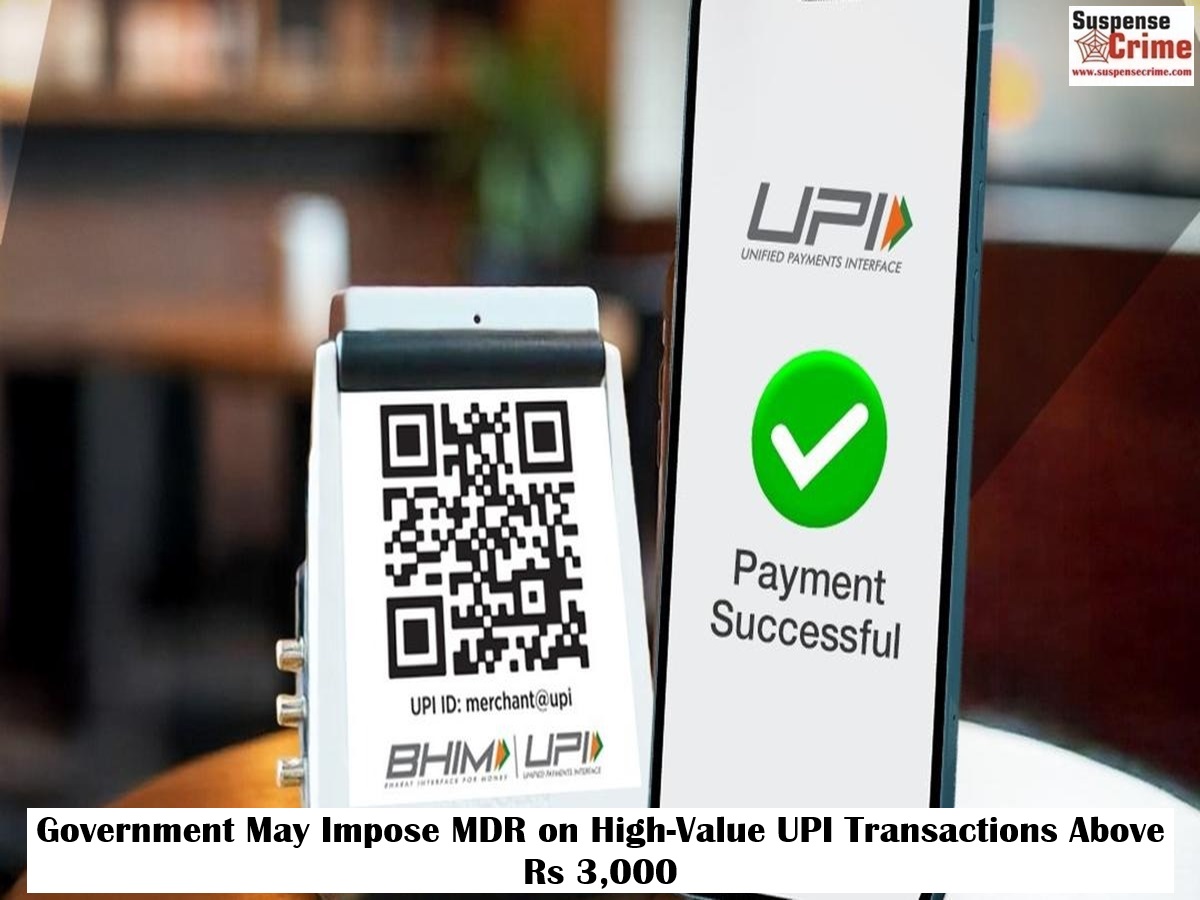
Suspense crime, Digital Desk : The Indian government has proposed establishing merchant discount rate (MDR) fees for UPI transactions over Rs 3,000, as noted in an article by NDTV Profit on June 11. If this comes into effect, it would represent a major departure from the zero-MDR policy with regards to UPI's digital payment infrastructure.
As per reports, it seems that financial institutions will be permitted to utilize MDR based on the value of the transaction instead of the merchant's turnover, which will certainly result in higher operational costs for merchants and also impact consumers partaking in high-value digital transactions.
Lower Value Payments Likely to Stay Free
As suggested by the report, lower value UPI transactions will most likely evade MDR fees, thus ensuring that everyday digital payments remain costless for users as well as merchants. It appears the intention is to promote widespread use and adoption of UPI, while facilitating cost recovery for high value transactions.
This comes after the Payment Council of India requested the reconsideration of the zero-MDR policy, which other industry practitioners think poses a serious threat to the long term viability of the freely available digital payment ecosystem.
UPI Usage Continues to Surge
On June 1, UPI enabled 644 million transactions and the next day another 650 million transactions were processed. This surpasses the average daily transaction volume of payment giants like Visa, which processed approximately 639 million transactions per day in FY24. These figures underscore the adoption of UPI in the payment ecosystem of India.
Though Visa does not publicly share daily information, this serves as an example of the rising popularity and acceptance of UPI in comparison to other digital payment systems.