Priyanka Tiwari
 Share
Share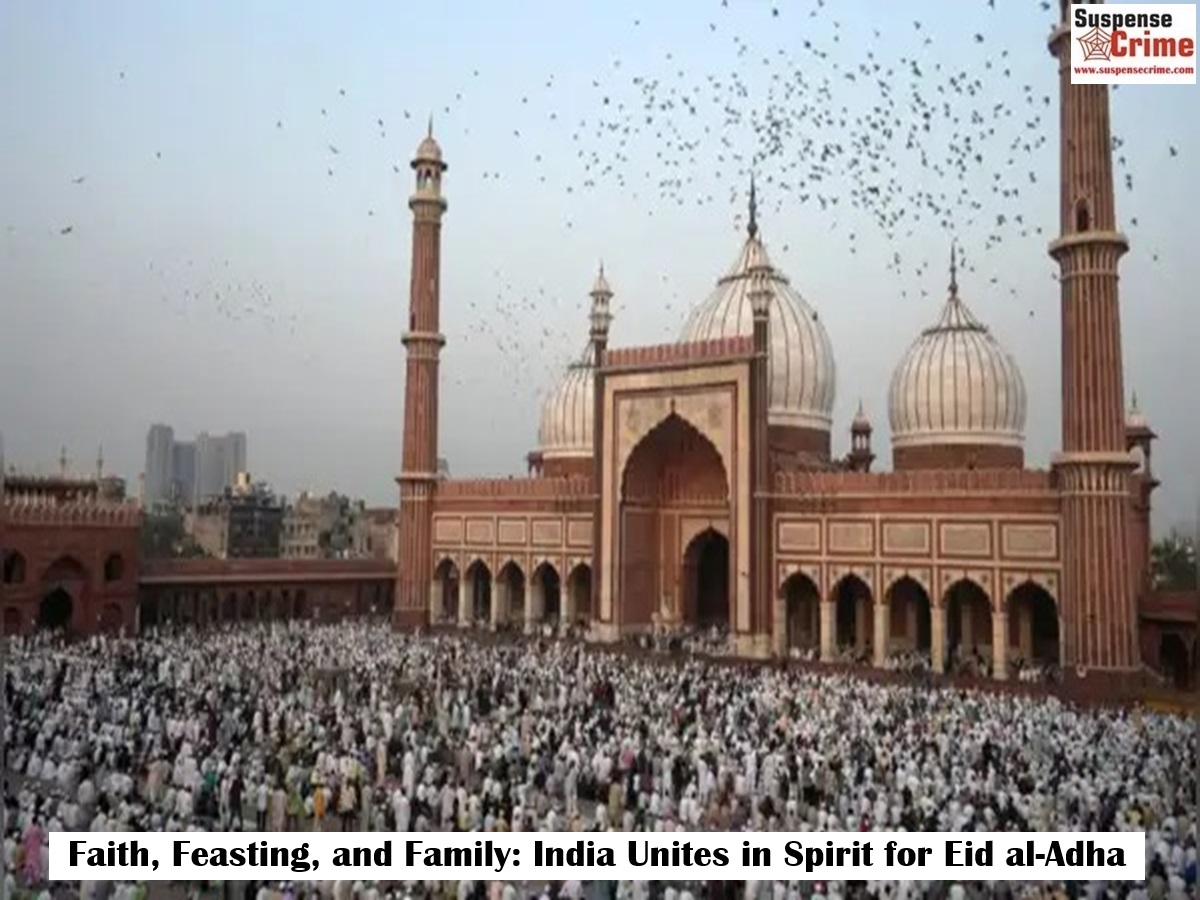
Suspense crime, Digital Desk : Across the vast and diverse landscape of India, millions of Muslims celebrated Eid al-Adha, the "Festival of Sacrifice," with a vibrant display of devotion, community, and joy. From the historic courtyards of Delhi's Jama Masjid to the iconic grounds near the Taj Mahal, the day was marked by heartfelt prayers, family gatherings, and acts of charity.
The celebrations began at dawn as large congregations gathered for special morning prayers, or namaz. In cities like Delhi, Mumbai, Srinagar, and Bhopal, public grounds and mosques overflowed with seas of devotees dressed in new, colorful attire, bowing in unison in a powerful spectacle of shared faith. The festive atmosphere was palpable, with children in bright outfits sharing greetings and families embracing after prayers.
Eid al-Adha commemorates the devotion of the Prophet Ibrahim, who was willing to sacrifice his son as an act of obedience to God. To honor this spirit, the tradition of Qurbani, or sacrifice, is observed. A core tenet of this ritual is charity; the meat from the sacrifice is traditionally divided into three parts—one for the family, one for friends and relatives, and a crucial one-third for the poor and needy, ensuring that everyone can partake in the celebratory feast.
Beyond the religious observances, the festival is a time for strengthening social bonds. Homes were filled with the aroma of festive dishes like biryani and sheer khurma as families hosted feasts for loved ones. The greeting "Eid Mubarak" echoed in streets and neighborhoods, a simple but profound expression of shared happiness and goodwill that transcended all community lines.
In a beautiful reflection of the nation's "unity in diversity," the spirit of Eid al-Adha was embraced across the country, serving as a poignant reminder of the shared values of faith, generosity, and the unbreakable bonds of community.
Read More: Sita Navami 2026: Date, Auspicious Timings, and Significant Rituals for Janaki Jayanti