Chhattisgarh HC Ruling: Govt Schools Cannot Force Students to Recite Hindu Prayers
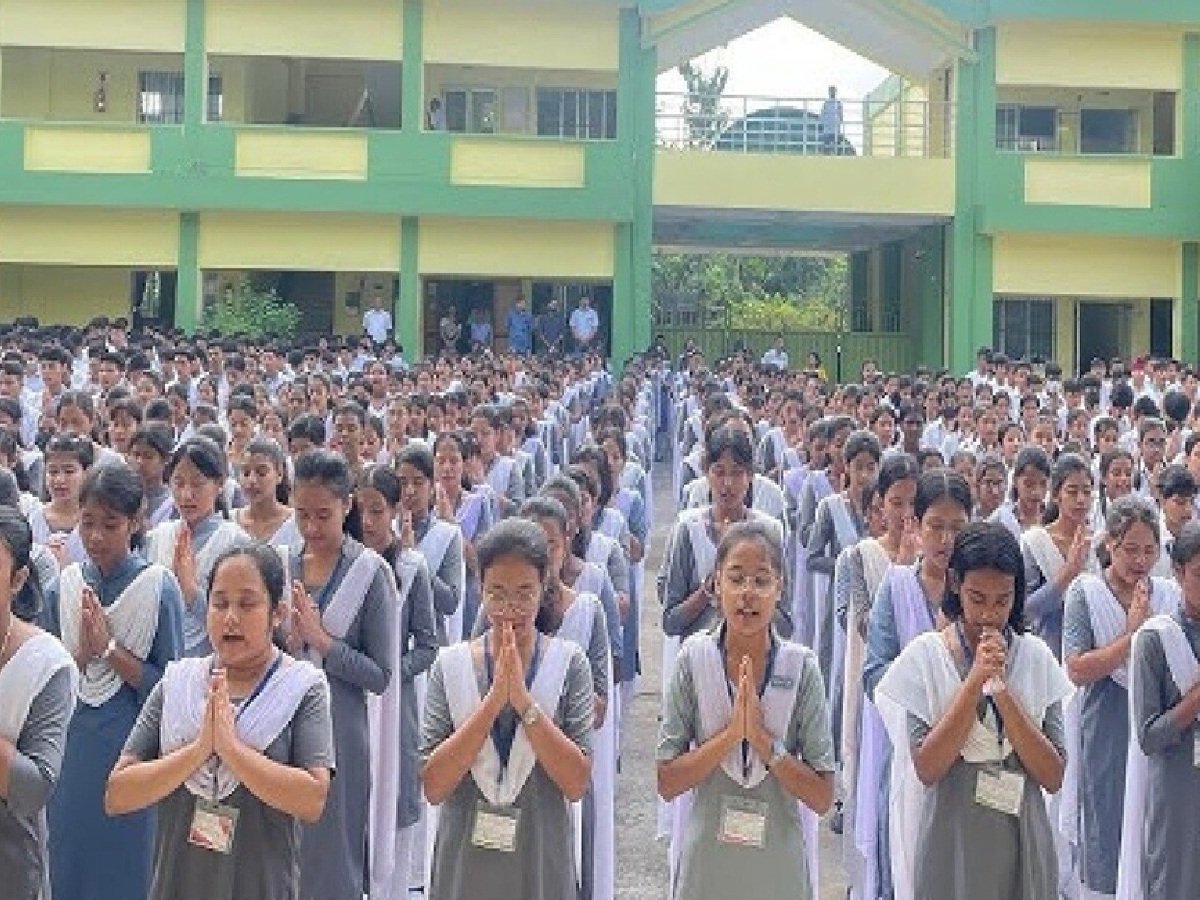
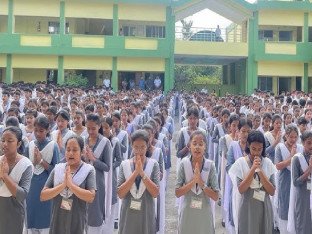
Suspense Crime, Digital Desk : The legal battle was initiated by a petition filed by former Chhattisgarh Waqf Board chairman Abdul Salam Rizvi, former Minority Affairs Department chairman Mahendra Chhabra, and social activist Shafiq Ahmed. The petitioners challenged a circular issued by the School Education Department on June 12, which directed schools to implement a mandatory prayer schedule. This schedule included the national anthem, the national song, Saraswati Vandana, Guru Mantra, Gayatri Mantra, and Shanti Mantra, along with the biographies of eminent personalities and specific mealtime prayers.
Secularism vs. Religious Mandates
The petition argued that the government’s directive was a direct violation of the fundamental rights guaranteed by the Constitution and undermined the secular nature of government-aided education. By forcing students to participate in rituals associated exclusively with one religion, the circular was accused of failing to provide exemptions or protect the "freedom of conscience" for students from diverse backgrounds. The petitioners asserted that the state has an obligation to maintain religious neutrality, and by prioritizing the practices of a single faith, the circular was discriminatory and unconstitutional.
Court’s Directive and Government Assurance
Presiding over the case, Justice Amitendra Kishore Prasad took note of the State Government's submission, which clarified that while the circular had been issued in early June, it had not yet been implemented on the ground. Satisfied with this assurance, the High Court closed the petition for now. However, in a stern warning to the administration, the Court explicitly granted the petitioners the liberty to approach the judiciary again if any instances of coercion are reported. The Court made it clear that if any such violation of the principle of religious neutrality is brought to its attention, strict and appropriate legal action will follow.