










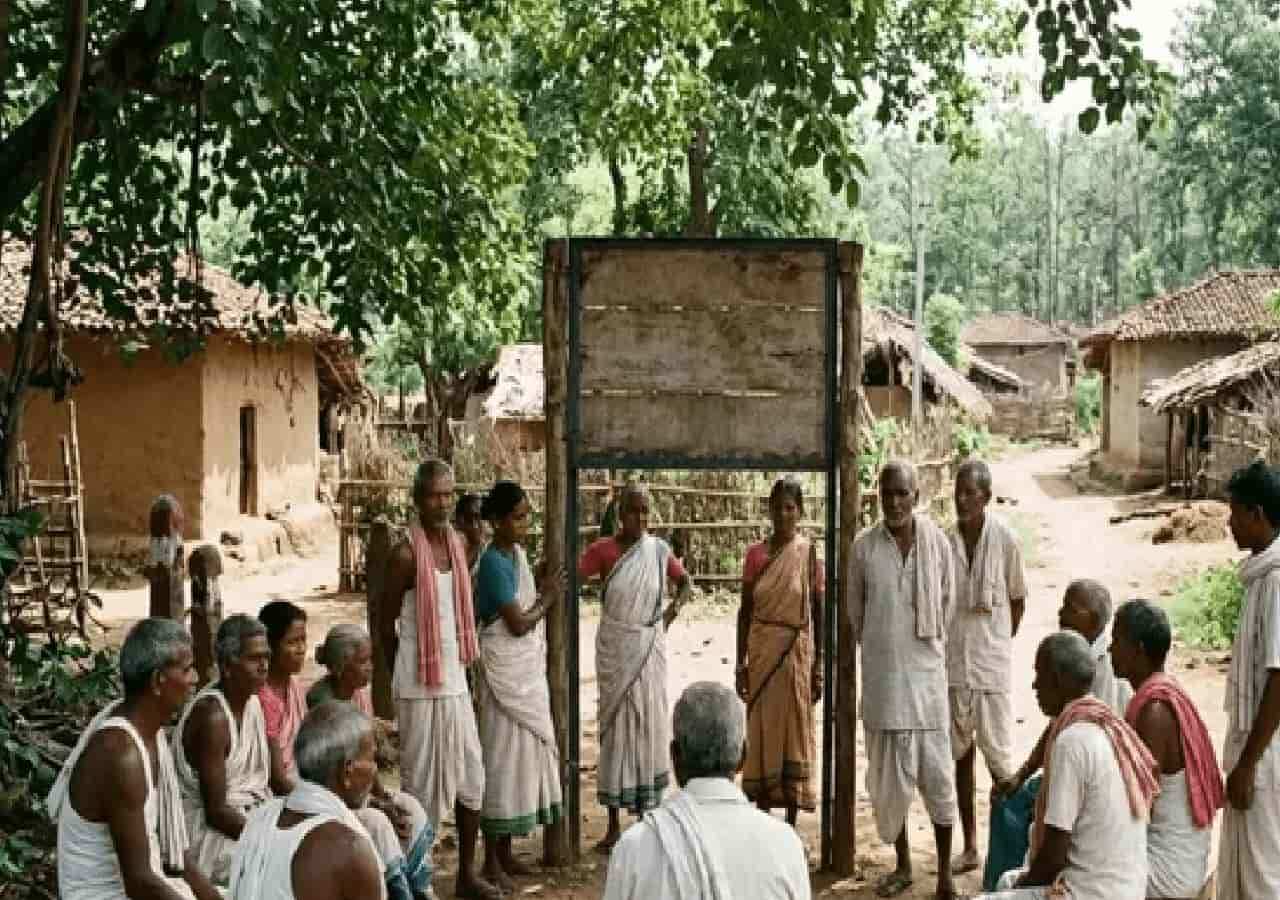
Chhattisgarh Gram Sabhas Put Up No-Entry Boards in 80+ Villages
More than 80 Gram Sabhas across the Scheduled Areas of Chhattisgarh have mounted information boards and banners at village entry boundaries barring the entry of pastors, priests, and religious preachers in an effort to curb religious conversions and safeguard traditional tribal customs, folk arts, and cultural practices. Reported across state and national media between November 27 and November 29, 2026, the resolutions invoke the Fifth Schedule of the Constitution of India alongside the Panchayats (Extension to Scheduled Areas) Act, 1996 (PESA) as the statutory basis for village-level self-governance and cultural preservation. At the same time, Christian community organizations—including the Christian Adivasi Mahasabha in northern Chhattisgarh's Jashpur district—have submitted formal memoranda to the District Collector and Superintendent of Police (SP) registering their protest, questioning the constitutional boundaries of the signage, and seeking administrative review. Across Uttar Pradesh—especially in state capital Lucknow and neighboring administrative, legal, and academic centers such as Unnao, Kanpur, Prayagraj, and Varanasi, where constitutional federalism, tribal self-rule under PESA, and judicial precedents draw close attention—the unfolding debate highlights how local self-governance powers intersect with fundamental rights.
Timeline and Key Legal Milestones Behind the Chhattisgarh Village Boards
The wave of Gram Sabha resolutions and signboards across districts such as Kanker, Bastar, Sukma, and Jashpur has developed alongside major High Court and Supreme Court rulings over the past year and a half:
| Date / Period | Key Development & Legal / Administrative Context |
| June & August 2025 | Movement gained momentum with Gram Sabha resolutions in Kanker district villages—including Kudal and Parvi—in June 2025, followed by widespread installation of boundary notice boards from August 2025 onward |
| October 2025 | The Chhattisgarh High Court declined to order the removal of hoardings erected in Kanker villages (hearing a writ petition filed by Kanker resident Digbal Tandi), observing that notices aimed at preventing forcible conversions via allurement or fraudulent means were not unconstitutional |
| February 16, 2026 | The Supreme Court of India dismissed a petition seeking removal of the notice boards, leaving the Chhattisgarh High Court's October 2025 order intact while noting statutory avenues for redress |
| Late November 2026 | Jabala (Jabla) Gram Panchayat in Jashpur district unanimously passed a resolution barring entry of priests and nuns for conversion activities, joining five panchayats—including Sogda, Chadiya, Doomartoli (Dumartoli), and Tempu—where similar boards had already been installed, bringing the statewide tally past 80 villages |
How Gram Sabhas Invoke the Fifth Schedule and PESA Act—and Why Jashpur Is in Focus
In northern Chhattisgarh's tribal-majority Jashpur district, the installation of a signboard at Jabala (Jabla) village—following similar resolutions and boards across Sogda, Chadiya, Doomartoli, and Tempu—marked a visible expansion of a trend earlier concentrated in southern districts like Kanker, Bastar, and Sukma. Village councils behind these resolutions maintain that Schedule V of the Constitution and the PESA Act, 1996 empower Gram Sabhas in Scheduled Areas to protect customary traditions, social cohesion, and community identity from external religious persuasion or inducement. Tracing back to June 2025 resolutions in Kanker's Kudal and Parvi villages and broader signage drives since August 2025, local panchayat leaders argue that collective Gram Sabha decisions reflect grassroots consensus to prevent social friction inside tribal hamlets.
Objections From Christian Groups and the Constitutional Balancing Act
On the other side, Christian representatives—including members of the Christian Adivasi Mahasabha, which points to roughly two lakh Christian tribals in Jashpur—have lodged formal objections with the Jashpur Collector and SP, contending that Fifth Schedule safeguards are meant to protect jal, jungle, and zamin (water, forest, and land) rather than restrict movement or religious freedom. While the Chhattisgarh High Court in October 2025 and the Supreme Court on February 16, 2026 declined blanket removal of boards targeting induced or fraudulent conversions, district officials and legal observers continue to emphasize that local panchayat resolutions must still operate within constitutional boundaries—leaving administrative oversight and statutory remedies at the center of how these 80-plus village notices are enforced on the ground.






