CAG Report Exposes Flaws in BIS Gold Hallmarking
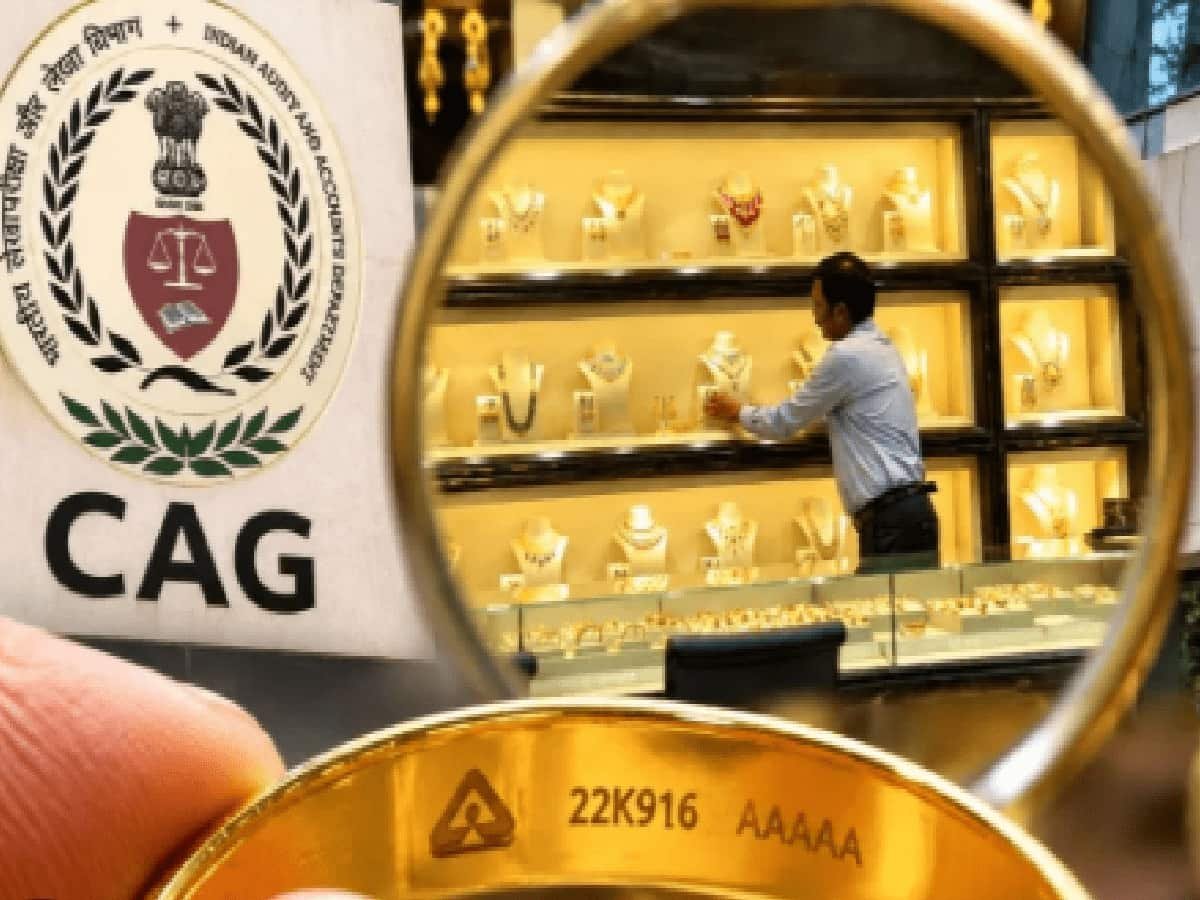
For millions of households across India, purchasing gold is not merely an investment; it is an emotional and cultural anchor symbolizing financial security. To protect consumers from rampant adulteration and fraud, the government instituted mandatory hallmarking, establishing the Hallmark Unique ID (HUID) system as an absolute guarantee of purity.
However, a draft audit report by the Comptroller and Auditor General of India (CAG) has sent shockwaves through the bullion market, revealing systemic regulatory failures that leave ordinary consumers vulnerable to substandard gold.
The Bureau of Indian Standards Under Fire: Over 80% of Jewelers Left Uninspected
According to findings highlighted in the CAG's draft audit, the Bureau of Indian Standards (BIS)—the nodal agency entrusted with monitoring and enforcing gold purity standards—has drastically fallen short of its mandatory oversight responsibilities.
Under established regulatory frameworks, BIS inspectors are mandated to conduct physical inspections of every registered jeweler’s establishment at least once a year. Yet, the CAG report reveals that over the five-year period since 2020–21, the BIS failed to visit 83.25 percent of registered jewelers. The regulatory blind spot was particularly acute in recent operational cycles; for instance, out of 28,865 active licensees in 2024–25, a staggering 81.13 percent (over 23,000 establishments) operated completely unchecked by regulatory authorities.
The compliance gap extended beyond retail storefronts to the Assaying and Hallmarking Centers (AHCs) where gold purity is officially tested. The CAG audit noted that BIS fell 43.7 percent short of its target for inspecting these testing facilities, indicating a systemic breakdown in quality control across the entire verification chain.
Expansion Without Accountability: The Hallmarking Paradox
To understand the scale of the vulnerability, one must examine how the hallmarking ecosystem has evolved. With mandatory hallmarking enforced across hundreds of districts, India's registered jeweler base has surged to approximately 2.3 million shops, supported by over 1,577 accredited assaying centers and more than 650 million HUID-tagged jewelry items.
The structural framework of the system has undeniably expanded. However, the CAG’s core criticism targets a dangerous regulatory imbalance: the BIS aggressively accelerated license issuance and HUID registrations while catastrophically neglecting routine, on-the-ground compliance audits.
When confronted with the audit findings, BIS officials defended the agency's performance by citing severe staffing shortages and logistic difficulties in collecting physical samples from remote geographic areas. The CAG flatly rejected this justification, pointing out a fundamental contradiction in administrative priorities: if the agency possessed adequate human resources to rapidly scale up license distribution and fee collection, it lacked justification for failing to deploy inspectors for mandatory annual oversight.
What This Means for Everyday Gold Buyers
The central promise of hallmarking is consumer protection—ensuring that buyers receive the exact karat purity stamped onto their ornaments. While HUID numbers and BIS apps provide a digital layer of traceability, the CAG report serves as a sobering reminder that a stamp is only as reliable as the enforcement agency backing it. If four out of five retail shops go uninspected year after year, the risk of compromised purity or compromised testing standards increases exponentially.
Consumer rights advocates emphasize that while hallmarking remains an essential baseline safeguard, buyers must exercise heightened vigilance. Until the Ministry of Consumer Affairs and the BIS overhaul their monitoring mechanisms and strengthen field enforcement, consumers are advised to purchase exclusively from trusted, established jewelers, demand detailed tax invoices explicitly stating purity specifications, and independently verify HUID codes using official BIS mobile applications.