
 Priyanka Tiwari
 Share
Share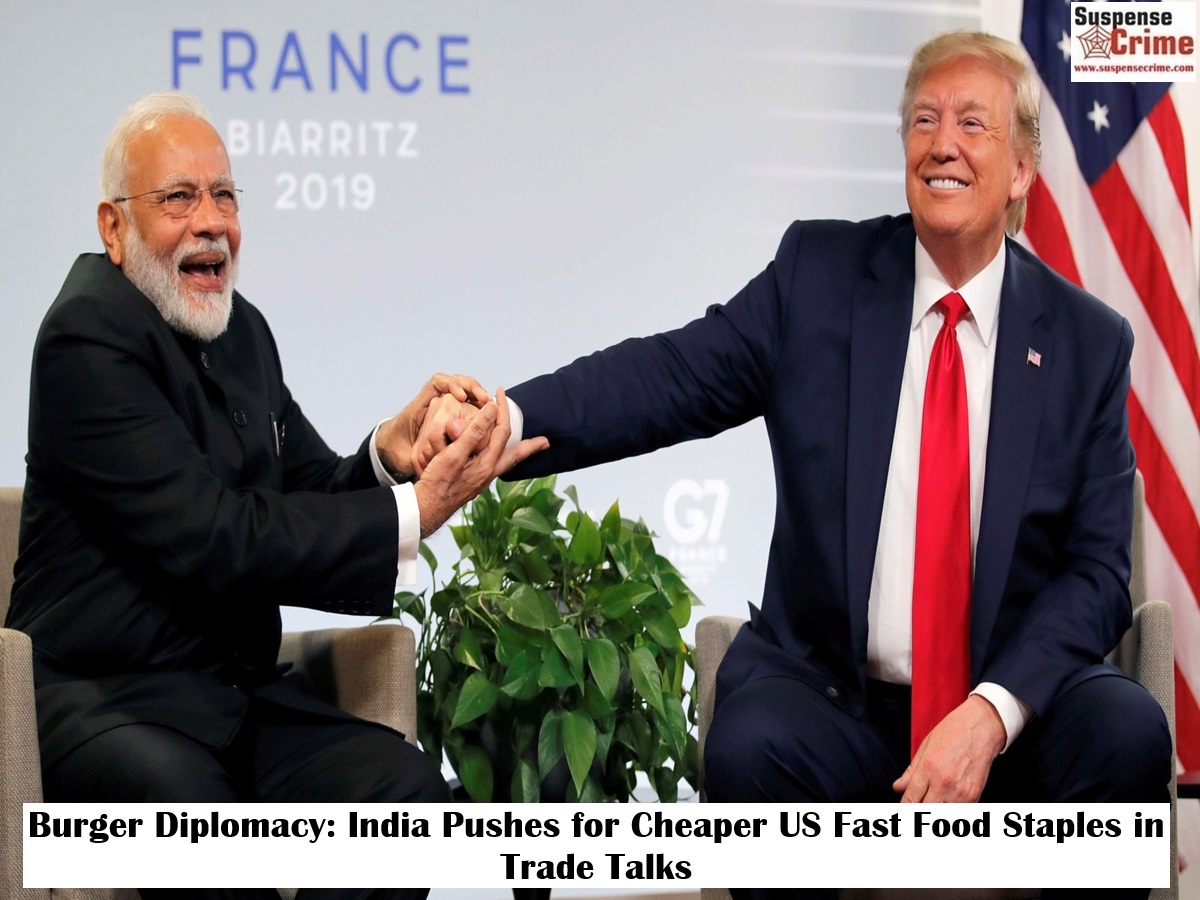
Suspense crime, Digital Desk : Your next American-style burger and fries in India could soon become more affordable, as the Indian government is negotiating with the United States to slash import taxes on key fast-food ingredients. This move is part of a broader effort to finalize a long-awaited trade deal between the two economic giants.
According to senior government officials, India is specifically seeking lower tariffs on popular American products like frozen potato fries, frozen duck meat, and turkey. The goal is to make these items cheaper for India's booming Quick Service Restaurant (QSR) sector, which includes major international and domestic fast-food chains. By reducing the cost of these core ingredients, the benefit could be passed on to consumers through lower menu prices.
This request is a central piece of ongoing trade negotiations aimed at resolving persistent economic friction between India and the US. The discussions are a two-way street; while India is pushing for cheaper burger fixings, the United States is seeking better market access for its own agricultural products. The US is particularly keen on seeing India reduce its high import duties on American apples, walnuts, and almonds. India is already the largest global importer of US almonds and a significant market for its walnuts and apples.
These trade talks are gaining momentum amidst high-level diplomatic engagements. The negotiations are expected to be a key topic during the upcoming India-US "2+2" ministerial dialogue. Hopes are high for a breakthrough, potentially timed around President Joe Biden's visit to India for the G20 Summit in September or a possible reciprocal visit by Prime Minister Narendra Modi to the US.
For years, both nations have worked towards a "mini-trade deal" to address immediate issues while laying the groundwork for a more comprehensive Free Trade Agreement (FTA). Successfully reaching an agreement on these agricultural and food products would be a major step forward, signalling a stronger and more cooperative economic partnership. Ultimately, a successful deal could mean a win for American farmers, a boost for the Indian food industry, and a more affordable meal for fast-food lovers across India.
_1570701464_100x75.jpg)
_1563449287_100x75.jpg)

_1025409548_100x75.jpg)
_1681775372_100x75.jfif)