
 Priyanka Tiwari
 Share
Share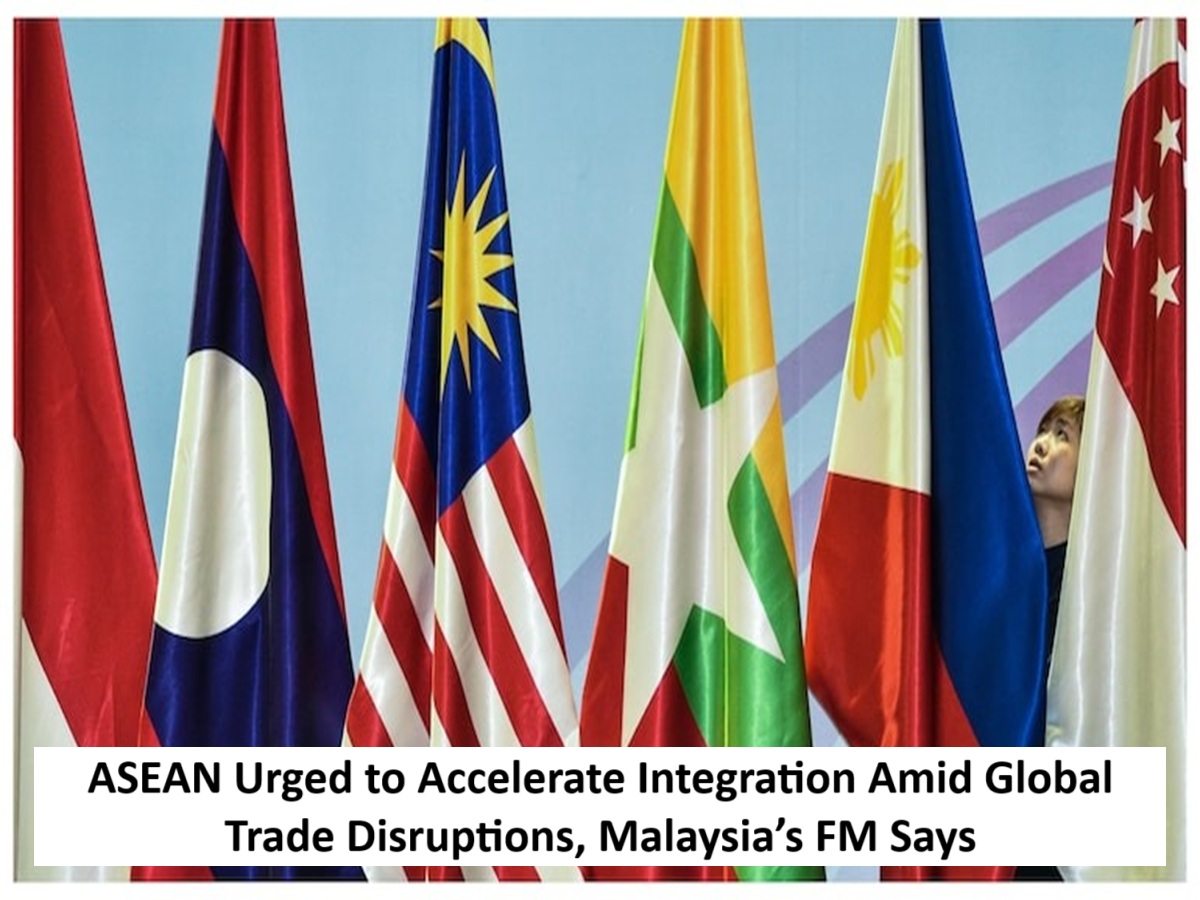
Suspense Crime, Digital Desk : Malaysian Foreign Minister Mohamad Hasan has called on ASEAN nations to speed up regional economic integration and diversify trade partnerships. Speaking at the Association of Southeast Asian Nations (ASEAN) foreign ministers' meeting on Sunday, he highlighted the severe impact of ongoing global trade disruptions and US-imposed tariffs on the region.
Hasan pointed out that the ongoing US–China trade conflict has significantly disrupted global production and trade patterns. He warned that these tensions could trigger a worldwide economic slowdown and emphasized the need for ASEAN to build economic resilience by deepening intra-regional trade ties.
Impact of US Tariffs on ASEAN Economies
ASEAN countries, particularly export-driven economies such as Malaysia, Thailand, Indonesia, and Vietnam, have faced substantial economic strain due to US tariffs introduced during former President Donald Trump's administration. Tariff rates have reached up to 49%, affecting six of the ten ASEAN members the most.
These trade restrictions threaten to undercut ASEAN’s projected economic growth rate of 4.7% this year, according to trade officials. Although the US has announced a temporary 90-day suspension of these tariffs, ASEAN as a bloc has yet to secure a formal meeting with the US. Individual nations, however, have begun separate trade discussions.
Focus on Myanmar Crisis and Regional Stability
Foreign Minister Hasan also reiterated ASEAN’s call for a cessation of violence in Myanmar. The civil war, triggered by the 2021 military takeover, has resulted in thousands of deaths and the displacement of millions. Despite humanitarian concerns and a recent earthquake killing over 3,700 people, Myanmar’s military leadership has been excluded from ASEAN meetings for failing to implement a proposed peace plan.
He emphasized the need to expand ceasefire agreements and enhance humanitarian access while admitting that political dialogue remains difficult due to a deep “trust deficit” between conflicting groups.
Climate, AI Risks, and ASEAN Unity in the Spotlight
Hasan stressed that unity within ASEAN is essential to handle broader regional threats such as climate change, misuse of artificial intelligence, and escalating geopolitical tensions. He described ASEAN’s centrality as being under significant strain, highlighting the importance of internal cohesion to withstand rising external pressure, particularly from the US–China rivalry.
ASEAN leaders are set to meet in a summit on Monday, followed by a joint session with Chinese Premier Li Qiang and Gulf Cooperation Council leaders on Tuesday. These meetings aim to expand economic cooperation and address regional challenges collaboratively.